

Table of contents
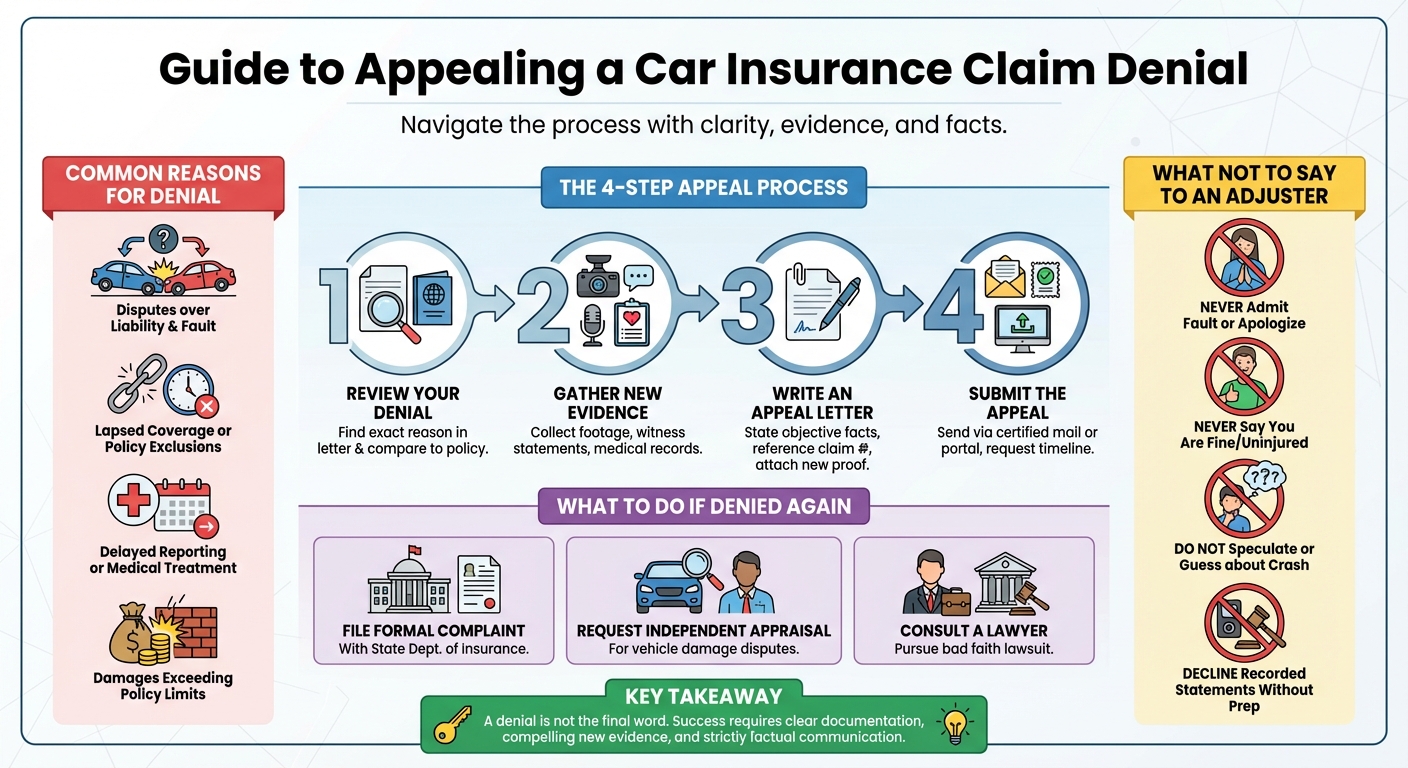
To appeal a car insurance claim denial, first review your denial letter to understand the specific reason for rejection. Next, gather new evidence like dashcam footage, police reports, or medical records. Finally, write a formal appeal letter detailing the facts and submit it to the insurance adjuster for reconsideration.
How to Appeal a Car Insurance Claim Denial: A Step-by-Step Guide
Receiving a denial letter for your car insurance claim can be incredibly frustrating, especially when you are dealing with vehicle damage or injuries. However, a denial is not always the final word. Insurance companies make mistakes, misinterpret policies, and sometimes overlook critical evidence.
By understanding the appeals process, you can effectively challenge the insurer’s decision and fight for the compensation you deserve.
Understand Why Your Claim Was Denied
Before you can fight a denial, you need to know exactly why the insurance company rejected your claim. Insurers are legally required to provide a specific reason for the denial in writing.
Disputes Over Liability or Fault
If the insurance adjuster believes you were entirely or partially at fault for the accident, they may deny your claim. This often happens when police reports are inconclusive or the other driver lies about what happened.
Lapsed Coverage or Policy Exclusions
Claims are frequently denied if your premium payment was late, causing your coverage to lapse at the time of the accident. Additionally, certain events—like using your personal vehicle for rideshare driving without the proper endorsement—may be excluded from your policy.
Delayed Medical Treatment or Reporting
Insurance policies require you to report accidents promptly. If you wait weeks to notify the insurer or delay seeking medical treatment for your injuries, the adjuster may argue that your injuries are unrelated to the crash.
Exceeding Policy Limits
If the cost of your property damage or medical bills exceeds the at-fault driver’s policy limits, the insurance company will only pay up to that maximum cap, effectively denying the remainder of your claim.
How to successfully appeal an insurance denial?
To successfully appeal an insurance denial, you must identify the exact reason for the rejection and provide new, concrete evidence that directly contradicts the insurer’s findings. Compile documents like police reports, dashcam footage, or medical records, and submit a formal, written appeal letter requesting a supervisor review the claim.
Step 1: Review the Denial Letter and Your Policy Carefully
Read the denial letter to pinpoint the exact policy provision the adjuster is citing. Compare this against your actual insurance policy declarations page to ensure they are interpreting your coverage correctly.
Step 2: Gather New, Compelling Evidence (Dashcams, Witnesses, Medical Records)
An appeal is rarely successful if you just ask the adjuster to change their mind. You need new proof. Gather:
- Dashcam or security camera footage
- Statements from independent witnesses
- Amended police reports
- Detailed medical records and doctor’s notes connecting your injuries to the crash
Step 3: Draft a Formal, Fact-Based Appeal Letter
Write a clear, professional appeal letter. State the facts of the accident, reference your claim number, and explain why the denial is incorrect based on the new evidence you are attaching. Keep emotion out of it; stick strictly to the facts.
Step 4: Submit the Appeal and Demand a Timeline for Review
Send your appeal letter via certified mail or through the insurer’s official online portal so you have a paper trail. Ask for a written response and a specific timeline for when they will complete their review.
What not to say to an auto insurance adjuster?
When speaking to an auto insurance adjuster, never admit fault, apologize, or say you are “fine” or uninjured. Avoid speculating about how the accident happened or estimating vehicle damage. Stick strictly to the objective facts, and decline to provide a recorded statement until you have consulted with an attorney.
Avoid Admitting Fault or Apologizing
Even a polite “I’m sorry” can be twisted into an admission of guilt. Let the evidence determine fault, not your conversational manners.
Do Not Speculate About Your Injuries or Vehicle Damage
If you don’t know the answer to a question, simply say “I don’t know.” Guessing your speed, distances, or the severity of your injuries gives the adjuster ammunition to deny your claim later if the facts differ.
Never Agree to a Recorded Statement Without Preparation
Adjusters use recorded statements to lock you into a narrative before you fully understand your injuries or the accident’s mechanics. You have the right to refuse a recorded statement until you are ready or have legal representation.
Escalating the Claim: What to Do If Your Appeal Is Rejected Again
If your internal appeal is denied, you still have options to escalate the matter outside of the insurance company’s internal review process.
Filing a Complaint with Your State Department of Insurance
Every state has an insurance commissioner or department that regulates insurers. Filing a formal consumer complaint forces the insurance company to respond to the state and justify their denial, which sometimes prompts them to overturn their decision.
Requesting an Independent Appraisal
If the dispute is strictly over the value of your totaled vehicle or property damage, you can invoke the appraisal clause in your policy. This allows you to hire an independent appraiser to assess the damage, and the insurer will hire their own. If they disagree, an impartial umpire makes the final binding decision.
Pursuing a Bad Faith Insurance Claim
If the insurance company denied your claim without a valid reason, failed to investigate properly, or intentionally misinterpreted your policy, they may be acting in bad faith. In these cases, consulting a personal injury attorney to file a bad faith lawsuit may be necessary to recover your damages and potential penalties.
Frequently Asked Questions About Car Insurance Appeals
What are the odds of winning an insurance appeal?
The odds of winning an insurance appeal depend heavily on the quality of your new evidence and the reason for denial. While exact success rates vary, policyholders who provide clear documentation—such as unreviewed dashcam footage or corrected medical codes—have a significantly higher chance of overturning a denied claim.
How do I get car insurance if I keep getting denied?
If you keep getting denied car insurance due to a poor driving record or multiple claims, you can apply for coverage through your state’s Automobile Insurance Plan (often called an assigned risk pool). Alternatively, seek out non-standard insurance companies that specialize in high-risk drivers, though premiums will be higher.