

Table of contents
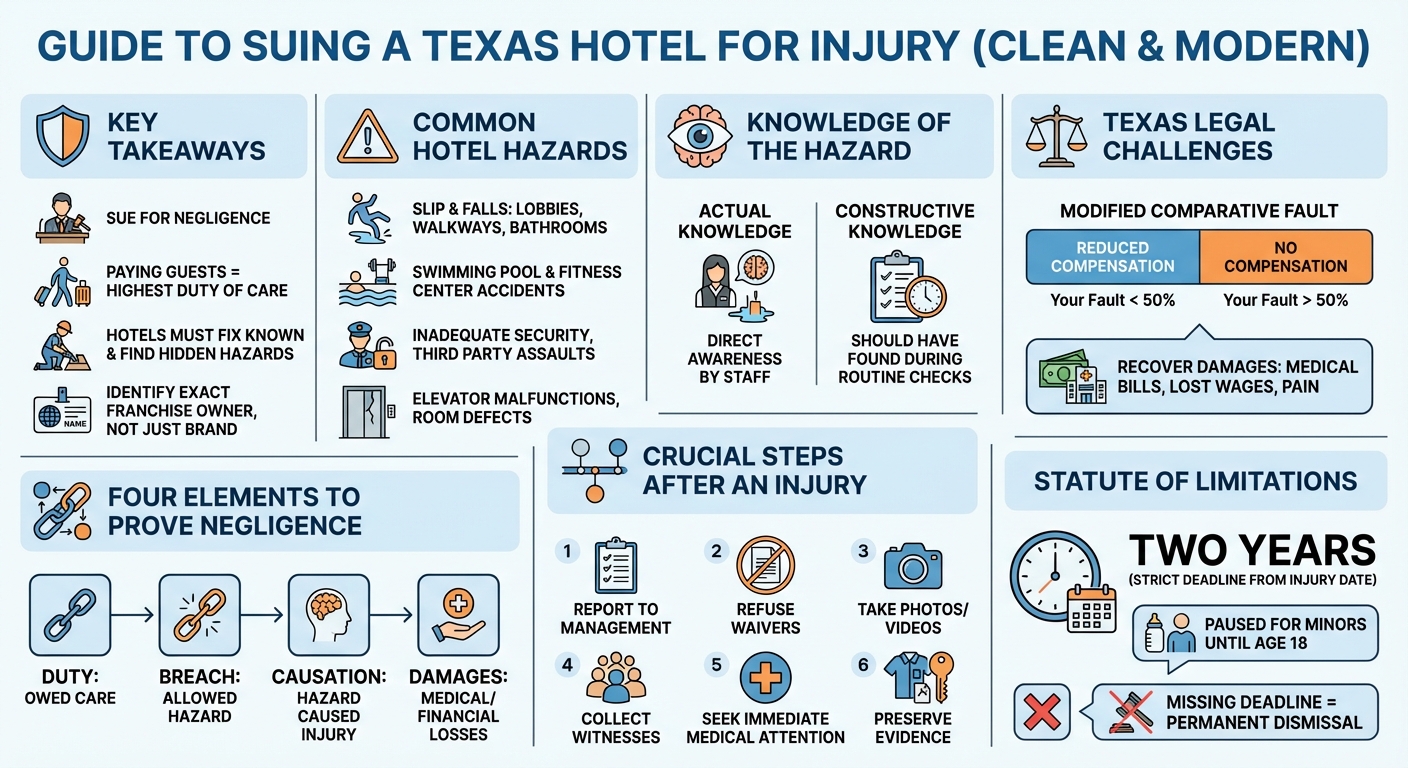
To sue a hotel for an injury in Texas, you must prove the hotel breached its duty of care under premises liability laws. You need evidence showing the hotel had actual or constructive knowledge of a hazard, failed to fix it, and directly caused your injury. Texas allows two years to file your claim.
Can You Sue a Hotel for an Injury in Texas?
Yes, you can sue a hotel in Texas if you are injured on their property due to their negligence. However, simply getting hurt at a hotel does not automatically entitle you to compensation. You must prove that the hotel failed to maintain a safe environment for its guests.
Understanding Texas Premises Liability Law
Hotel injury claims fall under a specific area of Texas law known as premises liability. Under these laws, property owners are legally responsible for accidents and injuries that occur on their property if they fail to address known hazards. Because hotels operate for profit and invite the public onto their premises, they are held to a very high legal standard.
Your Status as an ‘Invitee’ and the Hotel’s Duty of Care
In Texas premises liability cases, visitors are categorized based on why they are on the property. As a paying hotel guest, you are classified as an invitee. This means the hotel owes you the highest possible duty of care. They must not only fix known dangers but also proactively inspect the property to discover hidden hazards that could harm you.
Common Causes of Hotel Injuries in Texas
Hotels are massive properties with numerous amenities, meaning hazards can arise in a variety of locations. The most common incidents leading to lawsuits include:
Slip and Fall Accidents (Lobbies, Walkways, and Bathrooms)
Slip and falls are the most frequent hotel injuries. They often occur due to freshly mopped lobby floors without warning signs, torn carpeting in hallways, poorly lit stairwells, or slippery pool decks. In-room bathrooms are also common sites for falls if grab bars are loose or showers lack anti-slip surfaces.
Swimming Pool and Gym Accidents
Hotel pools and fitness centers are hotbeds for injuries. Missing depth markers, broken pool gates, highly chlorinated water causing chemical burns, and poorly maintained gym equipment can all lead to severe injuries or even tragic drownings.
Inadequate Security and Third-Party Assaults
Hotels have a duty to protect guests from foreseeable crimes. If you are assaulted, robbed, or injured by a third party on hotel grounds, you may have a negligent security claim. This often involves broken room locks, unlit parking garages, or a lack of security personnel in high-crime areas.
Elevator/Escalator Malfunctions and Room Defects
Mechanical failures in elevators or escalators can cause sudden drops, tripping hazards, or crushing injuries. Additionally, room defects like collapsing furniture, scalding hot tap water, or bed bug infestations can lead to valid claims against the property.
How to Prove Negligence in a Texas Hotel Lawsuit
Winning a hotel injury case requires more than just showing you were hurt. You and your attorney must build a compelling case based on specific legal criteria.
The Four Elements: Duty, Breach, Causation, and Damages
- Duty: The hotel owed you a duty of care (as an invitee).
- Breach: The hotel failed to meet that duty by allowing a hazard to exist.
- Causation: That specific hazard directly caused your injury.
- Damages: You suffered actual losses (medical bills, lost wages, pain).
Actual vs. Constructive Knowledge: Did the Hotel Know About the Hazard?
To prove a breach of duty, you must show the hotel knew or should have known about the danger. Texas law breaks this down into two categories:
| Knowledge Type | Definition | Example |
|---|---|---|
| Actual Knowledge | The hotel was directly aware of the hazard. | A guest reported a spill, or an employee created the hazard. |
| Constructive Knowledge | The hotel should have discovered the hazard through reasonable inspection. | A puddle of water was left in the hallway for three hours without being cleaned. |
Franchise vs. Corporate: Identifying the Correct Defendant
Many popular hotel brands (like Marriott or Hilton) are actually franchises owned and operated by independent management companies. Identifying the correct legal entity to sue is critical. Suing the corporate parent brand when a local franchisee is liable can result in your case being dismissed.
Crucial Steps to Take Immediately After a Hotel Injury
What you do in the minutes and days following a hotel accident can make or break your personal injury claim.
Report the Incident to Management (But Don’t Sign Anything)
Notify the hotel manager immediately and ask them to file an official incident report. Request a copy of this report for your records. Do not sign any waivers, settlement offers, or statements accepting blame.
Document the Scene: Photos, Videos, and Witness Info
Evidence disappears quickly in hotels. Maintenance will likely fix the hazard as soon as you report it. Take clear photos and videos of the exact condition that caused your injury. Collect names and phone numbers of any guests or staff who witnessed the event.
Seek Immediate Medical Attention
Go to the emergency room or an urgent care clinic right away, even if you feel your injuries are minor. Adrenaline can mask pain. A prompt medical evaluation creates an official record linking your injuries directly to the hotel incident.
Preserve Physical Evidence (Clothing, Shoes, Room Keys)
Keep the shoes and clothing you were wearing at the time of the accident in a safe place without washing them. Retain your room key, booking confirmation, and any receipts that prove you were a guest at the hotel.
Is it hard to sue a hotel?
Yes, it is hard to sue a hotel because they are backed by powerful corporate legal teams and aggressive insurance adjusters. You must definitively prove they had actual or constructive knowledge of the hazard. Without strong evidence and an experienced attorney, hotels will often deny liability or blame you for the accident.
Overcoming Corporate Legal Teams and Insurance Adjusters
Hotel insurers are trained to minimize payouts. They may claim the hazard was “open and obvious” or that you were distracted. An experienced Texas premises liability lawyer knows how to subpoena maintenance logs, security footage, and employee training records to defeat these defenses.
The Challenge of Texas Comparative Fault Laws
Texas follows a “modified comparative negligence” rule. If the hotel can prove you were partially at fault (e.g., you were running near the pool or looking at your phone), your compensation will be reduced by your percentage of fault. If you are found to be more than 50% responsible, you recover nothing.
Understanding Hotel Injury Settlements and Compensation
What is the average settlement for personal injury in Texas?
There is no single average settlement for personal injury in Texas, as payouts range from a few thousand dollars for minor injuries to millions for catastrophic harm. Your settlement depends heavily on your total medical bills, lost earning capacity, and the severity of your pain and suffering.
How much will I get from a $25,000 settlement?
From a $25,000 settlement, a victim typically receives between $10,000 and $15,000 after deductions. Attorney fees usually account for 33% to 40% (around $8,333), and the remaining funds must cover outstanding medical liens, case expenses, and court costs before the final payout is issued.
How to get compensated for a bad hotel stay?
To get compensated for a bad hotel stay—such as poor service or dirty rooms—complain directly to management, request a refund, or dispute the credit card charge. However, if your “bad stay” involved a physical injury, you must file a formal personal injury claim against the hotel’s liability insurance.
Types of Damages You Can Recover (Medical, Lost Wages, Pain & Suffering)
If your lawsuit is successful, you can recover economic damages (hospital bills, physical therapy, lost income) and non-economic damages (physical pain, emotional distress, and loss of enjoyment of life).
The Texas Statute of Limitations for Hotel Injuries
The Two-Year Deadline to File Your Claim
Under Texas law, you generally have exactly two years from the date of your hotel injury to file a personal injury lawsuit. If you miss this strict deadline, the court will permanently dismiss your case, and you will lose your right to recover any compensation.
Exceptions to the Rule (Minors and Hidden Injuries)
There are rare exceptions to the two-year rule. If the victim was a minor at the time of the accident, the two-year clock does not start until they turn 18. Additionally, if the injury was not immediately discoverable, the timeline may be paused, though this is difficult to prove in standard premises liability cases.
Why You Need a Texas Premises Liability Lawyer
How We Fight Corporate Hotel Chains and Win
Taking on a major hotel chain requires resources, legal expertise, and a willingness to go to trial. We handle the complex investigations, deal directly with the corporate insurance adjusters, and fight to ensure you are fully compensated for your injuries.
Free Case Evaluation: Contact Our Injury Law Firm Today
If you or a loved one suffered an injury at a Texas hotel, do not wait for evidence to disappear. Contact our legal team today for a free, no-obligation consultation. We will review the facts of your case and help you understand your legal options.