

Table of contents
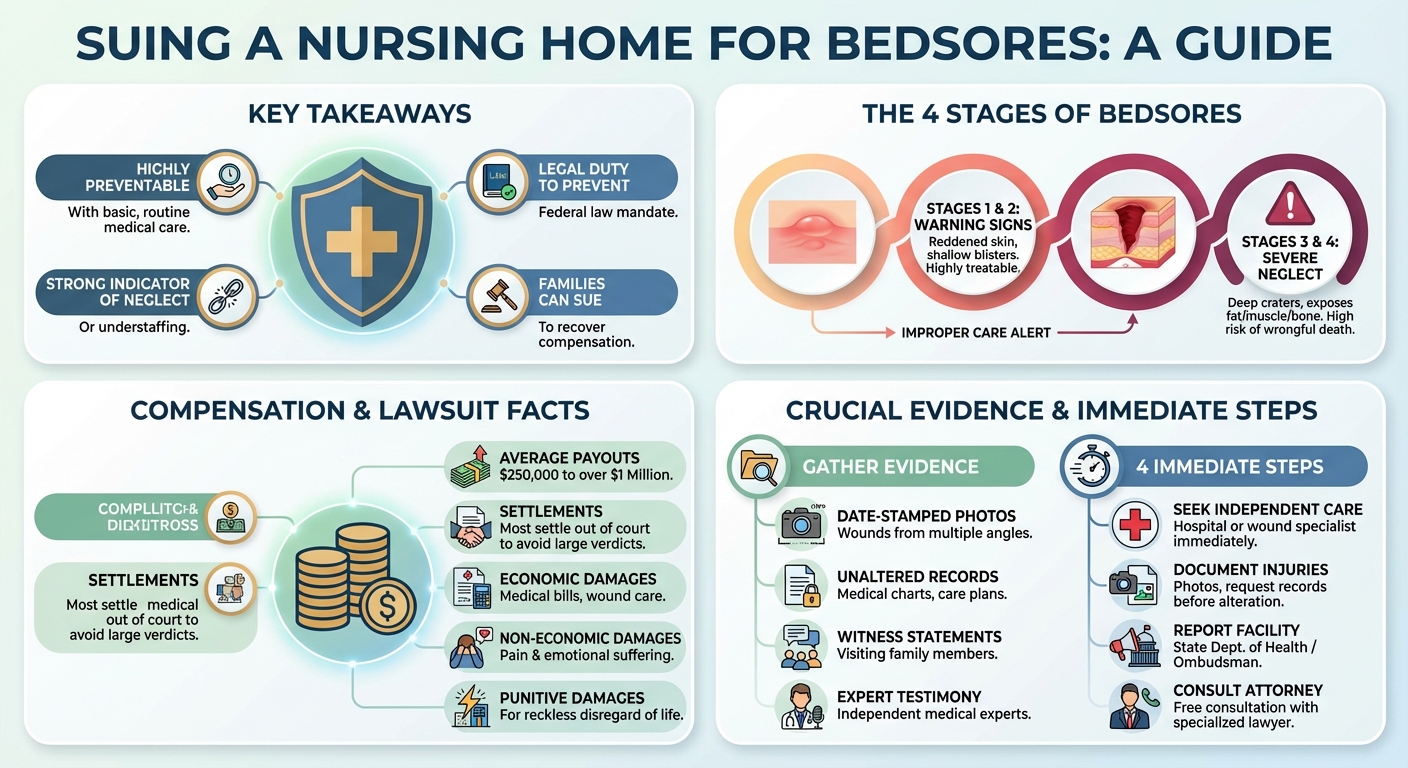
Yes, you can sue a nursing home for bedsores if the wounds resulted from neglect or poor care. Because bedsores are highly preventable, their presence often indicates a breach in the facility’s duty of care. Families can file a lawsuit to recover compensation for medical bills, pain, and suffering.
Can You Sue a Nursing Home for Bed Sores? The Short Answer
Yes, you can sue a nursing home for bedsores if the wounds developed or worsened due to the facility’s negligence. Because bedsores (also known as pressure ulcers) are highly preventable with basic medical care, their presence is a strong indicator that a facility has failed to meet its legal obligations to a resident.
Why Bedsores Are Often Considered Medical Malpractice or Neglect
Bedsores occur when prolonged pressure cuts off blood supply to the skin, typically because a patient with limited mobility is left in the same position for too long. In a clinical setting, preventing these wounds is a fundamental standard of care. When a nursing home fails to turn and reposition a resident, keep them clean and dry, or provide adequate nutrition, the resulting bedsores are often classified as medical malpractice or elder neglect.
When You Have Legal Grounds to File a Claim
You have legal grounds to file a claim when you can demonstrate that the nursing home breached its duty of care. This means proving that the staff failed to follow a resident’s care plan, ignored signs of skin breakdown, or lacked the necessary staffing to provide routine repositioning, directly resulting in the resident’s injuries.
Are nursing homes responsible for bed sores?
Yes, nursing homes are legally responsible for bed sores if they fail to provide adequate care. Because pressure ulcers are highly preventable with routine repositioning and proper hygiene, their development is a strong indicator of facility negligence, understaffing, or a direct violation of federal care standards.
The Legal Duty of Care in Assisted Living Facilities
When a nursing home accepts a resident, they assume a legal duty of care. This requires them to assess the resident’s risk for skin breakdown upon admission and implement a customized care plan. Failing to execute this plan makes the facility legally liable for any resulting harm.
How Understaffing and Neglect Lead to Pressure Ulcers
Understaffing is the leading cause of nursing home neglect. When there are not enough nurses or aides on shift, time-consuming preventative tasks—like turning bedbound residents every two hours, changing soiled linens, and assisting with hydration—are frequently skipped. This systemic neglect creates the perfect environment for pressure ulcers to form rapidly.
Federal Regulations on Bed Sore Prevention
The federal Nursing Home Reform Act mandates that facilities must ensure a resident who enters without pressure sores does not develop them unless their clinical condition makes it unavoidable. Facilities are also required to provide necessary treatment to promote healing and prevent infection for any existing wounds.
Proving Negligence: The 4 Stages of Bedsores
To win a lawsuit, your legal team must prove the severity of the neglect. The medical staging of the bedsore plays a crucial role in establishing how long the neglect occurred and the extent of the facility’s liability.
Stages 1 and 2: Early Warning Signs of Improper Care
Stage 1 bedsores appear as reddened, unbroken skin that does not turn pale when pressed. Stage 2 involves a shallow open ulcer or blister. While these early stages are highly treatable, they are clear warning signs of improper care. If staff fail to document and treat these early signs, it establishes a timeline of negligence.
Stages 3 and 4: Severe Neglect and Wrongful Death Risks
Stage 3 bedsores are deep craters that extend into the fat layer, while Stage 4 ulcers expose muscle, tendon, or bone. Reaching these advanced stages almost always indicates prolonged, severe neglect. Stage 4 bedsores carry a massive risk of life-threatening complications like sepsis and bone infections (osteomyelitis), frequently leading to wrongful death lawsuits.
Key Evidence Needed to Prove Your Case
Building a strong case requires concrete evidence. This includes the resident’s medical records and care logs, photographs of the wounds over time, witness statements from visiting family members, and expert testimony from medical professionals who can confirm the wounds were preventable.
What is the average payout for a bedsore lawsuit?
The average payout for a bedsore lawsuit typically ranges from $250,000 to over $1 million, depending on the severity of the injury. Cases involving Stage 4 bedsores, severe infections like sepsis, or wrongful death generally result in the highest settlements due to the extreme negligence involved.
Factors That Influence Settlement Amounts
No two cases are exactly alike. Settlement amounts are influenced by the stage of the bedsore, the cost of specialized medical interventions (like wound vacs or debridement surgery), the resident’s age and overall health, and the degree of the facility’s negligence. Egregious conduct, such as falsifying medical records, can significantly increase the case value.
Out-of-Court Settlements vs. Trial Verdicts
Most bedsore lawsuits are resolved through out-of-court settlements. Settlements offer families guaranteed compensation and a faster resolution without the emotional toll of a trial. However, if a nursing home refuses to offer a fair settlement, taking the case to trial can sometimes result in much larger jury verdicts, especially if punitive damages are awarded.
How much compensation for bed sores?
Compensation for bed sores depends on the specific damages incurred. Victims can typically recover economic damages for medical bills, non-economic damages for physical pain and emotional suffering, and occasionally punitive damages if the nursing home’s conduct was intentionally harmful or grossly negligent.
Economic Damages: Medical Bills and Wound Care
Economic damages reimburse the family for out-of-pocket financial losses. This includes the cost of hospital transfers, surgical debridement, specialized mattresses, antibiotics, and any ongoing medical care required to treat the bedsore and its complications.
Non-Economic Damages: Pain, Suffering, and Loss of Quality of Life
Bedsores are excruciatingly painful. Non-economic damages compensate the resident for this physical agony, as well as the emotional distress, loss of dignity, and diminished quality of life caused by the neglect.
Punitive Damages in Cases of Gross Negligence
In rare cases where a nursing home’s actions go beyond simple negligence and cross into malicious or reckless disregard for human life—such as intentionally hiding a severe wound from a doctor—a judge or jury may award punitive damages to punish the facility and deter future misconduct.
What are the odds of winning a lawsuit against a nursing home?
The odds of winning a lawsuit against a nursing home for bedsores are generally favorable if you have strong medical evidence. Because advanced bedsores are widely recognized as “never events” in healthcare, facilities frequently choose to settle out of court rather than face a sympathetic jury.
Why Nursing Homes Frequently Settle Bedsore Claims
Nursing homes and their insurance companies know that defending a Stage 3 or Stage 4 bedsore case in front of a jury is incredibly difficult. Graphic photos of the wounds and clear evidence of understaffing often result in massive jury verdicts, making quiet, out-of-court settlements the preferred route for corporate defendants.
Common Defenses Used by Nursing Homes (And How to Beat Them)
Facilities will often argue that the bedsore was “clinically unavoidable” due to the resident’s age, pre-existing conditions like diabetes, or poor circulation. An experienced attorney beats these defenses by using medical experts to prove that regardless of the resident’s health, proper turning schedules and preventative care would have stopped the wound from forming or worsening.
The Importance of Hiring a Specialized Abuse Attorney
Nursing home litigation is highly complex. Hiring an attorney who specializes in elder abuse ensures that critical evidence is preserved before it “disappears.” A specialized lawyer knows how to navigate corporate nursing home structures, subpoena staffing records, and counter the aggressive tactics used by defense insurance adjusters.
Steps to Take if Your Loved One Has Bedsores
If you discover that a family member has developed a bedsore in a care facility, you must act quickly to protect their health and their legal rights.
1. Seek Independent Medical Attention Immediately
Do not rely solely on the nursing home’s staff to treat a severe bedsore. Demand that your loved one be evaluated by an independent wound care specialist or transferred to a hospital if the wound is open, infected, or foul-smelling.
2. Document the Wounds and Request Medical Records
Take clear, date-stamped photographs of the bedsore from multiple angles. Request a complete copy of your loved one’s medical records, care plans, and daily charting logs immediately, before the facility has a chance to alter them.
3. Report the Facility to State Authorities
File a formal complaint with your state’s Department of Health or local Long-Term Care Ombudsman. An official state investigation can result in citations against the facility, which serves as powerful evidence in a civil lawsuit.
4. Schedule a Free Legal Consultation
Contact a nursing home abuse lawyer as soon as possible. Most attorneys offer free, confidential consultations and work on a contingency fee basis, meaning you pay nothing out of pocket unless they win your case.