

Table of contents
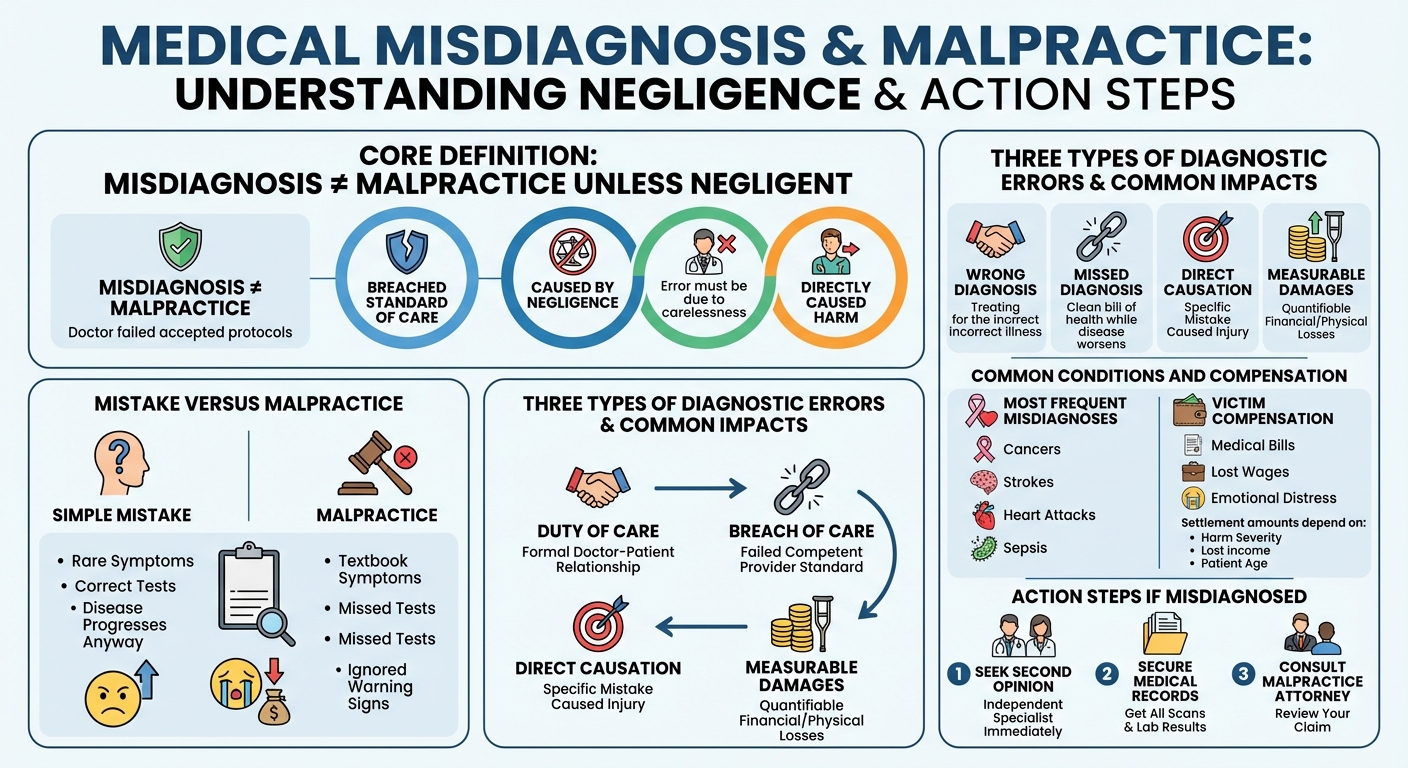
A misdiagnosis is considered medical malpractice only if it is the result of negligence. If a competent doctor in the same specialty would have made the correct diagnosis under similar circumstances, and the incorrect diagnosis directly caused you measurable harm, you likely have grounds for a lawsuit.
Is a Misdiagnosis Considered Medical Malpractice?
Receiving an incorrect medical diagnosis is terrifying, but a diagnostic error alone does not automatically give you the right to sue. A misdiagnosis is considered medical malpractice only when it stems from a healthcare provider’s negligence and directly causes harm to the patient.
The Short Answer: Negligence is the Key
Medicine is an imperfect science. Doctors are not legally required to be right 100% of the time. However, they are legally required to follow the accepted medical standard of care. If a doctor fails to order standard tests, ignores obvious symptoms, or misinterprets lab results that a competent doctor would have caught, that negligence forms the basis of a malpractice claim.
Simple Mistake vs. Medical Malpractice
Understanding the difference between an unfortunate medical reality and actionable malpractice is crucial.
| Scenario | Simple Mistake (Not Malpractice) | Medical Malpractice |
|---|---|---|
| Symptoms | Patient presents rare, atypical symptoms that mimic a minor illness. | Patient presents classic, textbook symptoms of a serious condition. |
| Testing | Doctor orders all appropriate tests, but results are inconclusive. | Doctor fails to order standard diagnostic tests for the presented symptoms. |
| Outcome | The disease progresses despite the doctor doing everything right. | The disease progresses because the doctor ignored obvious warning signs. |
The 4 Elements Required to Prove Misdiagnosis Malpractice
To win a medical malpractice lawsuit based on a diagnostic error, you and your attorney must prove four distinct legal elements.
1. A Doctor-Patient Relationship Existed (Duty of Care)
You must prove that you hired the doctor and the doctor agreed to treat you. This establishes that the physician owed you a legal duty of care. Casual advice from a doctor at a social event does not count.
2. The Doctor Breached the Standard of Care
This is the crux of a misdiagnosis claim. You must prove that the doctor failed to act as a reasonably competent healthcare provider would have under similar circumstances. This is typically established through the testimony of expert medical witnesses in the same specialty.
3. The Breach Directly Caused Injury
It is not enough that the doctor made a mistake; that mistake must have caused you actual harm. If a doctor misdiagnoses you, but corrects the error a day later before any harm is done, there is no malpractice case.
4. The Patient Suffered Measurable Damages
You must have quantifiable damages resulting from the delayed or incorrect diagnosis. This includes additional medical bills, lost earning capacity, physical pain, and emotional suffering.
Types of Diagnostic Errors That Lead to Lawsuits
Diagnostic errors generally fall into three primary categories, each carrying severe consequences for the patient.
Wrong Diagnosis (Incorrect Diagnosis)
This occurs when a doctor diagnoses a patient with the wrong illness. The patient may undergo unnecessary, painful, and expensive treatments for a disease they do not have, while their actual condition goes untreated and worsens.
Missed Diagnosis (Failure to Diagnose)
A missed diagnosis happens when a doctor gives the patient a clean bill of health, completely failing to identify an underlying disease or condition. The patient is sent home, allowing the illness to progress unchecked.
Delayed Diagnosis
In a delayed diagnosis, the doctor eventually reaches the correct conclusion, but takes an unreasonably long time to do so. In cases like cancer or stroke, a delay of even a few weeks or hours can drastically reduce the patient’s chances of survival.
What is the most common misdiagnosed condition?
The most common misdiagnosed conditions typically involve serious diseases with overlapping symptoms. Research consistently shows that cancers (especially breast, lung, and colorectal), vascular events like heart attacks and strokes, and severe infections such as sepsis or meningitis are the most frequently misdiagnosed conditions leading to malpractice claims.
Can you sue a doctor who misdiagnosed you?
Yes, you can sue a doctor who misdiagnosed you, provided you can prove their diagnostic error was caused by negligence. You must demonstrate that a reasonably competent physician would have diagnosed you correctly and that the doctor’s failure to do so directly resulted in your injury.
Can you get compensation for misdiagnosis?
Yes, you can get compensation for a misdiagnosis if it qualifies as medical malpractice. Victims can recover financial damages for additional medical bills, lost wages, and out-of-pocket expenses, as well as non-economic damages for physical pain, emotional distress, and reduced quality of life caused by the error.
What is the average payout for misdiagnosis?
There is no single average payout for a misdiagnosis, as settlements vary widely based on the severity of the harm. Minor injuries might settle for tens of thousands, while cases involving permanent disability, severe illness progression, or wrongful death frequently result in multi-million dollar verdicts or settlements.
Factors That Influence Settlement Amounts
- Severity of the Harm: A misdiagnosis that leads to terminal cancer will yield a higher payout than one requiring a brief hospital stay.
- Loss of Income: If the error permanently prevents you from working, compensation will reflect your lifetime lost earning capacity.
- Age of the Patient: Younger patients often receive higher settlements due to the longer duration of expected future suffering and lost wages.
Economic vs. Non-Economic Damages
Payouts are divided into economic damages (quantifiable costs like medical bills and lost wages) and non-economic damages (subjective costs like pain, suffering, and loss of consortium). Some states place legal caps on non-economic damages.
Steps to Take If You Suspect a Medical Misdiagnosis
If you believe you or a loved one has been the victim of a diagnostic error, taking immediate action is critical to protecting your health and your legal rights.
Seek a Second Medical Opinion Immediately
Your health is the absolute priority. If your current treatment is not working or you doubt your doctor’s diagnosis, seek a second opinion from an independent specialist right away. Do not wait for your condition to worsen.
Secure Your Complete Medical Records
Request copies of all your medical records, including doctor’s notes, lab results, imaging scans, and prescription histories. These documents are the foundational evidence of any medical malpractice claim.
Consult with a Medical Malpractice Attorney
Medical malpractice cases are notoriously complex and expensive to litigate. Consult with an experienced medical malpractice lawyer who can review your records, consult with medical experts, and determine if you have a viable claim for compensation.