
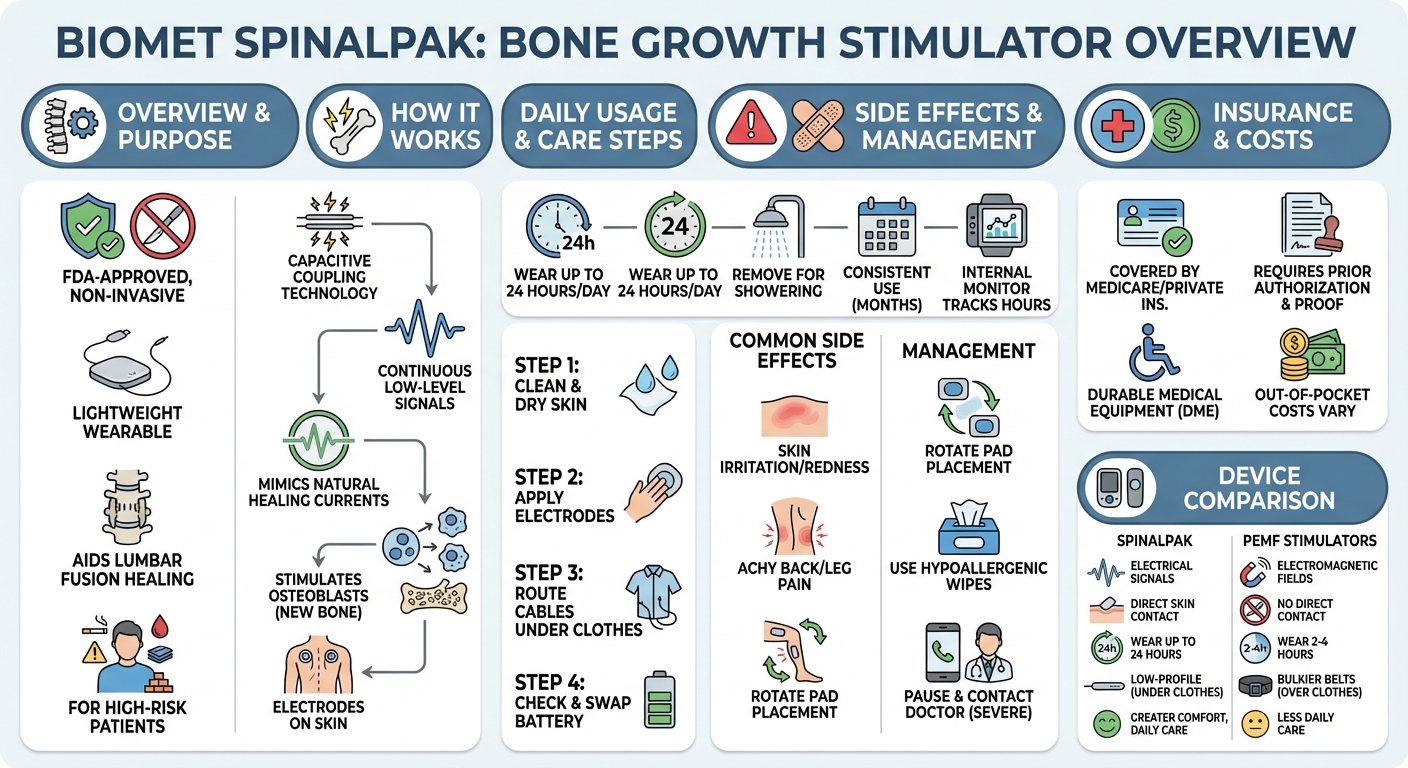
The Biomet SpinalPak is a non-invasive, FDA-approved bone growth stimulator used to aid healing after primary lumbar spinal fusion surgery. It is a lightweight, battery-powered device worn on the body that delivers a low-level electrical signal to the spine to promote bone formation and increase fusion success rates.
What is the Biomet SpinalPak?
The Biomet SpinalPak is a non-invasive, battery-powered spine fusion stimulator system designed to aid in bone healing. It is a lightweight, wearable device that patients use during their recovery period following back surgery to increase the likelihood of a successful fusion.
As a Class III FDA-approved medical device, the SpinalPak is specifically indicated as an adjunct electrical treatment to primary lumbar spinal fusion surgery for one or two levels. Surgeons typically prescribe this device for patients who have a higher risk of pseudoarthrosis (failed fusion) due to factors like smoking, diabetes, or multi-level procedures.
How does Biomet SpinalPak work?
The Biomet SpinalPak works by delivering a continuous, low-level electrical treatment signal directly to the surgical site. This electrical stimulus mimics the body’s natural healing currents to promote osteogenesis (bone formation). By placing electrodes specifically over the fusion area, the device encourages faster and more reliable bone growth.
The Science of Electrical Bone Growth Stimulation
Bone tissue naturally generates weak electrical fields when subjected to mechanical stress, a process essential for bone remodeling. The SpinalPak replicates this process using capacitive coupling technology. The electrical signal stimulates cellular pathways, encouraging osteoblasts (bone-building cells) to multiply and mineralize the fusion site.
Electrode Placement
Proper placement of the electrodes is critical for optimal healing. The electrodes are applied directly to the skin on the patient’s back, flanking the surgical incision. The device then sends the targeted electrical signal through the tissue and into the spine.
How many hours a day do you wear a bone growth stimulator?
Most surgeons recommend wearing a bone growth stimulator, like the Biomet SpinalPak, for up to 24 hours a day, removing it only to shower. However, exact treatment times vary by device and prescription. Consistent daily use over several months is critical for achieving a successful spinal fusion.
Tips for Comfortable Daily Use
- Skin Care: Clean and dry your back thoroughly before applying new electrodes to ensure proper adhesion and minimize irritation.
- Cable Management: Route the cables under your clothing to prevent snagging during daily activities or while sleeping.
- Battery Checks: Swap out the battery packs as directed by your device manual to ensure your treatment is never interrupted.
Tracking Your Progress
The Biomet SpinalPak features an internal compliance monitor that tracks how many hours the device is actively delivering therapy. Your doctor will review this data during follow-up appointments to ensure you are meeting your daily usage goals.
What are the side effects of using a bone stimulator?
The most common side effects of using a bone stimulator are mild skin irritation, redness, or rashes at the electrode placement site. Some patients also report an achy back or leg pain during prolonged use. If you experience severe discomfort or blistering, pause treatment and contact your healthcare provider immediately.
Managing Mild Reactions
Skin irritation is usually caused by the adhesive on the electrodes rather than the electrical current itself. Rotating the exact placement of the pads slightly (while keeping them over the fusion site) and using hypoallergenic skin prep wipes can help mitigate this issue.
Understanding Back and Leg Pain
According to FDA MAUDE database reports, a small number of patients experience an achy back or radiating leg pain that intensifies the longer the stimulator is worn. This can sometimes be related to the healing process itself or muscle fatigue. Always report new or worsening pain to your surgical team.
Will insurance pay for a bone stimulator?
Yes, Medicare and most private insurance companies will pay for a bone stimulator if it is deemed medically necessary. Coverage typically requires prior authorization and documentation from your surgeon proving you are at a high risk for a non-fusion, such as having a multi-level fusion or a previously failed surgery.
Required Documentation for Prior Authorization
To secure coverage for the Biomet SpinalPak, your surgeon’s office will need to submit medical records demonstrating:
- The specific type and level of lumbar spinal fusion performed.
- Patient risk factors for failed fusion (e.g., obesity, smoking, diabetes, steroid use).
- Evidence of a previously failed fusion, if applicable.
Out-of-Pocket Costs
Even with insurance approval, you may still be responsible for deductibles, copays, or coinsurance. Because bone stimulators are classified as Durable Medical Equipment (DME), your out-of-pocket cost will depend on your specific DME benefits. The device manufacturer or distributor will usually provide a cost estimate before dispensing the unit.
Biomet SpinalPak vs. Other Bone Growth Stimulators
While the Biomet SpinalPak is a highly effective option, there are other bone growth stimulators on the market. Understanding the differences can help you and your doctor choose the right device for your recovery.
| Feature | Biomet SpinalPak (Capacitive Coupling) | PEMF Devices (e.g., Orthofix) |
|---|---|---|
| Technology | Electrical signal via skin electrodes | Pulsed Electromagnetic Field |
| Daily Wear Time | Often up to 24 hours/day | Typically 2 to 4 hours/day |
| Form Factor | Small battery pack with wires/electrodes | Larger belt or brace worn over clothing |
| Skin Contact | Direct contact (adhesive electrodes) | No direct skin contact required |
The primary advantage of the Biomet SpinalPak is its incredibly lightweight, low-profile design, which allows patients to wear it continuously under clothing without the bulk of a heavy magnetic belt. However, the requirement for direct skin contact and longer wear times means patients must be diligent about skin care and electrode management.
 Call (713) 747-7777