
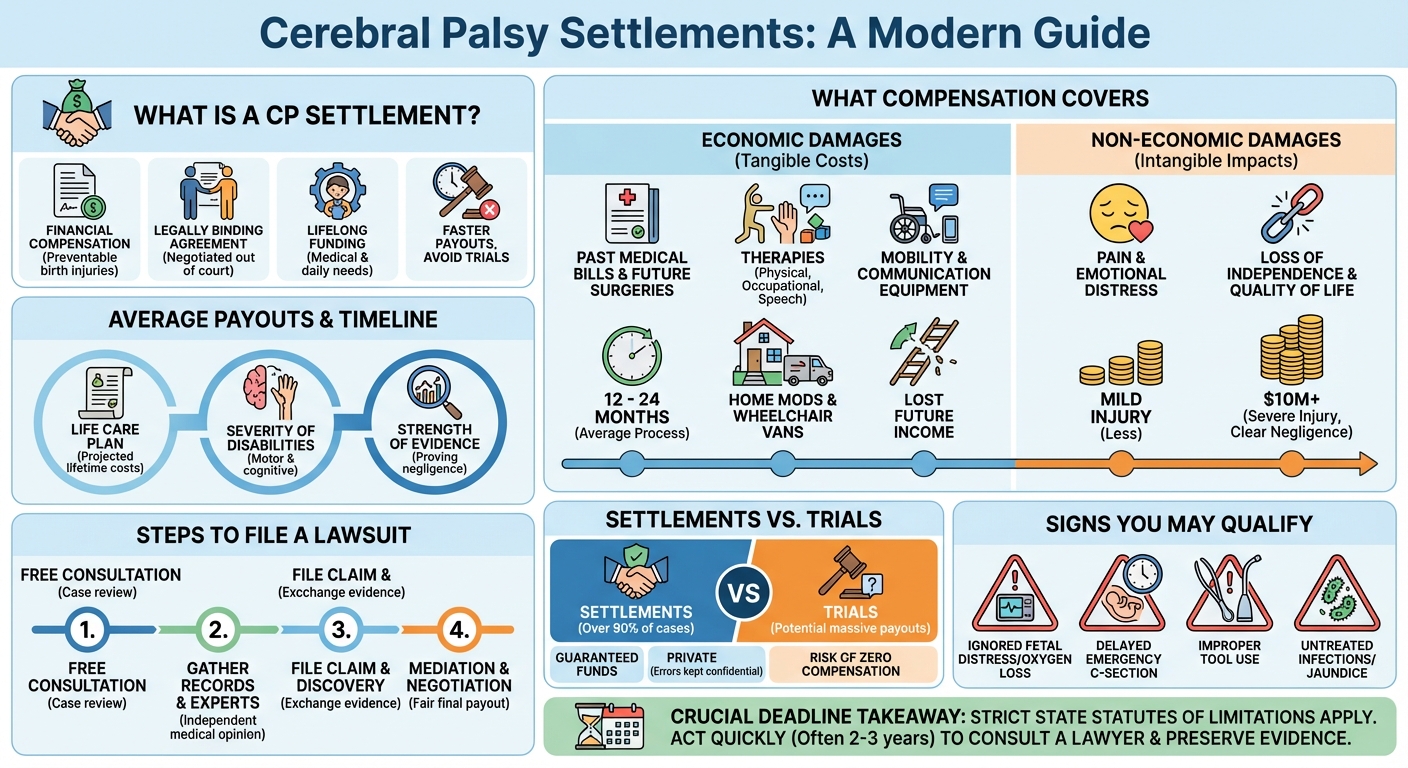
A cerebral palsy settlement is financial compensation awarded to families whose child developed the condition due to preventable medical negligence during birth. These payouts, which average between $1 million and $5 million, are negotiated out of court with the responsible doctors or hospitals. Settlements provide critical funding for a child’s lifetime medical care, physical therapy, specialized equipment, and lost future earning capacity, while helping families avoid the unpredictable risks of a jury trial.
What is a Cerebral Palsy Settlement?
A cerebral palsy settlement is a legally binding financial agreement between the family of a child diagnosed with cerebral palsy (CP) and the medical professionals or hospital responsible for the child’s birth injury. Instead of taking the case to trial, the at-fault party’s insurance company agrees to pay a negotiated sum to resolve the medical malpractice claim.
Because cerebral palsy often requires lifelong medical intervention, these settlements are designed to secure the child’s future. By settling out of court, families can access necessary funds faster and avoid the unpredictable nature of a jury trial.
Average Cerebral Palsy Settlement Amounts
National Averages and Payout Ranges
While every case is unique, the average cerebral palsy settlement in the United States typically falls between $1 million and $5 million. These figures reflect the immense financial burden of raising a child with severe motor and cognitive disabilities.
Payouts can occasionally be lower if the injury is mild, or significantly higher—sometimes exceeding $10 million—if the child requires around-the-clock care and the evidence of medical negligence is undeniable.
Notable Cerebral Palsy Verdicts and Settlements
To understand potential case values, here are examples of notable settlements and jury verdicts awarded in recent years:
| Case Type | Amount | Reason for Claim |
|---|---|---|
| Settlement | $4.9 Million | Failure to properly treat signs of fetal distress during labor. |
| Jury Verdict | $14.5 Million | Compensation for past/future pain, suffering, and diminished earning capacity. |
| Jury Verdict | $18 Million | Negligent medical staff ignored continuous fetal monitor alarms. |
| Jury Verdict | $130 Million | Decade-long legal battle over severe medical negligence in New York. |
Key Factors That Determine Settlement Value
The Lifetime Cost of Care (Life Care Plan)
The most significant driver of a CP settlement is the Life Care Plan. Medical and financial experts collaborate to project the exact cost of the child’s needs over their entire expected lifespan. This comprehensive document accounts for future surgeries, daily medications, specialized schooling, and in-home nursing care.
Severity of the Birth Injury and Disability
Cerebral palsy is an umbrella term for various movement disorders. A child with mild spastic diplegia who can walk independently will have a lower projected cost of care than a child with severe spastic quadriplegia who requires a feeding tube and a motorized wheelchair. The greater the disability, the higher the settlement value.
Strength of Evidence for Medical Negligence
Hospitals are more likely to offer a maximum settlement if the evidence of malpractice is overwhelming. If medical records clearly show that doctors ignored a prolapsed umbilical cord, delayed an emergency C-section, or misused delivery instruments, the defense will usually settle quickly to avoid a massive jury verdict.
What Does a Cerebral Palsy Settlement Cover?
Economic Damages: Medical Bills, Therapy, and Equipment
Economic damages reimburse families for direct, quantifiable financial losses. A settlement typically covers:
- Medical Expenses: Past hospital bills and future surgeries (e.g., orthopedic procedures).
- Therapies: Physical, occupational, and speech therapy.
- Mobility Equipment: Wheelchairs, braces, and communication devices.
- Accommodations: Wheelchair-accessible vans and home modifications (ramps, widened doorways).
- Lost Earning Capacity: Compensation for the income the child will be unable to earn as an adult.
Non-Economic Damages: Pain, Suffering, and Quality of Life
Non-economic damages compensate the child for intangible losses. This includes physical pain, emotional distress, loss of independence, and a diminished overall quality of life. Some states place legislative caps on how much can be awarded for non-economic damages in medical malpractice cases.
Settlements vs. Jury Verdicts: Understanding the Difference
Why Most Cerebral Palsy Cases Settle Out of Court
The vast majority of birth injury lawsuits—often estimated at over 90%—end in a settlement rather than a trial. Settlements offer a guaranteed payout, keep the details of the medical error private, and resolve the case much faster. For families, it removes the emotional toll of testifying in court and eliminates the risk of walking away with nothing.
The Risks and Rewards of Going to Trial
Taking a case to trial can result in a massive jury verdict, sometimes tens of millions of dollars higher than the hospital’s best settlement offer. However, trials are inherently risky. Juries can be unpredictable, and if the defense wins, the family receives zero compensation. Furthermore, even if a family wins at trial, the hospital will likely appeal the decision, delaying the payout for years.
How to File a Cerebral Palsy Lawsuit
Step 1: Free Legal Consultation and Case Review
The process begins by contacting a specialized birth injury law firm. Attorneys offer free, confidential consultations to listen to your story, review basic facts, and determine if you have a viable medical malpractice claim.
Step 2: Gathering Medical Records and Expert Testimony
If the lawyer accepts your case, their team will collect all maternal and infant medical records. They will hire independent medical experts—such as obstetricians and pediatric neurologists—to review the files and establish exactly how the standard of care was breached.
Step 3: Filing the Claim and the Discovery Phase
Your attorney will officially file the lawsuit against the responsible parties. During the “discovery” phase, both sides exchange evidence, take depositions under oath, and build their respective arguments.
Step 4: Mediation and Settlement Negotiations
Before a trial date arrives, both parties usually enter mediation. A neutral third-party mediator helps the family’s legal team and the hospital’s insurance adjusters negotiate a fair settlement amount. If an agreement is reached, the case is closed.
How Long Does It Take to Reach a Settlement?
A cerebral palsy lawsuit is highly complex. On average, it takes between 12 to 24 months to reach a settlement. The timeline depends heavily on the severity of the injury, how long it takes to accurately project the child’s future medical needs, and whether the hospital disputes liability.
Do You Qualify for a Cerebral Palsy Settlement?
Common Signs of Medical Malpractice During Birth
You may qualify for a settlement if your child’s CP was caused by preventable medical errors. Common red flags include:
- Failure to detect or respond to fetal distress (lack of oxygen).
- Unreasonable delays in ordering an emergency Cesarean section.
- Improper or forceful use of vacuum extractors or forceps.
- Failure to treat maternal infections or infant jaundice.
Statute of Limitations: When to File Your Claim
Every state has a strict legal deadline known as the statute of limitations. While many states “toll” or pause the clock for minors until they turn 18, the parents’ window to sue for medical expenses is often much shorter (typically 2 to 3 years from the date of injury). It is critical to consult an attorney immediately to preserve evidence and protect your legal rights.
Get a Free Cerebral Palsy Case Evaluation
If you suspect your child’s cerebral palsy was the result of a medical mistake during labor or delivery, you do not have to shoulder the financial burden alone. Contact an experienced birth injury attorney today for a free, no-obligation case evaluation to explore your legal options and fight for the compensation your family deserves.
 Call (713) 747-7777