
Table of contents
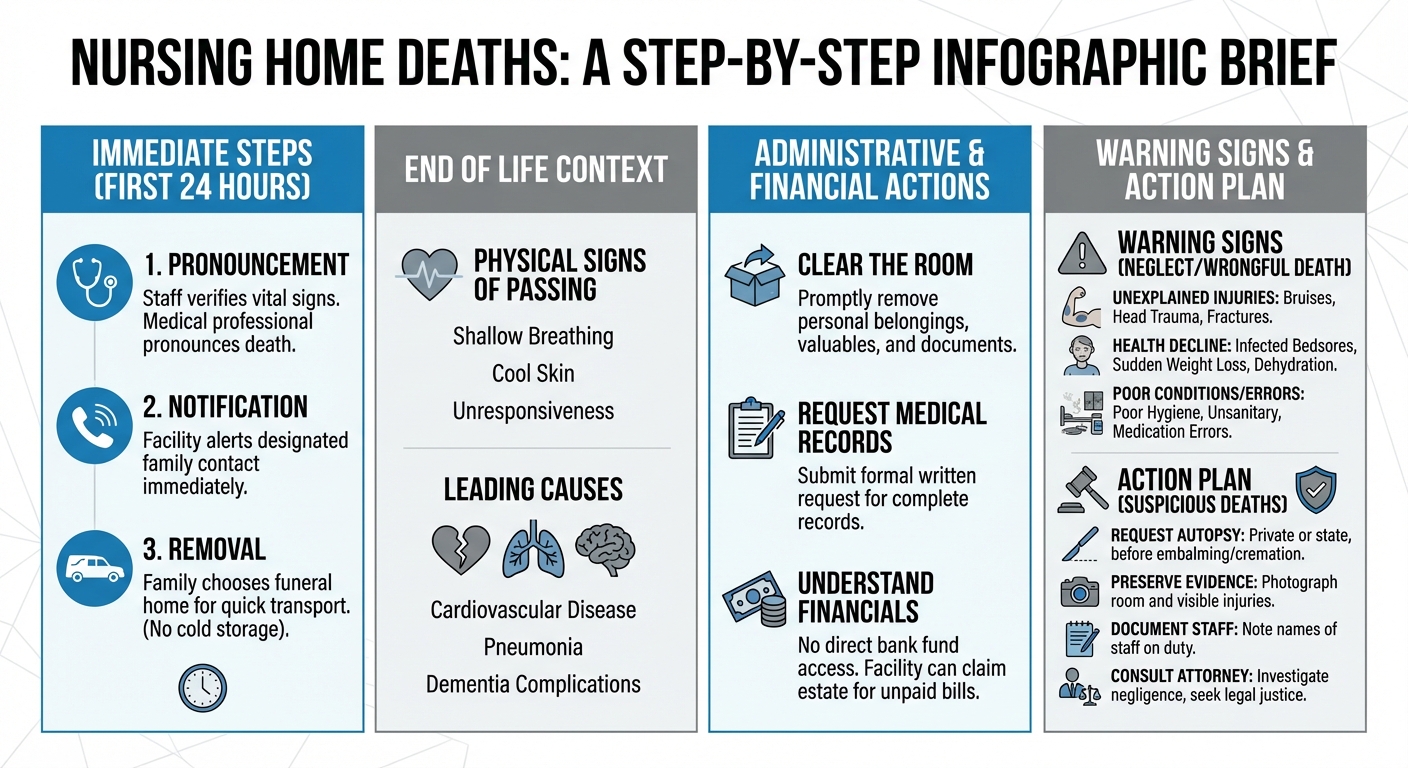
When a death occurs in a nursing home, staff must immediately notify the family and a medical professional to officially pronounce the death. Because facilities cannot keep remains on-site, families must quickly contact a funeral home to arrange for the prompt removal and transportation of the body.
What Happens When Someone Dies in a Nursing Home? A Step-by-Step Guide
Losing a loved one in a long-term care facility is a deeply emotional experience. Amidst the grief, families are often forced to navigate a rapid sequence of administrative, medical, and legal procedures. Understanding exactly what happens when someone dies in a nursing home can help you protect your loved one’s dignity and legal rights.
The Immediate Aftermath: Steps to Take in the First 24 Hours
What happens in the first 30 minutes of death?
In the first 30 minutes of death, the body begins to relax completely, a process known as primary flaccidity. Breathing and heartbeat stop, the skin pales, and body temperature starts to drop. Nursing home staff will typically verify these vital signs and prepare to contact the family and a physician.
Official Pronouncement and Family Notification
Once vital signs cease, a registered nurse or attending physician must officially pronounce the resident dead. The facility is legally required to notify the designated emergency contact immediately. If you are the primary contact, you will receive a phone call detailing the time of death and the immediate next steps.
Removing the Body and Contacting a Funeral Home
Unlike hospitals, nursing homes rarely have morgues or cold storage facilities. Consequently, the body must be removed from the premises as soon as possible. Families must quickly select a funeral home or cremation service. Once chosen, the nursing home staff will coordinate with the funeral director to arrange prompt transport.
Understanding the Medical and Physical Process
What happens at the end of life?
At the end of life, a person’s body gradually shuts down. You may notice changes in breathing patterns, such as long pauses or shallow breaths, decreased appetite, and increased sleepiness. The skin may become cool to the touch, and the individual often becomes unresponsive as their organs cease functioning.
What is the most common cause of death in nursing homes?
The most common cause of death in nursing homes is cardiovascular disease, including heart attacks and strokes. Other frequent causes include respiratory infections like pneumonia, complications from Alzheimer’s disease or severe dementia, and physical decline associated with advanced age and multiple chronic medical conditions.
Administrative and Financial Next Steps
Securing Personal Belongings and Medical Records
After the body is transferred, families should promptly clear out the resident’s room. Be sure to collect all personal items, valuables, and financial documents. Crucially, submit a formal written request for your loved one’s complete medical records. These documents are vital if you later suspect substandard care.
Can a nursing home take money from your bank account?
A nursing home cannot legally take money directly from a deceased resident’s personal bank account without authorization. However, if there are unpaid facility bills, the nursing home can file a claim against the deceased’s estate during the probate process to seek payment for outstanding debts.
Recognizing Red Flags: When Is a Death Considered Wrongful?
While many nursing home deaths are natural, some result from negligence or abuse. It is essential to remain vigilant and look for warning signs.
Signs of Nursing Home Neglect or Abuse
- Unexplained bruises, fractures, or head injuries
- Advanced bedsores (decubitus ulcers) that became infected
- Sudden, unexplained weight loss, malnutrition, or dehydration
- Medication errors, including overdoses or missed doses
- Poor hygiene or unsanitary living conditions
Why You Should Request an Autopsy for Unexpected Deaths
If a death is sudden or the circumstances seem suspicious, request a private or state-ordered autopsy before the body is embalmed or cremated. Nursing homes rarely suggest autopsies, but this medical examination is the most definitive way to uncover hidden injuries, infections, or fatal medication errors.
Preserving Evidence for a Potential Investigation
If you suspect foul play, act quickly to preserve evidence. Take photographs of the resident’s room, document any visible injuries on the body before transport, write down the names of the staff on duty, and secure all medical charts and incident reports.
Legal Options and Seeking Justice for Your Loved One
The Difference Between Natural Causes and Wrongful Death
Understanding the distinction between a natural passing and a wrongful death is critical for families considering legal action.
| Scenario | Characteristics | Legal Liability |
|---|---|---|
| Natural Death | Expected decline due to age, terminal illness, or unpreventable medical events. | None. The facility provided appropriate standard of care. |
| Wrongful Death | Preventable death caused by staff negligence, abuse, understaffing, or medical errors. | High. The facility can be sued for damages and held accountable. |
When to Consult a Nursing Home Negligence Attorney
If your loved one’s death was accompanied by red flags like severe bedsores, unmonitored falls, or sudden infections, it is wise to consult a nursing home negligence attorney. A lawyer can help subpoena records, consult medical experts, and determine if the facility violated standard care protocols, ensuring your family receives the justice you deserve.