
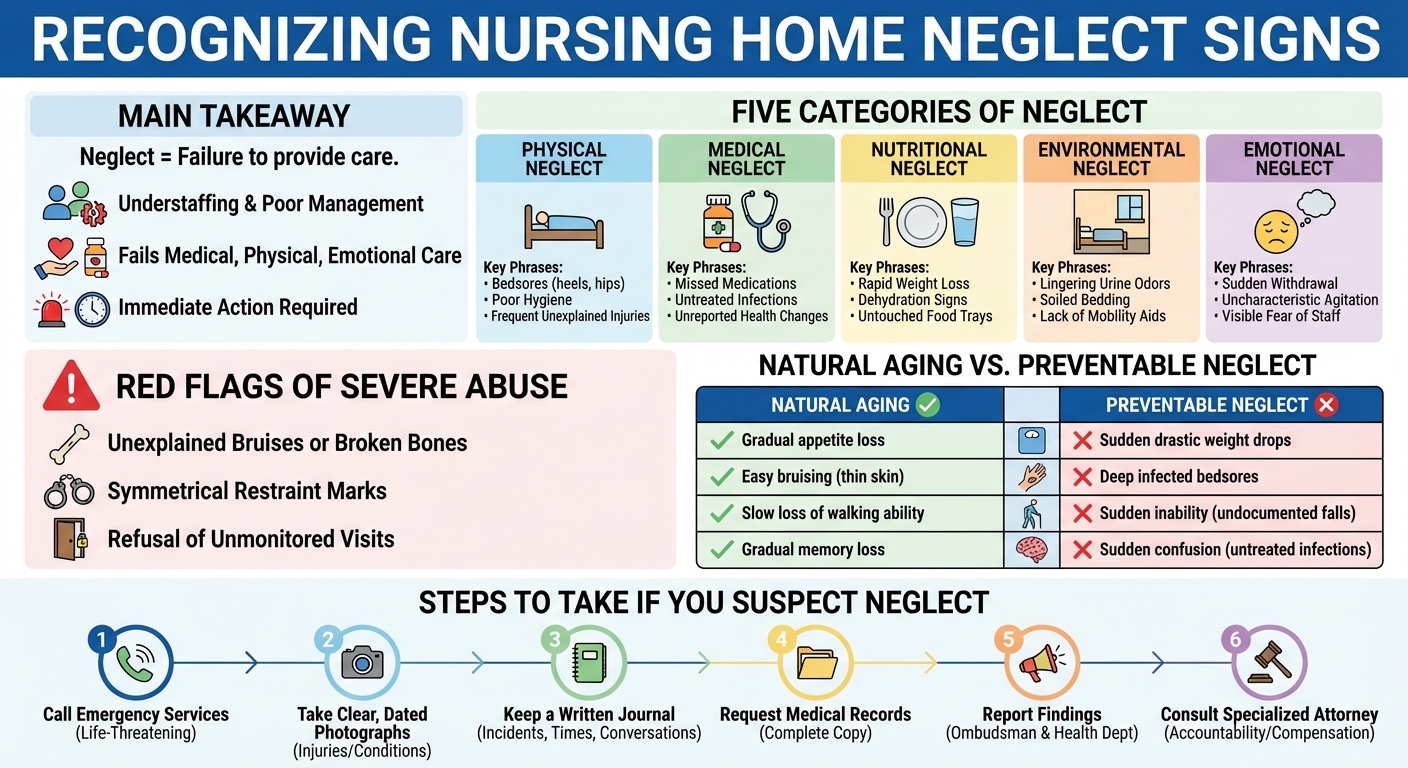
The most common nursing home neglect signs include unexplained weight loss, poor personal hygiene, untreated bedsores, and frequent infections. Other warning signs involve unsanitary living conditions, soiled bedding, sudden behavioral changes like withdrawal, and medication errors. If you notice these red flags, immediate action is required.
Recognizing Nursing Home Neglect Signs: A Guide for Families
Placing a loved one in a long-term care facility is one of the most difficult decisions a family can make. You trust that the staff will provide compassionate, professional, and attentive care. Unfortunately, understaffing and poor management often lead to substandard conditions. Recognizing nursing home neglect signs early is critical to protecting your family member from irreversible physical and emotional harm.
What counts as patient neglect?
Patient neglect counts as any failure by a caregiver or facility to provide the standard level of medical, physical, or emotional care required to keep a resident safe. This includes ignoring call bells, failing to provide nutritious meals, withholding medication, or leaving residents in unsanitary conditions that result in harm.
What is an example of negligence in a nursing home?
A common example of negligence in a nursing home is failing to regularly reposition a bedbound resident. If staff ignore the repositioning schedule, the resident can develop severe, life-threatening bedsores (pressure ulcers) that become infected. This demonstrates a clear breach of the facility’s basic duty of care.
The 5 Major Categories of Nursing Home Neglect Signs
Neglect is not always as obvious as physical abuse. It often happens slowly, manifesting in subtle changes that worsen over time. Families should monitor these five critical categories.
Physical Signs: Bedsores, Poor Hygiene, and Unexplained Injuries
Physical neglect occurs when staff fail to assist with basic daily living activities. Warning signs include:
- Bedsores (Pressure Ulcers): Often found on the heels, tailbone, or hips, these indicate a resident is not being moved.
- Poor Personal Hygiene: Unwashed hair, overgrown nails, or unbrushed teeth.
- Unexplained Injuries: Frequent falls, skin tears, or minor injuries that staff cannot adequately explain.
Medical Neglect: Medication Errors and Ignored Infections
When a facility fails to manage a resident’s healthcare needs, the consequences can be fatal. Look for:
- Missed doses of vital medications or incorrect prescriptions being administered.
- Untreated urinary tract infections (UTIs) or respiratory issues.
- Failure to report significant changes in the resident’s health to their primary doctor or family.
Nutritional Neglect: Sudden Weight Loss and Dehydration
Many residents require assistance with eating or drinking. If staff are too rushed, residents may suffer from malnutrition or dehydration. Signs include:
- Clothes fitting much looser than usual due to rapid, unexplained weight loss.
- Dry mouth, cracked lips, and sunken eyes indicating severe dehydration.
- Untouched food trays frequently left in the resident’s room.
Environmental Neglect: Unsanitary Conditions and Soiled Bedding
A resident’s living space reflects the overall quality of the facility. Environmental neglect compromises safety and dignity. Watch for:
- Urine or feces smells lingering in the hallways or the resident’s room.
- Soiled bed linens or adult diapers that have not been changed.
- Slippery floors, poor lighting, or lack of mobility aids like walkers or wheelchairs within reach.
Emotional & Behavioral Changes: Withdrawal and Fear of Staff
The psychological toll of being ignored can profoundly change a person’s demeanor. Emotional neglect signs include:
- Sudden depression, anxiety, or extreme withdrawal from social activities.
- Flinching or showing visible fear when certain staff members enter the room.
- Uncharacteristic agitation or crying spells.
What are the red flags of nursing home abuse?
The primary red flags of nursing home abuse include unexplained bruises, broken bones, or restraint marks. You may also notice sudden behavioral changes, such as flinching when staff approach, extreme withdrawal, or caregivers refusing to let family members visit the resident alone.
Normal Aging vs. Neglect: How to Tell the Difference
Nursing home administrators will often try to dismiss a family’s concerns by blaming a resident’s declining health on “normal aging” or underlying diseases. While it is true that elderly individuals become more fragile, certain conditions are highly preventable with proper care.
| Sign / Symptom | Natural Decline | Preventable Neglect |
|---|---|---|
| Weight Changes | Gradual loss of appetite over months or years. | Sudden, drastic weight drop within weeks; signs of dehydration. |
| Skin Condition | Thinning skin that bruises easily from light bumps. | Deep, infected bedsores or symmetrical bruises suggesting restraints. |
| Mobility | Slowly losing the ability to walk long distances. | Sudden inability to walk due to an undocumented fall or over-medication. |
| Mental State | Gradual memory loss associated with dementia. | Sudden lethargy, confusion from UTIs, or fearfulness of staff. |
What to Do If You Suspect Nursing Home Negligence
If you recognize any of these nursing home neglect signs, you must act quickly to protect your loved one’s health and legal rights.
Documenting the Evidence (Photos, Medical Records, Journals)
Start building a record immediately. Take clear, dated photographs of injuries, bedsores, or unsanitary room conditions. Keep a written journal of dates, times, and the names of staff members you speak with regarding your concerns. Request a complete copy of your loved one’s medical records from the facility.
Reporting to the State Ombudsman and Authorities
If your loved one is in immediate, life-threatening danger, call 911. Otherwise, report your findings to your state’s Long-Term Care Ombudsman program and the state department of health. They have the authority to investigate the facility and issue citations.
Consulting a Nursing Home Neglect Attorney
Once your loved one is safe, it is vital to hold the negligent facility accountable. A specialized attorney can help you navigate the legal system, uncover hidden facility records, and seek compensation for medical bills, pain, and suffering. If you are wondering about the financial aspects of a potential case, read our comprehensive guide on how much you can sue a nursing home for negligence to understand settlement amounts and legal expectations.
Frequently Asked Questions
What are the signs of a neglectful parent?
While our primary focus is elder care, signs of a neglectful parent generally include failing to provide a child with basic necessities like food, clean clothing, safe shelter, or medical care. This often manifests as chronic poor hygiene, malnourishment, or leaving young children unsupervised in dangerous situations.
 Call (713) 747-7777