

Table of contents
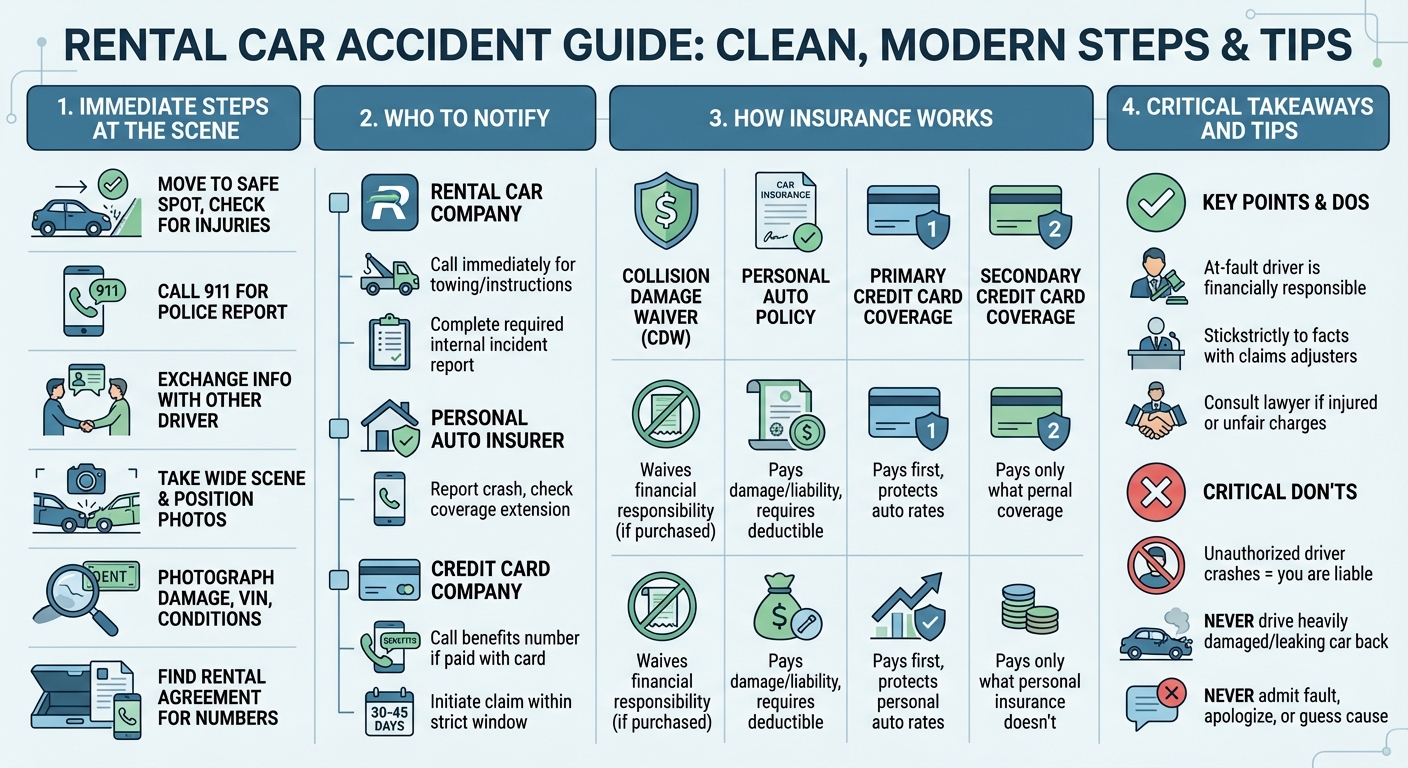
If you get into a rental car accident, first ensure everyone is safe and call 911 to obtain a police report. Next, document the scene with photos and exchange information. Finally, locate your rental agreement and immediately notify the rental company, your personal auto insurer, and your credit card company.
Immediate Steps to Take at the Scene of a Rental Car Accident
Getting into an accident is stressful, but crashing a rental car adds an extra layer of complexity. Knowing exactly what to do can protect your physical safety and shield you from massive out-of-pocket costs.
1. Ensure Safety and Call 911
Your immediate priority is health and safety. Move your vehicle to the shoulder if it is safe and operable. Check yourself and your passengers for injuries. Always call 911. Rental car companies and credit card insurers almost universally require an official police report to process a damage claim.
2. Exchange Information and Document the Scene
Treat this like any other car accident. Gather information from the other driver, including their name, phone number, insurance details, and license plate number. Next, document the scene extensively:
- Take wide shots of the entire crash scene and vehicle positions.
- Take close-up photos of the damage to the rental car and the other vehicle.
- Photograph the rental car’s license plate and VIN (Vehicle Identification Number).
- Capture images of any relevant road signs, skid marks, or weather conditions.
3. Locate the Rental Agreement in the Glovebox
Before you leave the scene, open the glovebox and find your rental agreement. This document contains the rental company’s emergency roadside assistance number and outlines your specific responsibilities. It will also confirm whether you purchased the company’s damage waiver when you picked up the keys.
Reporting the Accident: Who to Call and When
Once you are safe and the police have cleared the scene, you must notify the relevant parties. Failing to report the accident promptly can void your insurance coverage.
Notifying the Rental Car Company
Call the emergency number provided by your rental agency (Enterprise, Hertz, Budget, etc.) immediately. They will instruct you on where to tow the vehicle if it is undrivable or where to return it if it is safe to drive. You will also need to fill out the company’s internal incident report form.
Contacting Your Personal Auto Insurance Provider
If you carry personal auto insurance, call your agent to report the crash. In most cases, your personal liability and collision coverage will extend to a rental car used for personal travel. However, you will still be responsible for paying your standard deductible.
Filing a Claim with Your Credit Card Company
If you paid for the rental car using a credit card, you might have built-in rental coverage. Call the benefits number on the back of your card immediately. Credit card companies have strict reporting windows—often requiring you to initiate a claim within 30 to 45 days of the incident.
Understanding Rental Car Insurance: How Coverage Works
Figuring out who pays for the damage depends on the coverage you had in place before you drove off the lot.
The Rental Company’s Collision Damage Waiver (CDW/LDW)
If you purchased the Collision Damage Waiver (or Loss Damage Waiver) at the rental counter, you are generally off the hook for damage to the rental car, provided you did not violate the rental agreement (e.g., driving under the influence or driving off-road). The CDW is not technically insurance; it is a waiver stating the rental company will not hold you financially responsible for repairs.
How Your Personal Auto Policy Applies to Rentals
If you declined the CDW, your personal auto insurance is usually the next line of defense. Your collision coverage will pay for the damage to the rental car, while your liability coverage will pay for damage to the other driver’s vehicle. Keep in mind that filing a claim may increase your future premiums.
Credit Card Rental Coverage: Primary vs. Secondary
Credit card coverage can save you from paying your personal auto deductible, but it is vital to know whether your card offers primary or secondary coverage.
| Coverage Type | How It Works | Impact on Personal Insurance |
|---|---|---|
| Primary Coverage | Pays out first, before your personal auto insurance is billed. | Prevents your personal auto rates from increasing. |
| Secondary Coverage | Pays only what your personal auto insurance does not cover (like your deductible). | Requires you to file a claim with your personal insurer first. |
Frequently Asked Questions About Rental Car Accidents
Who pays for a rental car after an accident?
Financial responsibility falls to the at-fault driver. If you caused the crash, the damage is covered by the rental company’s damage waiver (if purchased), your personal auto insurance, or your credit card benefits. If another driver hit you, their liability insurance is responsible for the rental car’s repairs.
What happens if someone crashes your rental car?
If an unauthorized driver crashes your rental car, you are personally liable for the damages because you violated the rental agreement. If an authorized additional driver crashes it, the coverage you selected at the counter (or your personal insurance) will apply just as if you were driving.
Should you go return the rental car after you crash?
Do not attempt to drive the rental car back if it is unsafe, leaking fluids, or heavily damaged. Call the rental company’s emergency roadside number first. They will arrange for a tow truck or instruct you to return it to a specific location to swap it for a replacement vehicle.
Can an insurance company just give you money to get a rental car yourself?
Yes. If you are not at fault, the other driver’s insurance company may offer a “cash out” option for loss of use. Instead of them booking a rental car directly for you, they provide a daily cash allowance, allowing you to rent a vehicle yourself or use the money for alternative transportation.
Protecting Your Legal Rights After a Rental Car Crash
What Not to Say to the Rental Company’s Claims Adjuster
When filling out the rental company’s incident report or speaking to their claims department, stick strictly to the facts. Never admit fault, apologize, or speculate about what caused the crash. Provide the police report number and let the authorities and insurance adjusters determine liability.
When to Consult a Personal Injury Lawyer
Rental car accidents can result in complex multi-party claims involving the rental agency, credit card companies, and multiple auto insurers. You should consult a personal injury lawyer immediately if you suffered injuries, if the at-fault driver is uninsured, or if the rental company attempts to unfairly charge you for “loss of use” or diminished value of their vehicle.