
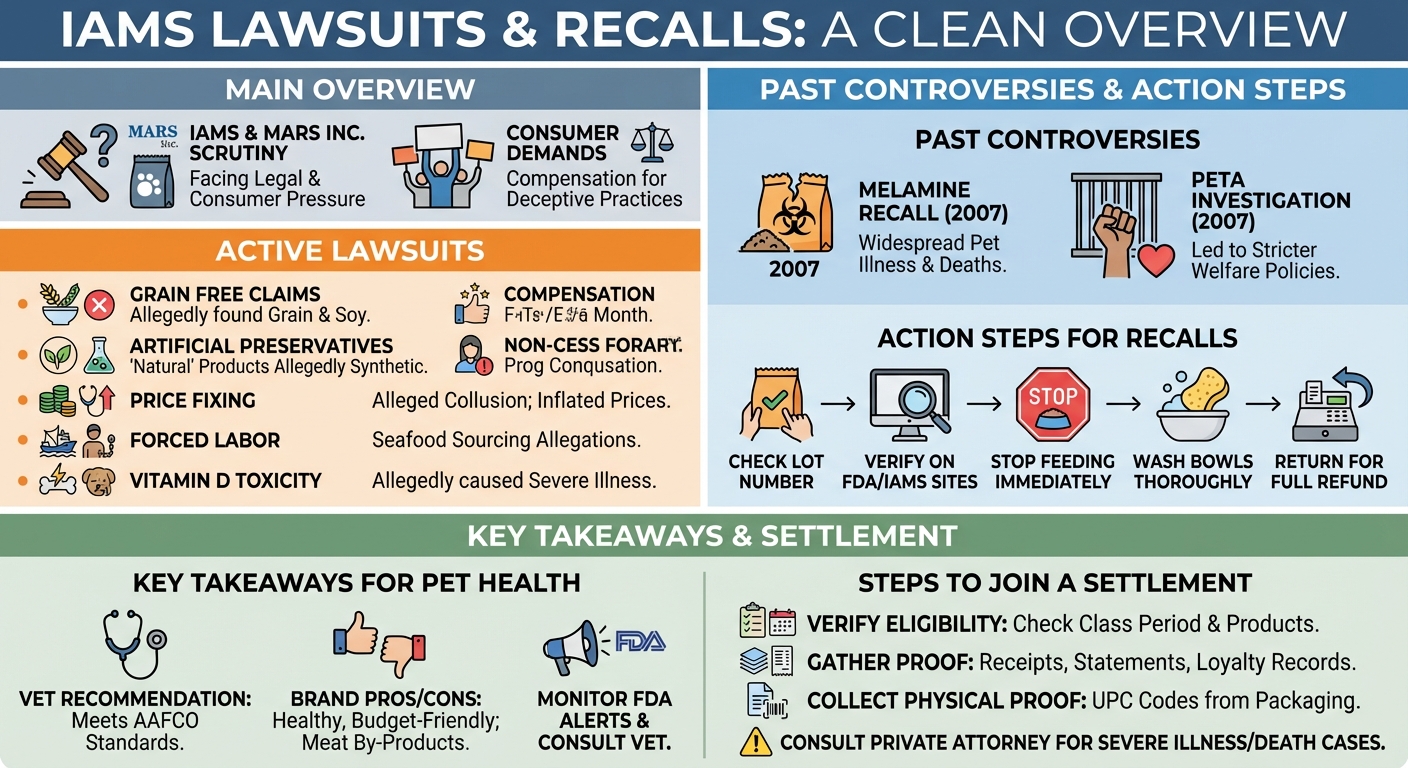
Several class action lawsuits have been filed against IAMS and its parent company, Mars, Inc. Recent legal actions allege deceptive marketing practices, including false “grain-free” and “no artificial preservatives” claims, prescription pet food price-fixing, and the failure to disclose forced labor within their seafood supply chains.
IAMS Lawsuits and Recalls: Complete 2024 Guide for Pet Owners
In recent years, IAMS and its parent company, Mars, Inc., have faced mounting legal scrutiny from consumers and advocacy groups. These legal actions range from allegations of deceptive marketing to serious supply chain violations. For pet owners, understanding the scope of these lawsuits is critical to making informed decisions about the products they feed their animals.
Pet owners are primarily seeking compensation and corporate accountability. Many allege they paid premium prices for pet foods that were mislabeled, contained undisclosed artificial ingredients, or were produced using unethical labor practices. This guide breaks down the active class action lawsuits, historical controversies, and what you need to know if you purchased affected IAMS products.
Active and Recent IAMS Class Action Lawsuits
The ‘Grain-Free’ and Mislabeling Class Action
A significant class action lawsuit alleges that IAMS deceptively marketed certain dog foods as “grain-free” and “soy-free.” Plaintiffs claim that independent testing revealed the presence of these exact ingredients in the food. Beyond the financial injury of paying a premium for a falsely advertised product, the lawsuit argues that this mislabeling puts dogs with specific dietary allergies at severe risk for gastrointestinal and dermatological health problems.
Deceptive Marketing: ‘No Artificial Preservatives’ Claims
Another major legal challenge involves claims that IAMS and other major pet food brands falsely advertised products as containing “No Artificial Preservatives.” Consumers allege that despite these prominent packaging claims, the foods actually contain synthetic preservatives. Because pet owners are increasingly health-conscious and willing to pay more for natural products, plaintiffs argue that the company unlawfully profited from these misleading labels.
Prescription Pet Food Price-Fixing Allegations
Mars, Inc. (the owner of IAMS and Royal Canin) has also been named in antitrust class action lawsuits regarding prescription pet food. Plaintiffs allege that major pet food manufacturers colluded with veterinary clinics to artificially inflate the prices of “prescription diet” foods. The lawsuit claims that these foods contain no actual medicine or drugs that legally require a prescription, meaning consumers were unlawfully forced to overpay.
Forced Labor and Supply Chain Lawsuits
In one of the more severe allegations, a class action lawsuit claims that IAMS cat food supply chains utilized forced labor. Specifically, the lawsuit alleges that Mars, Inc. failed to disclose that the seafood used in certain IAMS cat food products was sourced from suppliers in Southeast Asia known to rely on slave labor. Consumers argue they would not have purchased the products had this ethical violation been disclosed.
Excessive Vitamin D Toxicity Claims
Lawsuits have also targeted Mars, Inc. over allegations of excessive Vitamin D in various pet food lines, including IAMS, Pedigree, and Royal Canin. While Vitamin D is an essential nutrient for dogs, toxic levels can lead to severe health issues, including vomiting, loss of appetite, increased urination, and in extreme cases, fatal renal failure. Plaintiffs are seeking damages for veterinary bills and the loss of their pets.
Historical Controversies: PETA and the 2007 Crisis
The 2007 Melamine Pet Food Recall
IAMS was heavily impacted by the massive 2007 pet food recall, one of the largest in history. Products manufactured by Menu Foods for IAMS and dozens of other brands were found to be contaminated with melamine and cyanuric acid. This contamination caused widespread kidney failure in cats and dogs across North America, leading to a massive class action settlement to compensate pet owners for veterinary expenses and pet deaths.
2007 PETA Cruelty Charges and Investigations
In the early 2000s, an undercover investigation by People for the Ethical Treatment of Animals (PETA) alleged severe animal cruelty at an independent laboratory contracted by IAMS. The investigation revealed dogs kept in poor conditions and subjected to invasive testing. Following the public outcry, IAMS severed ties with the facility and implemented stricter animal welfare policies for their feeding trials.
IAMS Product Recalls and Safety History
Has there been a recall on IAMS cat food?
Yes, there have been recalls on IAMS cat food in the past. Historically, IAMS was involved in the massive 2007 melamine recall. More recently, specific batches of IAMS cat food have faced targeted recalls due to potential salmonella contamination and issues with insufficient levels of essential vitamins like thiamine.
Which dog food brand has had the most recalls?
While recall frequency fluctuates, brands produced by large manufacturers like Midwestern Pet Foods, Diamond Pet Foods, and Purina have historically seen multiple recalls due to their massive production volumes. IAMS has experienced several recalls over the decades, but it does not currently hold the record for the highest number of overall recalls.
How to check your pet food lot numbers for active recalls
To ensure your pet’s food is safe, always check the lot number printed on the back or bottom of the bag. You can cross-reference this number with the FDA’s official animal health recall database or the official IAMS website. If your lot number matches a recalled batch, stop feeding it immediately, wash all food bowls, and return the product to the store for a full refund.
Pet Health and Veterinary Perspectives
Do vets recommend IAMS for dogs?
Yes, many veterinarians recommend IAMS for dogs because it meets the nutritional standards established by the Association of American Feed Control Officials (AAFCO). Vets often appreciate that IAMS conducts extensive feeding trials and employs veterinary nutritionists, making it a reliable, science-backed, and widely accessible commercial diet for most healthy dogs.
Is IAMS considered a healthy cat food?
IAMS is generally considered a healthy, budget-friendly cat food that provides complete and balanced nutrition according to AAFCO guidelines. While it includes high-quality animal proteins, some premium-focused pet owners and holistic veterinarians critique its use of meat by-products and artificial additives, which have been the subject of recent consumer lawsuits.
Navigating pet food choices amidst class action lawsuits
When choosing a pet food, lawsuits regarding marketing claims (like “grain-free” labeling) should be weighed differently than lawsuits regarding acute toxicity (like excessive Vitamin D). Consult your veterinarian to determine the best diet for your pet’s specific health needs, and stay subscribed to FDA recall alerts to monitor any immediate safety threats.
How to Join an IAMS Class Action Lawsuit
Eligibility requirements for current consumer settlements
To participate in an active IAMS class action lawsuit, you generally must have purchased the specific products named in the suit during the designated class period. Eligibility is usually restricted to consumers who bought the food for personal use rather than for resale. Settlement administrators will outline the exact dates and eligible product UPCs on their official settlement websites.
What proof of purchase do you need?
While some class action settlements allow you to claim a small financial payout without proof of purchase, providing evidence significantly increases your compensation. Valid proof of purchase includes:
- Store receipts or digital invoices
- Credit card or bank statements showing the transaction
- Original UPC codes cut from the pet food packaging
- Loyalty card records from pet supply retailers
When to consult a consumer protection or class action attorney
If your pet suffered severe illness, required expensive veterinary care, or passed away due to a contaminated or mislabeled IAMS product, a standard class action rebate may not cover your losses. In cases of significant financial or emotional injury, you should consult a consumer protection or product liability attorney to discuss filing an individual claim for damages.
 Call (713) 747-7777