

Table of contents
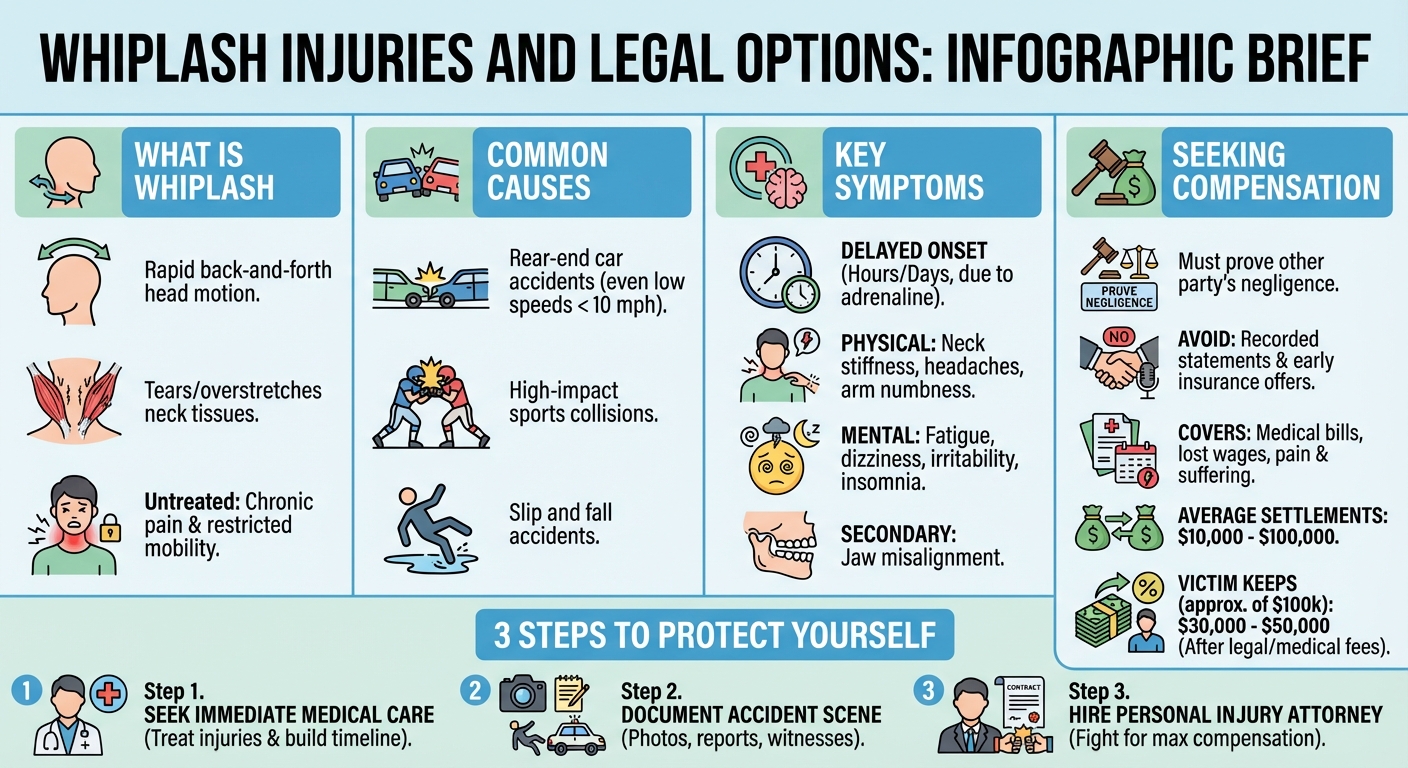
Whiplash is a severe neck injury caused by a rapid back-and-forth motion, often resulting from rear-end car accidents. Symptoms include neck stiffness, headaches, and fatigue. If another party’s negligence caused your whiplash, your legal options include filing a personal injury claim to recover compensation for medical bills, lost wages, and pain and suffering.
Understanding Whiplash: Causes, Symptoms, and Legal Options
What is Whiplash?
Whiplash is a severe neck injury caused by a rapid, forceful back-and-forth jerking motion of the head, much like the cracking of a whip. This sudden movement tears and overstretches the muscles, tendons, and ligaments in the neck. While often dismissed as a minor issue, whiplash can lead to chronic pain, restricted mobility, and long-term physical complications if left untreated.
Why Prompt Medical and Legal Action Matters
Taking immediate action after sustaining a whiplash injury is critical for both your health and your legal rights. Medically, early diagnosis prevents the injury from worsening and establishes a clear timeline of your symptoms. Legally, prompt action ensures you do not miss the statute of limitations for filing a personal injury claim. It also prevents insurance companies from arguing that your injuries were caused by an unrelated event after the accident.
Common Causes of Whiplash Injuries
Rear-End Car Collisions
Rear-end car accidents are the leading cause of whiplash. When a vehicle is struck from behind, the impact forces the occupants’ bodies forward while their heads snap backward, then violently forward again. Even low-speed collisions under 10 mph can generate enough force to cause significant soft tissue damage in the neck.
Sports Injuries and Physical Trauma
High-impact and contact sports are another frequent cause of whiplash. Athletes participating in football, hockey, rugby, or martial arts are highly susceptible to sudden collisions or blows to the head and body that mimic the physics of a car crash, resulting in severe neck strain.
Slip and Fall Accidents
A sudden slip and fall can cause a person’s head to jerk violently as they attempt to catch their balance or hit the ground. Property hazards such as wet floors, icy walkways, or uneven stairs frequently lead to these unexpected jolts, making property owners potentially liable for the resulting whiplash injuries.
Recognizing the Symptoms of Whiplash
Immediate vs. Delayed Symptoms
One of the most dangerous aspects of whiplash is that symptoms do not always appear immediately. The adrenaline rush following an accident can mask pain for hours or even days. It is common for victims to feel fine at the scene, only to wake up the next morning with severe stiffness and debilitating pain.
Physical Symptoms
When whiplash symptoms do manifest, they typically involve the upper body. Common physical signs include:
- Severe neck pain and stiffness
- Worsening pain with neck movement
- Loss of range of motion in the neck
- Headaches, often starting at the base of the skull
- Tenderness or pain in the shoulder, upper back, or arms
- Tingling or numbness radiating down the arms
Cognitive and Emotional Symptoms
Whiplash is not just a physical injury; it can also affect your mental well-being. Victims frequently report cognitive and emotional symptoms, such as:
- Chronic fatigue and dizziness
- Difficulty concentrating or remembering details
- Irritability and mood swings
- Sleep disturbances and insomnia
- Ringing in the ears (tinnitus)
Associated Complications
Severe whiplash can lead to secondary injuries that complicate recovery. One frequently overlooked complication involves the jaw. The violent motion of a crash can misalign the temporomandibular joint. For more information on this specific condition, you can read our guide on TMJ Injuries from Texas Car Accidents: The Overlooked Consequence of Whiplash.
Your Legal Options After a Whiplash Injury
Proving Negligence and Liability
To recover compensation for whiplash, you must prove that another party’s negligence caused your injury. This requires establishing four legal elements: the at-fault party owed you a duty of care, they breached that duty (e.g., by texting and driving), the breach directly caused your accident, and you suffered measurable damages as a result.
Dealing with At-Fault Drivers and Insurance Companies
Insurance adjusters often try to minimize whiplash claims, arguing that the injury is exaggerated or pre-existing. They may offer a fast, lowball settlement before you fully understand the extent of your medical needs. It is crucial never to provide a recorded statement or accept an early settlement without consulting a personal injury attorney who can negotiate aggressively on your behalf.
Types of Compensation Available
A successful whiplash claim can secure various forms of financial recovery, including:
- Medical Expenses: Coverage for ER visits, imaging (MRIs/X-rays), physical therapy, and chiropractic care.
- Lost Wages: Compensation for the time you had to take off work to recover.
- Pain and Suffering: Damages for physical discomfort, emotional distress, and loss of enjoyment of life.
Whiplash Lawsuits and Settlements: Frequently Asked Questions
Is it worth suing for whiplash?
Yes, suing for whiplash is often worth it if your injuries result in significant medical bills, lost wages, or chronic pain. A successful personal injury claim holds the negligent party accountable and ensures you are not left paying out-of-pocket for an accident you did not cause.
How much is a whiplash lawsuit worth?
The worth of a whiplash lawsuit depends entirely on the severity of your injury, the cost of your medical treatment, and how the injury impacts your daily life. Cases involving minor stiffness may settle for less, while severe cases requiring surgery or causing permanent impairment yield higher payouts.
How much is the average whiplash settlement?
The average whiplash settlement typically ranges between $10,000 and $100,000, depending on the specific facts of the case. Minor whiplash injuries often settle on the lower end, while severe cases involving nerve damage, chronic pain, or extended time off work can exceed the six-figure mark.
How much of a $100K settlement will I get?
From a $100,000 settlement, you will typically receive between $30,000 and $50,000. This is because standard attorney contingency fees take about 33 percent, and the remaining funds must first be used to pay off any outstanding medical liens, court costs, and expert witness fees before you receive the net payout.
Steps to Protect Your Legal Rights and Health
Seek Immediate Medical Attention
Your health is the top priority. Visit an emergency room, urgent care, or your primary physician immediately after an accident. A prompt medical evaluation ensures you receive the necessary treatment and creates an official medical record linking your whiplash directly to the incident.
Document the Accident Scene and Your Injuries
Evidence disappears quickly. If you are physically able, take clear photos of the accident scene, vehicle damage, and any visible injuries. Collect contact information from eyewitnesses and ensure a formal police or incident report is filed.
Consult with an Experienced Personal Injury Attorney
Navigating the legal aftermath of a whiplash injury is complex. An experienced personal injury attorney can handle all communications with the insurance company, gather crucial evidence, calculate your total damages, and fight to secure the maximum compensation you deserve while you focus on your recovery.