

Table of contents
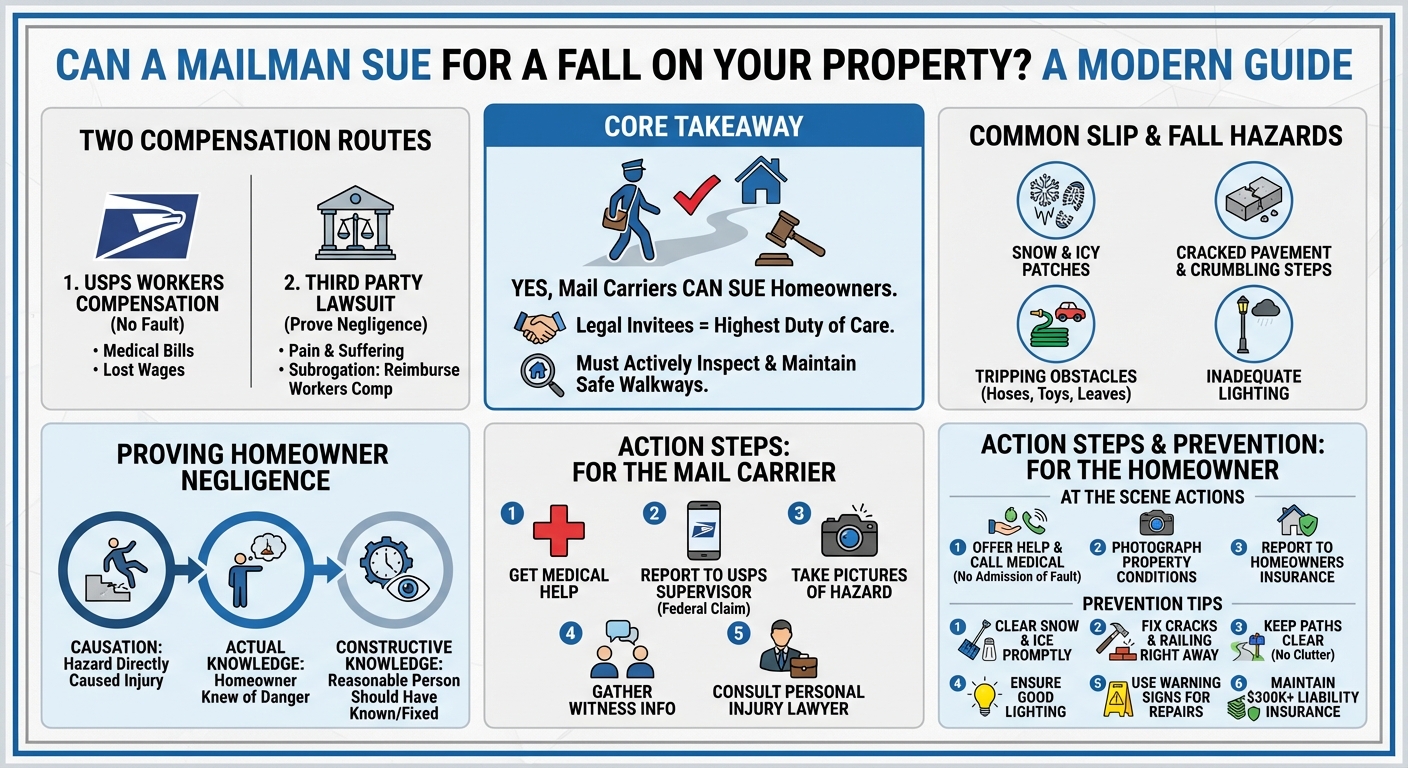
Yes, a mailman can sue a homeowner for falling on their property. While injured postal workers typically file a federal workers’ compensation claim through the USPS, they can also pursue a third-party personal injury lawsuit against the property owner if negligence, such as an uncleared walkway, caused the fall.
Can a Mailman Sue for Falling on Your Property?
The Short Answer: Yes, Mail Carriers Can Sue
If a mail carrier slips, trips, or falls while delivering mail to your home, they absolutely have the right to take legal action. Property owners have a legal obligation to maintain safe premises for individuals who are invited onto their property, and this includes delivery personnel. When a homeowner fails to address a known hazard, they can be held financially responsible for the resulting injuries.
Workers’ Compensation vs. Premises Liability
When a postal worker is injured on the job, two distinct legal avenues come into play. First, the mail carrier is entitled to federal workers’ compensation benefits through their employer (the USPS). Second, if the fall was caused by a property owner’s negligence, the carrier can file a third-party premises liability claim against the homeowner. These two systems operate independently but can overlap when it comes to final settlements.
Understanding Premises Liability and Postal Workers
Are Mail Carriers Invitees or Licensees?
In premises liability law, visitors are categorized to determine the level of care a property owner owes them. Mail carriers are generally classified as invitees (or in some jurisdictions, a protected class of licensees). Because they are on the property for a business purpose that benefits the homeowner—delivering mail—homeowners owe them the highest duty of care. This means owners must actively inspect their property for hidden dangers and fix them promptly.
The Homeowner’s Duty of Care
A homeowner’s duty of care requires maintaining a clear, safe path to the mailbox or front door. This includes repairing broken steps, providing adequate lighting, and removing slip hazards like wet leaves, snow, or ice. If a homeowner neglects these basic maintenance tasks, they breach their duty of care, opening the door to a personal injury lawsuit.
Proving Negligence: Actual vs. Constructive Knowledge
To win a lawsuit, the injured mail carrier must prove the homeowner was negligent. This requires demonstrating that the owner had either actual knowledge (they knew the hazard existed) or constructive knowledge (they should have known about the hazard because a reasonable person would have discovered it). For example, if a step has been rotting for six months, the homeowner has constructive knowledge of the danger, even if they claim they never noticed it.
Workers’ Compensation vs. Third-Party Lawsuits
Filing a USPS Workers’ Comp Claim (FECA)
Injured mail carriers are covered under the Federal Employees’ Compensation Act (FECA). This program pays for all necessary medical treatments and provides wage replacement while the carrier is unable to work. FECA is a no-fault system, meaning the carrier receives benefits regardless of who caused the fall, as long as it happened during the course of their employment.
Filing a Third-Party Personal Injury Lawsuit
While workers’ compensation covers basic economic losses, it does not compensate for pain and suffering or diminished quality of life. To recover these non-economic damages, the mail carrier must file a third-party personal injury lawsuit against the negligent homeowner’s insurance policy. This lawsuit targets the property owner, not the USPS.
Can You Do Both? Understanding Subrogation
Yes, an injured mail carrier can pursue both a FECA claim and a third-party lawsuit. However, they cannot collect double compensation for the same financial losses. Under a legal concept called subrogation, if the carrier wins a settlement from the homeowner, the federal government has a lien on that settlement. The carrier must reimburse the workers’ compensation program for the medical bills and lost wages it already paid out, keeping the remainder for pain and suffering.
Common Causes of Mail Carrier Slip and Fall Accidents
Can mailman sue for slipping on ice?
Yes, a mailman can sue a homeowner for slipping on ice if the property owner failed to clear their walkways within a reasonable timeframe. Homeowners have a legal duty to remove snow and ice to ensure a safe path for delivery personnel. If negligence is proven, the homeowner is liable.
Uneven Sidewalks and Broken Steps
Cracked pavement, uneven paving stones, and crumbling concrete steps are among the most common tripping hazards for delivery workers. Because mail carriers are often carrying heavy packages or looking at mail rather than their feet, these structural defects pose a significant risk.
Hidden Hazards, Debris, and Poor Lighting
Other frequent causes of falls include garden hoses left across walkways, wet leaves, loose handrails, and inadequate porch lighting during winter months when it gets dark early. Homeowners must ensure the path to the mailbox is free of unexpected obstacles.
Navigating a Slip and Fall Lawsuit: Compensation and Difficulty
How much compensation can you get for a fall?
Compensation for a slip and fall varies widely based on injury severity, ranging from a few thousand dollars for minor sprains to over $100,000 for severe fractures or spinal injuries. Settlements typically cover medical bills, lost wages, rehabilitation costs, and damages for physical pain and suffering.
How hard is it to win a slip and fall lawsuit?
Winning a slip and fall lawsuit can be challenging because the plaintiff must prove negligence. You must demonstrate that the property owner knew or reasonably should have known about the dangerous condition and failed to correct it, and that this specific hazard directly caused your injuries.
Is it hard to sue the post office?
Yes, suing the post office is difficult due to sovereign immunity protections. Claims against the USPS must follow the strict administrative rules of the Federal Tort Claims Act (FTCA). However, injured postal workers cannot sue the USPS directly for workplace injuries; they must use the federal workers’ compensation system.
How Homeowners Can Protect Themselves from Liability
Routine Property Maintenance Tips
- Shovel snow and apply ice melt promptly after winter storms.
- Repair loose bricks, cracked concrete, and wobbly handrails immediately.
- Keep the pathway to your mailbox clear of children’s toys, garden tools, and wet leaves.
- Ensure your porch and walkway are well-lit during evening hours.
Understanding Your Homeowner’s Insurance Coverage
Most standard homeowner’s insurance policies include personal liability coverage, which pays for legal defense and settlements if a mail carrier sues you for a fall. Review your policy limits; a minimum of $300,000 in liability coverage is generally recommended to protect your personal assets in the event of a severe injury claim.
Warning Signs for Known Hazards
If you cannot immediately fix a hazard (such as waiting for a contractor to repair a broken step), you must warn visitors. Placing a highly visible warning sign or blocking off the dangerous area can significantly reduce your liability, as it fulfills your duty to warn invitees of known dangers.
What to Do Immediately After a Mail Carrier Falls
Steps for the Injured Mail Carrier
If you are a mail carrier who has fallen, seek medical attention immediately. Report the incident to your USPS supervisor to initiate your FECA claim. Document the scene by taking photos of the hazard that caused your fall, and collect contact information from any witnesses.
Steps for the Homeowner
If a delivery person falls on your property, offer assistance and call for medical help if needed. Do not admit fault or apologize, as these statements can be used against you. Document the conditions of your property at the time of the fall with photographs, and notify your homeowner’s insurance company about the incident.
When to Contact a Personal Injury Attorney
Both parties should consider legal counsel. Injured mail carriers should consult a personal injury attorney to explore a third-party claim against the homeowner, especially if injuries are severe. Homeowners facing a lawsuit should rely on the legal defense provided by their insurance company, but may want private counsel if damages exceed their policy limits.