

Table of contents
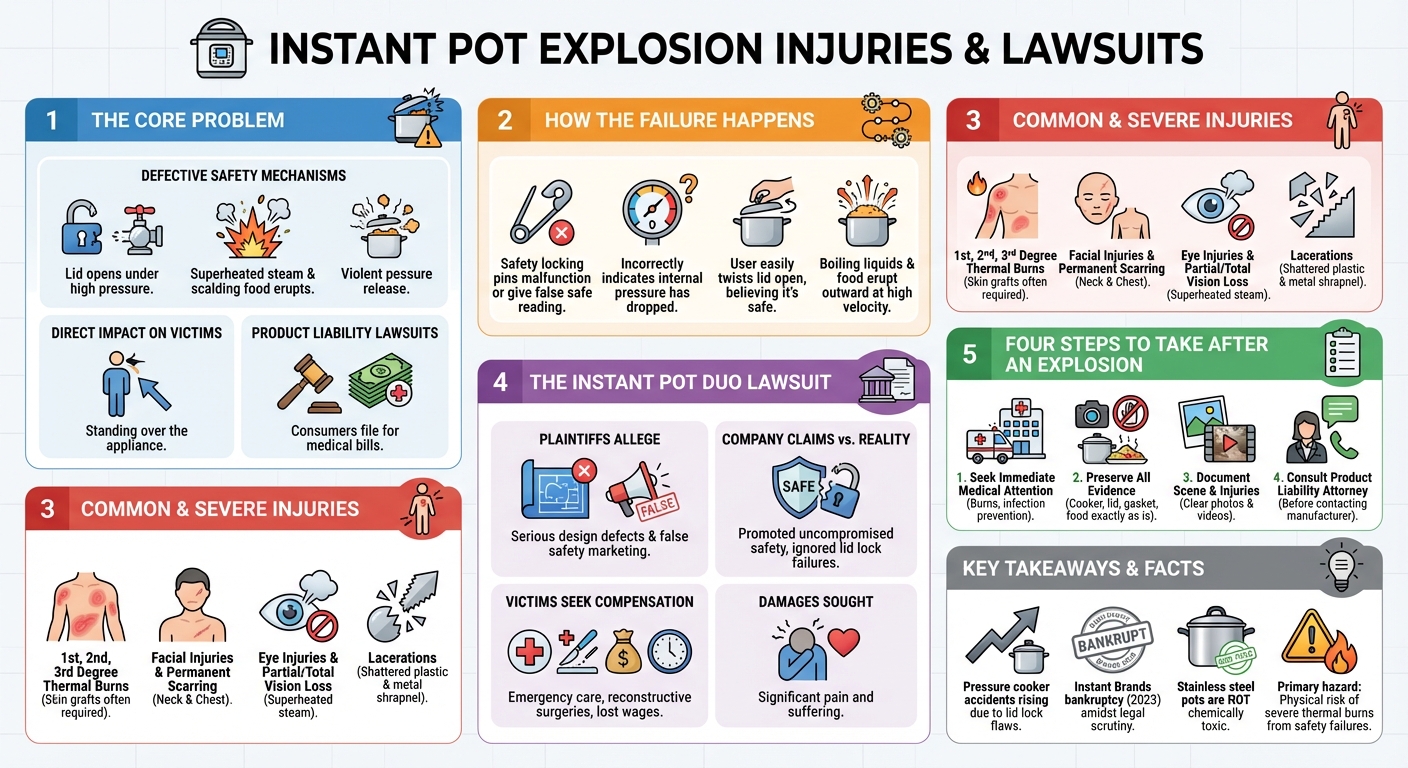
An Instant Pot injury typically occurs when defective safety mechanisms allow the pressure cooker’s lid to be opened while still under high pressure. This causes scalding hot liquids and steam to explode outward, resulting in severe thermal burns, facial injuries, permanent scarring, and lacerations from flying debris.
Instant Pot Injury Lawsuits: What to Do If Your Pressure Cooker Explodes
Electric pressure cookers have revolutionized modern cooking, but a rising concern over defective units has turned kitchen convenience into a nightmare for many families. Across the country, consumers are reporting horrifying incidents where their Instant Pots exploded, spraying scalding hot food and steam across their kitchens.
Victims are now filing product liability claims against the manufacturers. These lawsuits allege that despite being marketed with advanced, foolproof safety mechanisms, design flaws in certain models allow the lid to be removed while the contents are still under dangerous levels of pressure. For victims, pursuing a claim is often the only way to cover the massive medical bills associated with severe burn injuries.
How Do Instant Pot Explosions Happen?
To understand why these accidents occur, it is essential to look at how the appliance is designed to function versus how it actually performs under stress.
- Understanding the safety mechanism failure: Instant Pots are equipped with safety locks designed to prevent the lid from opening until all internal pressure has safely dissipated. Lawsuits allege that these locking pins can fail or falsely indicate that the pressure has dropped.
- How pressurized contents and scalding liquids escape: When a user easily twists the lid open—believing it is safe to do so—the sudden release of trapped pressure causes a violent eruption. Boiling liquids, sticky foods, and steam explode outward at high velocity.
- The danger of defective lid locks: A defective lid lock transforms a standard kitchen appliance into a pressurized hazard. Because the user is typically standing directly over or next to the pot when opening it, they take the direct impact of the explosion.
Common Injuries Caused by Defective Instant Pots
The injuries sustained in a pressure cooker explosion are rarely minor. Because the liquids inside reach temperatures well above the normal boiling point, the resulting trauma is often catastrophic.
- First, second, and third-degree thermal burns: This is the most common and devastating injury. Sticky foods like soups or stews adhere to the skin, causing deep, severe burns that often require skin grafts.
- Facial injuries and permanent scarring: Because users are looking down at the appliance when opening the lid, the face, neck, and chest are highly vulnerable to permanent disfigurement.
- Eye injuries and vision loss: The blast of superheated steam and boiling liquid can cause severe thermal damage to the cornea, leading to partial or total vision loss.
- Lacerations from flying debris: In some explosive failures, the force is strong enough to shatter parts of the lid or internal components, sending plastic and metal shrapnel into the user.
The Instant Pot Duo Lawsuit Explained
What is the lawsuit against Instant Pot duo?
The lawsuit against the Instant Pot Duo alleges that the appliance’s safety mechanisms fail, allowing consumers to remove the lid while the unit is still dangerously pressurized. Plaintiffs claim this design defect and false safety marketing led to unexpected explosions, causing severe thermal burns and permanent scarring.
Beyond the physical defects, these lawsuits heavily target the company’s marketing practices. Instant Brands heavily promoted the “uncompromised safety” of their products. Plaintiffs argue this constitutes false safety marketing, as the company allegedly knew or should have known about the lid lock failures but failed to issue adequate warnings.
Compensation available for burn victims in these lawsuits typically includes coverage for emergency medical care, ongoing reconstructive surgeries, lost wages, and significant pain and suffering.
Crucial Steps to Take After an Instant Pot Burn Injury
If you or a loved one are injured by an exploding pressure cooker, the actions you take immediately afterward can significantly impact both your physical recovery and your legal rights.
- Seek immediate medical attention for burns: Do not attempt to treat severe thermal burns at home. Go to an emergency room immediately. Deep burns carry a massive risk of infection and require specialized care.
- Preserve the evidence (Do not throw away the cooker or lid): This is the most critical step for a product liability claim. Keep the Instant Pot, the lid, the rubber gasket, and even the food exactly as it was after the explosion. Store it in a safe place.
- Document the scene and your injuries: Take clear photographs and videos of your kitchen, the splatter marks, the appliance, and your injuries before they are treated and bandaged.
- Consult a product liability attorney before speaking to the manufacturer: The manufacturer or their insurance company may ask you to send the unit back to them for an “investigation.” Do not do this. Sending the unit destroys your evidence. Speak to an attorney first.
Frequently Asked Questions About Instant Pot Safety
Are pressure cooker accidents common?
While modern electric pressure cookers are generally safe, pressure cooker accidents are increasingly common due to specific design defects. Lawsuits allege hundreds of incidents where safety locks failed, causing scalding liquids to erupt. Even a small failure rate can result in severe, life-altering burn injuries for consumers.
Why is Instant Pot discontinued?
Instant Brands, the parent company of Instant Pot, filed for Chapter 11 bankruptcy in 2023 due to declining sales and high interest rates, rather than a total product discontinuation. However, specific defective models have faced intense legal scrutiny and consumer warnings regarding severe explosion and burn risks.
Is Instapot toxic?
The standard stainless steel inner pot of an Instant Pot is not considered toxic and does not contain Teflon or PFAS forever chemicals. However, the primary danger associated with an Instapot is not chemical toxicity, but rather the physical risk of severe thermal burns from defective pressure safety locks.