
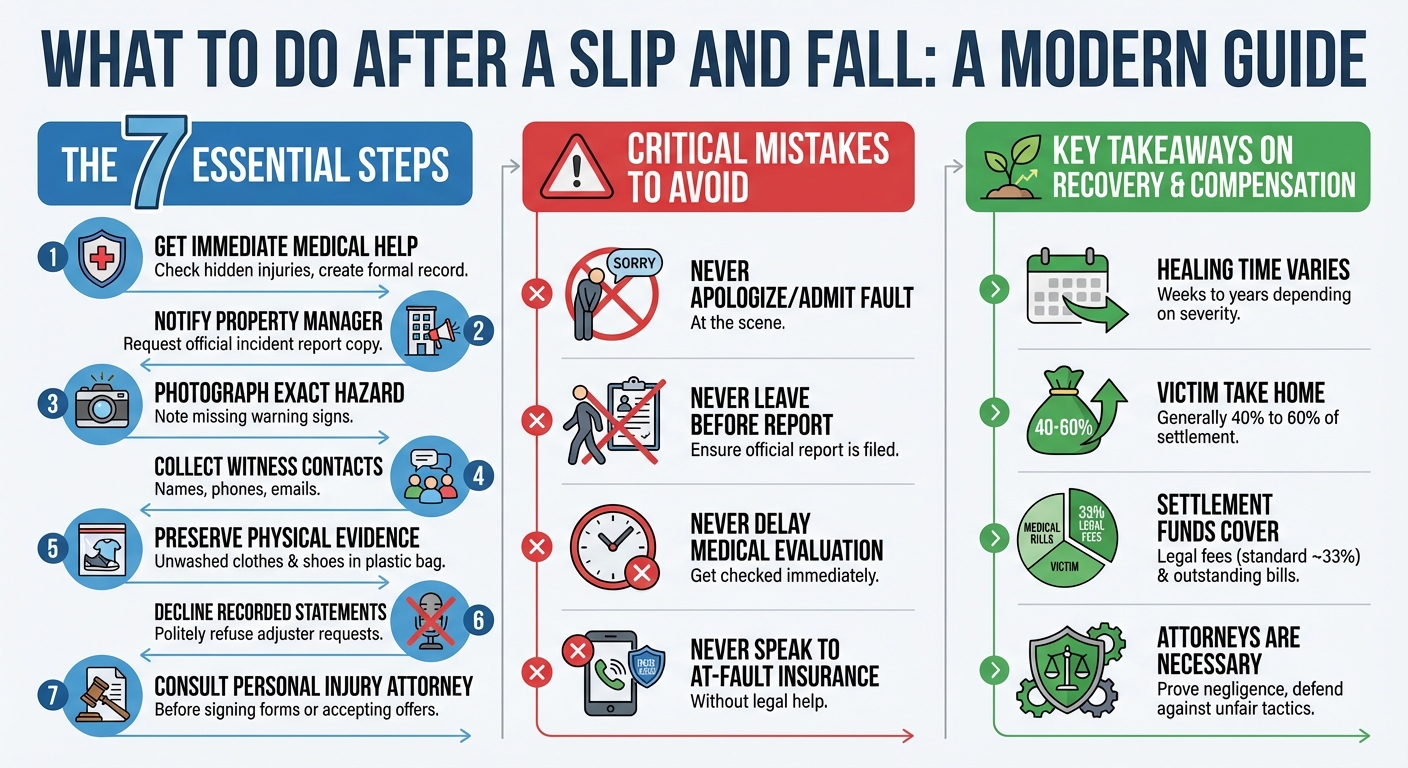
After a slip and fall, immediately seek medical attention to document your injuries. Report the incident to the property manager, take photos of the hazard, and collect witness information. Finally, preserve your clothing and consult an attorney before speaking with insurance companies.
What to Do After a Slip and Fall: 7 Steps to Protect Your Rights
Experiencing a sudden fall in a store, workplace, or public area is disorienting. However, the actions you take in the immediate aftermath dictate the strength of any future personal injury claim. Knowing exactly what to do can protect both your physical health and your legal rights.
Quick Summary: The 7 Essential Steps
- Seek immediate medical attention
- Report the incident to management
- Document the scene with photos
- Identify and speak to witnesses
- Preserve your clothing and shoes
- Decline recorded insurance statements
- Consult a personal injury attorney
Step-by-Step Guide: Actions to Take Immediately After a Fall
1. Seek Immediate Medical Attention
Your health is the top priority. Even if you feel fine, adrenaline can mask serious injuries like concussions or internal bleeding. Visiting an emergency room or urgent care clinic creates a crucial, time-stamped medical record linking your injuries directly to the fall.
2. Report the Incident to Management or the Property Owner
Notify the store manager, landlord, or property owner immediately. Request that they file a formal incident report and ask for a copy before you leave. Keep your report brief and factual—do not apologize or suggest you were clumsy.
3. Document the Scene and Gather Evidence
Evidence disappears quickly in premises liability cases. Use your smartphone to take clear photos and videos of the exact location. Focus on the hazard that caused your fall, such as a wet floor, uneven pavement, torn carpet, or poor lighting. Capture the lack of warning signs.
4. Identify and Speak to Witnesses
If anyone saw you fall, ask for their names, phone numbers, and email addresses. Independent witness testimony is incredibly powerful for proving that a hazard existed and that the property owner failed to address it.
5. Preserve Your Clothing and Shoes
Place the shoes and clothing you were wearing during the accident into a plastic bag and store them safely. Do not wash them. They may contain physical evidence, such as grease or cleaning chemicals, that proves what caused your slip.
6. Decline to Give a Recorded Statement to Insurance
Insurance adjusters will often call you shortly after the accident, asking for a recorded statement. Politely decline. Adjusters are trained to ask leading questions designed to make you admit partial fault or downplay your injuries.
7. Consult a Slip and Fall Attorney
Before signing any documents or accepting a lowball settlement offer, speak with a lawyer. An attorney will investigate the property owner’s negligence, secure surveillance footage, and handle all communications with the insurance company.
How do you know if you are ok after a fall?
You cannot rely solely on how you feel immediately after a fall, as adrenaline often masks severe pain. To know if you are truly okay, you must be evaluated by a medical professional. Watch for delayed symptoms like dizziness, severe headaches, or localized swelling.
What are the four things you should avoid immediately after injury?
Immediately after a slip and fall injury, you should avoid four critical mistakes: apologizing or admitting any fault, leaving the scene without filing an official report, delaying your medical evaluation, and providing a recorded statement to the at-fault party’s insurance company.
Understanding Your Recovery Timeline
How long does it take to heal from a slip and fall?
Healing times vary drastically based on the injury. Minor sprains and deep bruises typically take two to six weeks to heal. However, severe injuries like bone fractures, spinal cord damage, or traumatic brain injuries can take several months to years, sometimes requiring lifelong physical therapy.
Financial Compensation and Settlement Expectations
How much of a $100K settlement will I get?
From a $100,000 settlement, a victim typically takes home between $40,000 and $60,000. Standard contingency attorney fees account for about 33 percent. The remaining deductions go toward case expenses and paying off outstanding medical liens or health insurance subrogation claims.
Why You Need a Legal Advocate for Your Slip and Fall Claim
Protecting Your Claim from Insurance Tactics
Premises liability claims are notoriously difficult because you must prove the property owner knew or should have known about the hazard. Insurance companies will aggressively argue that you were distracted or wearing improper footwear. A skilled attorney anticipates these defenses and builds a robust case using medical records, witness statements, and expert testimony.
Next Steps: Contacting a Houston Slip and Fall Lawyer
If you were injured on someone else’s property, do not navigate the complex legal system alone. Reach out to experienced Houston slip and fall accident lawyers who can evaluate your case, preserve critical evidence before it is destroyed, and fight for the maximum compensation you deserve.
 Call (713) 747-7777