
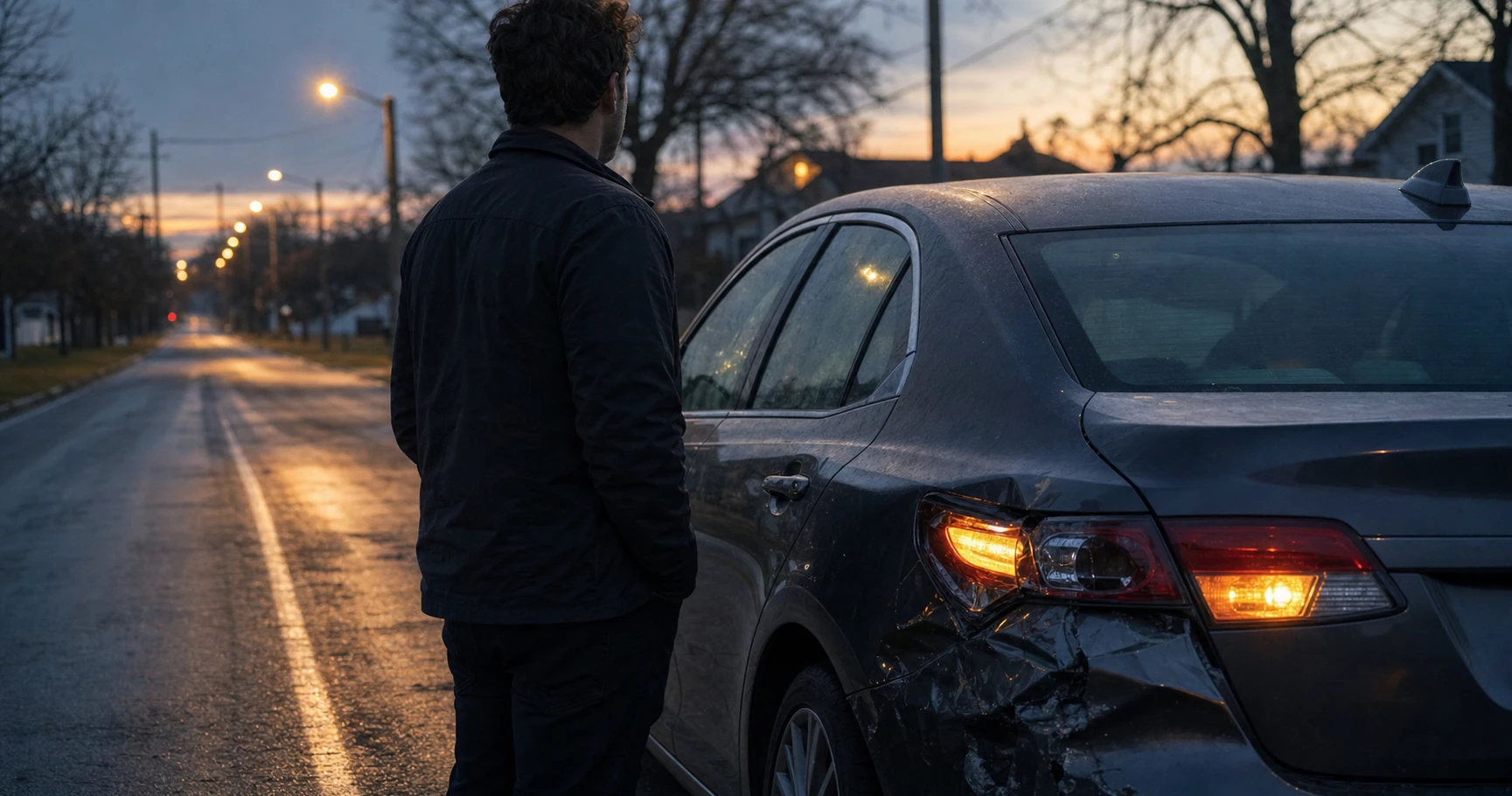
Yes, it can: Texas has no law that stops an insurer from raising your premium after a hit-and-run claim, even one you did nothing to cause. The Texas Department of Insurance (TDI) says plainly that "home and auto insurance companies can raise your premium for filing most types of claims," and that you could also lose a claim-free discount.
What Texas does give you is narrower. Your insurer cannot raise your premium for a claim it did not pay. It cannot refuse to renew your policy over a claim that was not your fault unless you have two of them in a year. And your personal injury protection (PIP) pays no matter who was at fault. This page explains those rules, when uninsured motorist coverage pays for a hit-and-run, and what to do first. It is current as of November 23, 2026.
At a glance: hit-and-run claims and your Texas insurance
| Question | Answer |
|---|---|
| Can my rate go up after a hit-and-run claim? | It can. TDI says insurers can raise premiums after most types of claims. We found no Texas rule that exempts a claim you did not cause. |
| What cannot raise my rate | A claim your insurer did not pay, and calling your company or agent with questions. |
| Can my insurer drop me? | Not solely over a claim that cannot reasonably be considered your fault, unless you have two such claims in one year. |
| Does uninsured motorist coverage pay? | Yes, if you have it, you reported the crash to police, and the other car actually touched you, your car or your property. |
| Uninsured motorist property damage deductible | $250, set by state law. |
| Personal injury protection (PIP) | Pays medical bills and lost income regardless of fault, unless you rejected it in writing. |
| Crash report | $6 from TxDOT's online system, $8 for a certified copy. |
| Deadline to sue the driver if found | Two years from the crash. |
Will a hit-and-run claim raise my insurance rates in Texas?
It can. TDI's guide Will my premium go up if I file a claim? says insurers "can raise your premium for filing most types of claims" and that "you could also lose any discounts you're getting for being claim free." We read the Texas Insurance Code chapters on auto rates and coverage and found no rule that exempts a claim you did not cause. Whether your insurer actually adds a surcharge depends on its own rating rules, which differ from company to company. Ask your agent, in writing, how the claim will be rated before your renewal.
Two limits do apply to every Texas auto insurer:
- Unpaid claims. Under the Texas auto insurance Consumer Bill of Rights, "your insurance company can't change your premium solely because of a claim you file that is not paid or payable under your policy."
- Questions. TDI says companies cannot charge you more for calling your company or agent to ask about your policy or how to file a claim.
Insurers can see claims you filed with other companies, too. TDI explains that most of them pull a Comprehensive Loss Underwriting Exchange (CLUE) report, and that you can request a free copy of yours once a year.
Can my insurance company drop me after a hit-and-run?
Not over one claim you did not cause. The Consumer Bill of Rights says your insurer "cannot refuse to renew your policy solely because of" an "accident or claim that cannot reasonably be considered your fault, unless you have 2 of these claims or accidents in a one-year period." That rule protects your renewal. It does not cap your price.
Does uninsured motorist coverage pay for a hit-and-run in Texas?
Usually, if you have it. Texas insurers must include uninsured/underinsured motorist (UM/UIM) coverage in an auto liability policy unless a named insured rejects it in writing (Insurance Code section 1952.101). TDI's auto insurance guide says UM coverage "also pays if you're in a hit-and-run accident."
UM can cover your medical bills, lost income and pain and suffering. If you carry UM property damage coverage, it also pays for car repairs with a $250 deductible (section 1952.105). If you have collision coverage too, you choose which one pays for your car (section 1952.107); collision deductibles are usually higher.
Look for "uninsured/underinsured motorist" on your declarations page before you count on it. If you or another named insured signed a rejection, the coverage is not there, and the law does not require the insurer to add it back at renewal unless you ask for it in writing.
Does the hit-and-run car have to actually hit me?
Yes. When the other driver is unknown, Texas law requires that "actual physical contact must have occurred" between that driver's vehicle and you or your property (section 1952.104). Texas courts apply this strictly:
- In Nationwide Insurance Co. v. Elchehimi (2008), the Texas Supreme Court held that hitting an axle that had broken off an unidentified truck was not contact with the truck, so UM did not pay.
- In Franks v. Liberty County Mutual Insurance Co. (2019), a Houston court of appeals ruled there was no UM coverage where an unknown car sped past, forced the driver into another lane and into a collision with a different car, all without touching his car.
If a driver who fled ran you off the road without touching your car, UM will likely not pay for that driver's part. Your PIP still pays your medical bills, and collision coverage still pays for your car.
What should I do right after a hit-and-run in Texas?
- Call 911 if anyone is hurt, and move to a safe spot.
- Call the police and get the report number. TDI's auto guide warns that "your uninsured motorist coverage won't pay for a hit-and-run accident if you didn't report it to police."
- Write down what you saw: time, place, the other car's color, make, damage and plate, and which way it went. Photograph your car and the scene, and ask nearby businesses whether a camera caught the crash.
- Tell your insurer quickly. One Texas Personal Auto Policy form we read requires notice "as soon as possible" and asks that a hit-and-run be reported to police "within 24 hours or as soon as possible." Check the wording in your own policy.
- See a doctor, even if you feel fine, and keep every bill and receipt.
Which coverage should I use: PIP, uninsured motorist or collision?
Often more than one. PIP pays medical bills and lost income "without regard to" fault (section 1952.155), up to your PIP limit. Texas does not require an insurer to provide more than $2,500 of PIP per person, and you can buy more. Your insurer must pay PIP within 30 days of receiving satisfactory proof of the claim (section 1952.156), or owe a 12 percent penalty, interest and attorney's fees (section 1952.157).
UM/UIM then covers what PIP does not, such as pain and suffering. For your car, use UM property damage or collision, whichever deductible and limits work better for you. TDI notes that UM may also pay for a rental car. For more, see our guides to PIP insurance in Texas and to whether your insurance goes up when someone hits you.
How do I get the crash report for a hit-and-run in Texas?
An officer who investigates a crash with an injury, a death or at least $1,000 in apparent property damage must file the report with TxDOT within 10 days (Transportation Code section 550.062). You can buy it through TxDOT's Crash Report Online Purchase System: $6 for a regular copy and $8 for a certified one. Ask the officer for the report number at the scene. Our guide on getting a police report after a car accident walks through it.
How long do I have to make a claim after a hit-and-run in Texas?
Report the crash to your insurer right away, because policies require prompt notice. If police find the driver, you have two years from the crash to sue for your injuries or property damage (Civil Practice and Remedies Code section 16.003). Deadlines for a claim against your own insurer work differently, so ask a lawyer early. See the Texas statute of limitations for car accidents.
Hurt by a driver who fled in Houston?
Our Houston car accident lawyers help hit-and-run victims file PIP and uninsured motorist claims, answer a denial and work with police to find the driver. Read what to do after a hit-and-run in Texas, then contact The Nguyen Law Firm or call (713) 747-7777 for a free case review.
This article provides general information, not legal advice. Your own policy controls your coverage, and insurance rules and forms change; the information here is as of November 23, 2026.
 Call (713) 747-7777