

Table of contents
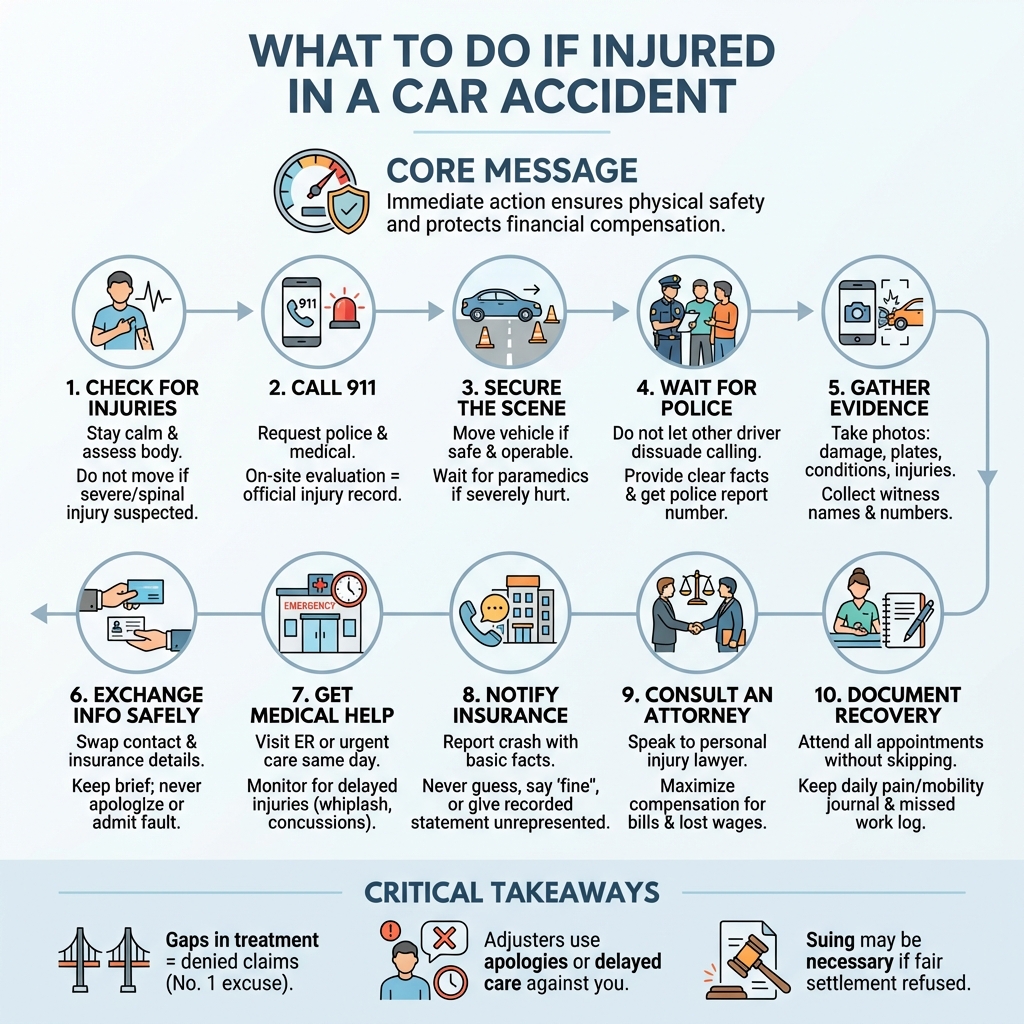
If you are injured in a car accident, take these immediate steps: 1) Call 911 to request police and medical assistance. 2) Do not move if you are severely injured. 3) Gather evidence and exchange information if able. 4) Seek medical attention immediately. 5) Consult a personal injury attorney before speaking to insurance adjusters.
What to Do If Injured in a Car Accident: A Step-by-Step Guide
The moments following a car crash are chaotic and overwhelming. If you are injured, your priority must immediately shift from assessing property damage to ensuring your physical survival and protecting your legal rights. Knowing exactly what to do if injured in a car accident can mean the difference between a full physical and financial recovery, and being left with mounting medical debt.
Why Your Immediate Actions Matter
Insurance companies begin building a defense against your claim the moment an accident is reported. If you delay medical treatment, admit fault, or fail to document the scene, adjusters will use these missteps to devalue or deny your compensation. Taking swift, calculated action preserves vital evidence before it disappears.
How This Guide Protects Your Health and Your Claim
This step-by-step guide is designed to help you navigate the critical hours and days following a crash. By following these steps, you create a clear, undeniable record of the other driver’s negligence and the exact nature of your injuries, setting a strong foundation for any future personal injury claim.
Immediate Steps at the Accident Scene (Safety First)
1. Stay Calm and Check for Injuries
Take a deep breath and assess yourself first. Do not make sudden movements if you feel severe pain, numbness, or suspect a spinal injury. If you are able, check on your passengers. Adrenaline can mask severe pain, so never assume you are completely unharmed just because you feel okay in the moment.
2. Call 911 and Request Medical Assistance
Always call 911 if anyone is injured, no matter how minor it seems. Explicitly tell the dispatcher that you need an ambulance. Having emergency medical personnel evaluate you at the scene provides immediate care and establishes the first official medical record linking your injuries directly to the crash.
3. Move to Safety (If Possible)
If your vehicle is operable and causing a hazard in the middle of a busy highway, move it to the shoulder. However, if you are severely injured, do not attempt to move. Wait for paramedics to extract you safely to avoid exacerbating fractures or spinal injuries.
Protecting Your Legal Rights On-Site
4. Wait for the Police and Get a Report
Never let the at-fault driver talk you out of calling the police. An official police report is a critical piece of evidence. When the officer arrives, state the facts clearly but do not guess about speeds or distances. Ask the officer for the report number so your attorney can retrieve it later.
5. Document the Scene and Gather Evidence
If you are physically able to move around safely, use your smartphone to gather evidence. Take photos of:
- Vehicle damage from multiple angles
- License plates of all involved vehicles
- Skid marks, shattered glass, and road conditions
- Visible injuries you sustained
If there are witnesses, ask for their names and phone numbers immediately. Witnesses often leave before the police arrive.
6. Exchange Information (But Do Not Admit Fault)
Exchange names, contact details, and insurance information with the other driver. Keep the conversation brief. Do not apologize or say “I’m sorry.” Even a polite apology can be twisted by insurance adjusters as an admission of guilt.
Medical Care and Injury Assessment
7. Seek Immediate Medical Attention (Even for Minor Injuries)
If you did not take an ambulance from the scene, go to an emergency room or urgent care clinic the same day. Gap in treatment is the number one excuse insurance companies use to deny claims. A prompt medical evaluation documents your injuries and initiates your treatment plan.
Can a car accident cause spinal stenosis?
Yes, the severe impact of a car accident can cause or aggravate spinal stenosis. The blunt force trauma can rupture discs, fracture vertebrae, or trigger severe inflammation that narrows your spinal canal. This puts dangerous pressure on your spinal cord and nerves, requiring immediate medical evaluation.
Watch for Delayed Injury Symptoms
Many severe injuries, such as whiplash, concussions, and internal bleeding, do not show symptoms for 24 to 48 hours. Monitor your body closely in the days following the crash. If you experience headaches, dizziness, stiffness, or radiating pain, return to a doctor immediately.
Dealing with Insurance Companies
8. Notify Your Insurance Company Promptly
You are contractually obligated to report the accident to your own auto insurance provider within a reasonable timeframe. Stick to the basic facts: where the accident happened, when it happened, and that you are seeking medical treatment. Do not provide a detailed medical assessment yet.
What not to say to the insurance adjuster?
When speaking to an insurance adjuster, do not admit fault, apologize, or guess about the accident details. Never say you are “fine” or claim your injuries are minor, as symptoms often worsen later. Avoid giving a recorded statement without consulting a personal injury attorney first.
Legal Action and Compensation
9. Consult with a Personal Injury Attorney
Before you sign anything or accept a preliminary settlement offer, speak with a qualified personal injury lawyer. An attorney will handle all communications with the insurance companies, investigate the crash, and ensure you are pursuing the maximum compensation available for your specific injuries.
Should I sue if I was injured in a car accident?
You should consider suing if you were injured in a car accident caused by someone else’s negligence, especially if their insurance company denies your claim or offers an inadequate settlement. A lawsuit helps you recover costs for medical bills, lost wages, and pain and suffering.
How much of a $100K settlement will I get?
From a $100,000 settlement, you will typically receive between $30,000 and $50,000. Attorney contingency fees usually account for 33% to 40% of the total. The remaining funds must cover your outstanding medical liens, expert witness fees, and court costs before the final net amount is disbursed.
10. Follow Your Treatment Plan and Document Your Recovery
The Importance of Medical Compliance
Attend every physical therapy session, take prescribed medications, and follow your doctor’s orders strictly. If you skip appointments or stop treatment early, the insurance company will argue that you are fully healed or that your injuries were never as severe as you claimed.
Keeping a Post-Accident Journal
Keep a daily log detailing your pain levels, mobility limitations, and how the injuries impact your daily life. Document missed work days and activities you can no longer enjoy. This journal serves as powerful evidence when your attorney negotiates compensation for your pain and suffering.