
Yes, you can sue for a burn injury if your injuries were caused by someone else’s negligence, an unsafe property, or a defective product. To build a successful case, you must prove that the at-fault party breached their duty of care, directly causing your burns and resulting in financial damages.
Can You Sue for a Burn Injury? The Short Answer
Yes, you can sue for a burn injury if your injuries were the direct result of someone else’s negligence, reckless behavior, or a defective product. Burn injuries are among the most painful and expensive traumas a person can endure, often requiring specialized care, skin grafts, and long-term rehabilitation.
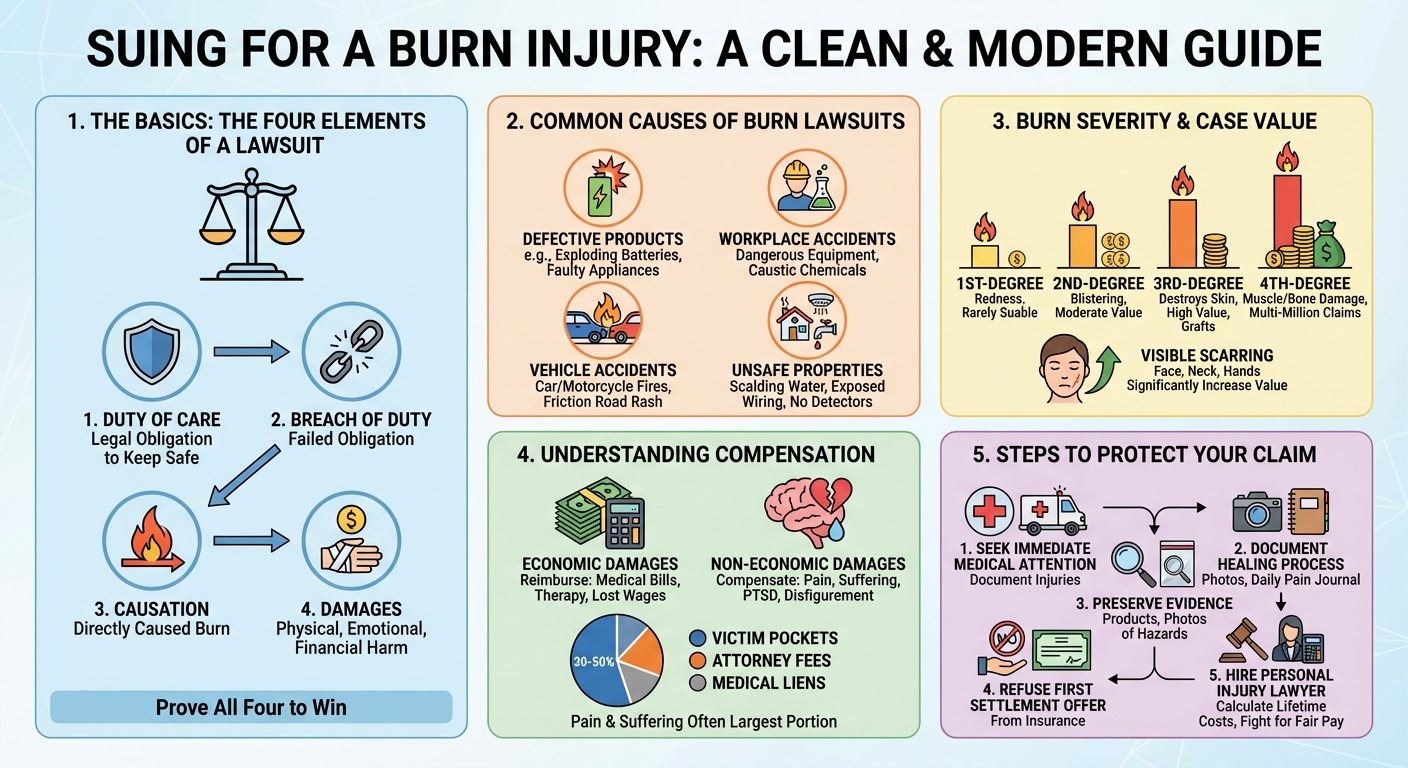
To have a valid burn injury lawsuit, your case must establish four key elements:
- Duty of Care: The defendant had a legal obligation to keep you reasonably safe.
- Breach of Duty: The defendant failed to meet that obligation through action or inaction.
- Causation: Their failure directly caused your burn injury.
- Damages: You suffered actual physical, emotional, and financial harm as a result.
Whether you were burned by a negligent landlord, a careless driver, or a dangerous consumer product, establishing liability is the cornerstone of recovering the compensation you deserve.
Common Causes of Burn Injury Lawsuits
Burns can happen anywhere, but legally actionable burn injuries typically fall into a few distinct categories.
Defective Products
Manufacturers are strictly liable if their products cause harm when used as intended. Common culprits include exploding lithium-ion batteries in e-bikes, faulty space heaters, and defective kitchen appliances like pressure cookers that open while still pressurized, causing severe thermal burns.
Workplace Accidents and Chemical Burns
While many workplace injuries fall under workers’ compensation, you may have grounds for a third-party personal injury lawsuit if your burn was caused by an outside contractor, defective industrial equipment, or improper storage of caustic chemicals leading to severe chemical burns.
Car Accidents and Friction Burns
High-speed collisions can result in vehicle fires, leading to catastrophic thermal burns. Additionally, motorcyclists and pedestrians frequently suffer severe friction burns (often called “road rash”) which can permanently damage multiple layers of skin and nerve tissue.
Premises Liability
Property owners must maintain safe environments. You may have a premises liability claim if you suffered burns due to apartment fires lacking working smoke detectors, exposed electrical wiring, or scalding water in a hotel or rental property caused by an improperly regulated water heater.
Understanding Burn Degrees and Case Value
The severity of your burn directly impacts both your medical treatment and the potential value of your legal claim.
| Burn Severity | Medical Impact | Lawsuit Viability & Value |
|---|---|---|
| First-Degree | Superficial redness, minor pain. | Rarely grounds for a lawsuit unless part of a larger injury claim. |
| Second-Degree | Blistering, deep tissue pain, potential scarring. | Viable if scarring is permanent or medical bills are significant. Moderate value. |
| Third-Degree | Destroys all skin layers; nerve damage. | High-value claims. Requires skin grafts and results in permanent disfigurement. |
| Fourth-Degree | Damage to muscle, tendon, and bone. | Catastrophic claims. Often results in multi-million dollar settlements or verdicts. |
The Impact of Scarring and Disfigurement
In personal injury law, visible scarring—especially on the face, neck, or hands—significantly increases case value. Disfigurement alters a person’s quality of life, self-esteem, and sometimes their ability to work, all of which are heavily factored into settlement calculations.
Burn Injury Compensation and Settlement Amounts
How much compensation for a burn injury?
Compensation for a burn injury varies widely based on severity, ranging from $10,000 for minor second-degree burns to multi-million dollar verdicts for catastrophic third-degree burns. Your final compensation depends on total medical expenses, lost income, the extent of permanent scarring, and the degree of emotional trauma experienced.
How much is a burn settlement worth?
A burn settlement is typically worth the combined total of your economic losses—like hospital bills, skin graft surgeries, and lost wages—plus non-economic damages for pain and disfigurement. Minor burn settlements may average $25,000 to $75,000, while severe, life-altering burn cases frequently settle for six or seven figures.
Economic vs. Non-Economic Damages
Economic damages reimburse you for out-of-pocket costs: ambulance rides, ICU stays, reconstructive surgeries, physical therapy, and lost earning capacity. Non-economic damages compensate you for the subjective losses: physical pain, loss of enjoyment of life, and emotional anguish.
Pain, Suffering, and Emotional Distress
Is it worth suing for pain and suffering?
Yes, it is absolutely worth suing for pain and suffering after a burn injury. Burns are widely considered one of the most painful injuries a human can endure. Compensation for pain and suffering often makes up the largest portion of a burn settlement, covering physical agony, PTSD, and permanent disfigurement.
Calculating Emotional Distress and PTSD
Burn survivors frequently experience Post-Traumatic Stress Disorder (PTSD), anxiety, and depression. Insurance companies and juries calculate these damages by looking at the daily impact on your life, testimony from mental health professionals, and the expected duration of your psychological recovery.
Understanding Your Payout: The Settlement Breakdown
How much of a $100K settlement will I get?
From a $100,000 settlement, you will typically receive between $30,000 and $50,000 in your pocket. This is calculated after deducting standard attorney contingency fees, which usually range from 33% to 40%, along with case expenses and any outstanding medical liens or health insurance reimbursements required by law.
Attorney Contingency Fees Explained
Most personal injury lawyers work on a contingency fee basis. This means you pay nothing upfront. The lawyer only gets paid a percentage of the final settlement or verdict if they win your case.
Medical Liens and Out-of-Pocket Reimbursements
Before you receive your final check, your attorney must legally pay off any medical liens. If your health insurance, Medicare, or a hospital covered your initial burn treatments, they have a right to be reimbursed from your settlement funds.
Steps to Take to Protect Your Burn Injury Claim
If you have suffered a burn injury, the actions you take in the immediate aftermath can make or break your case.
- Seek Immediate Medical Attention: Go to a hospital or specialized burn center immediately. Delaying treatment gives insurance companies an excuse to argue your injuries aren’t severe.
- Document Everything: Take clear, well-lit photos of your burns as they heal. Keep a pain journal detailing your daily struggles.
- Preserve the Evidence: If a defective product caused the burn, do not throw it away. Keep it in its exact post-accident condition. If the burn happened on someone else’s property, take photos of the hazard.
- Do Not Accept the First Offer: Insurance adjusters often swoop in with fast, lowball settlement offers before you know the full extent of your future medical needs. Never sign a release without consulting an attorney.
Why You Need a Personal Injury Lawyer for Your Burn Case
Burn injury claims are incredibly complex. Insurance companies will use every tactic available to devalue your claim—arguing that your scars are “minor,” that you were partially at fault, or that your psychological trauma is exaggerated.
An experienced personal injury lawyer knows how to fight back. They will hire medical experts, life care planners, and accident reconstructionists to prove the true lifetime cost of your injury. If you or a loved one has suffered a severe burn, protect your future by scheduling a free, no-obligation case evaluation today.
 Call (713) 747-7777