
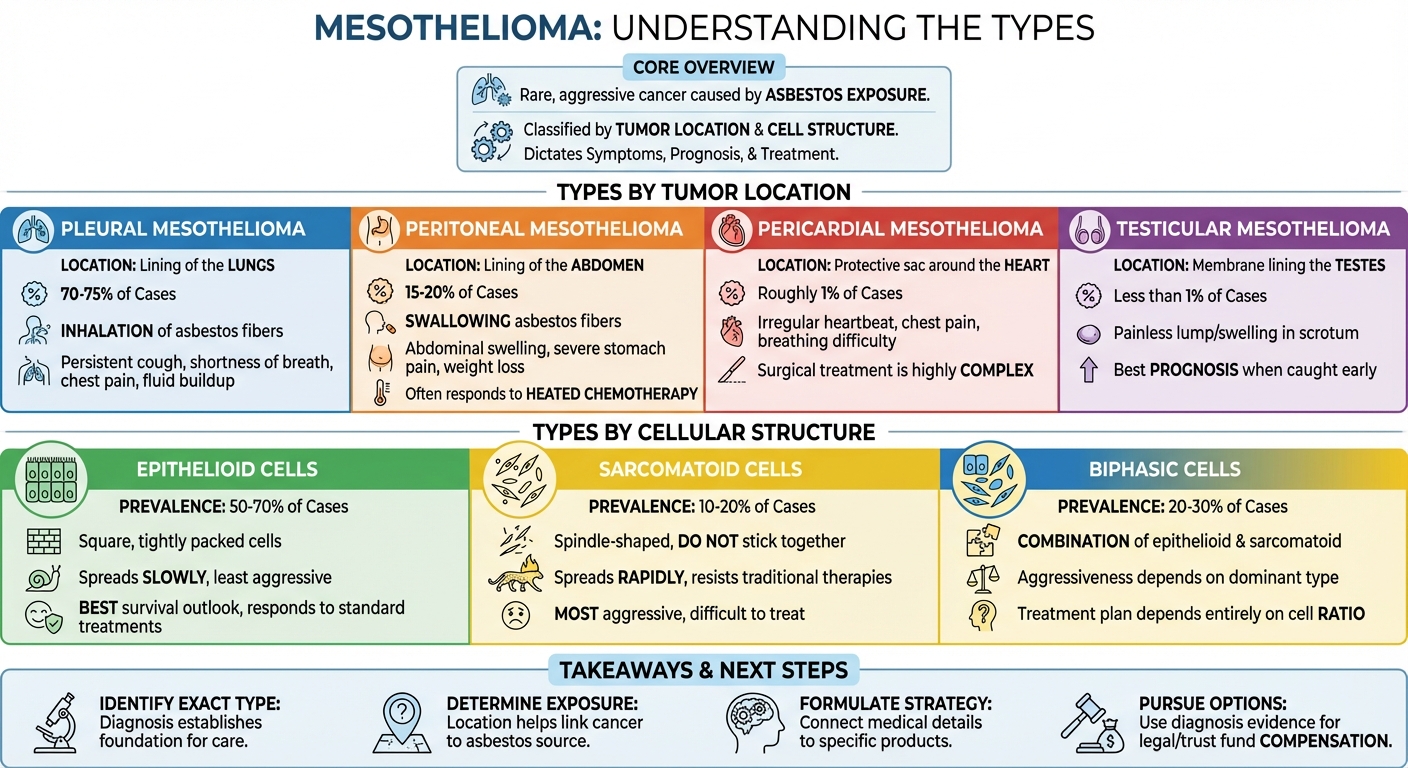
There are four main types of mesothelioma based on where the cancer develops: pleural (lungs), peritoneal (abdomen), pericardial (heart), and testicular (testes). Doctors also classify mesothelioma by three cell types: epithelioid, sarcomatoid, and biphasic. Pleural mesothelioma is the most common, accounting for roughly 75% of all diagnoses.
Understanding the Different Types of Mesothelioma
Mesothelioma is a rare, aggressive cancer caused almost exclusively by asbestos exposure. When a patient is diagnosed, doctors categorize the disease in two distinct ways: by the location of the tumors in the body, and by the cellular structure (histology) of the cancer. Understanding your specific mesothelioma type is critical because it dictates your symptoms, your prognosis, and the treatment options available to you.
The 4 Main Types of Mesothelioma (By Location)
The most common way doctors classify mesothelioma is by where the cancer first develops. Asbestos fibers can become lodged in different mesothelial linings throughout the body, leading to four primary location-based types.
| Mesothelioma Type | Location in Body | Percentage of Cases |
|---|---|---|
| Pleural | Lining of the lungs (pleura) | 70% – 75% |
| Peritoneal | Lining of the abdomen (peritoneum) | 15% – 20% |
| Pericardial | Lining of the heart (pericardium) | ~1% |
| Testicular | Lining of the testes (tunica vaginalis) | <1% |
Pleural Mesothelioma (Lungs)
Pleural mesothelioma is by far the most common diagnosis. It develops in the pleura, the protective membrane surrounding the lungs. When microscopic asbestos fibers are inhaled, they can lodge in this lining, causing inflammation and scarring that eventually mutates into cancer. Common symptoms include persistent coughing, shortness of breath, chest pain, and fluid buildup around the lungs (pleural effusion).
Peritoneal Mesothelioma (Abdomen)
Peritoneal mesothelioma forms in the peritoneum, the tissue lining the abdominal cavity. This type typically occurs when asbestos fibers are swallowed or migrate from the respiratory system into the digestive tract. Patients often experience abdominal swelling, unexplained weight loss, nausea, and severe stomach pain. Peritoneal patients often respond well to a specialized treatment called HIPEC (heated chemotherapy).
Pericardial Mesothelioma (Heart)
Pericardial mesothelioma is an extremely rare form of the disease that develops in the pericardium, the protective sac around the heart. Because it restricts the heart’s ability to pump effectively, symptoms mimic other severe cardiac conditions, including irregular heartbeat, chest pain, and difficulty breathing. Due to its proximity to the heart, surgical treatment is highly complex.
Testicular Mesothelioma
Accounting for less than 1% of all cases, testicular mesothelioma develops in the tunica vaginalis, the membrane lining the testes. It is usually discovered when a patient seeks treatment for a painless lump or swelling in the scrotum. Because it is so rare, there is no standard staging system, but it generally has a better prognosis than other types when caught early.
Mesothelioma Types by Cell Structure (Histology)
Beyond location, pathologists examine biopsy samples under a microscope to determine the cancer’s cell type. The cellular structure plays a massive role in how aggressively the cancer spreads and how well it responds to chemotherapy or immunotherapy.
Epithelioid Mesothelioma (Most Common)
Epithelioid cells are the most common, making up 50% to 70% of all mesothelioma diagnoses. These cells are square or tubular and tend to clump tightly together. Because they stick together, they spread (metastasize) more slowly than other types. Patients with epithelioid mesothelioma generally have the best prognosis and respond most favorably to standard treatments.
Sarcomatoid Mesothelioma
Sarcomatoid mesothelioma accounts for 10% to 20% of cases. These cells are spindle-shaped, scattered, and do not stick together, allowing them to spread rapidly through the body. This is the most aggressive cell type and is highly resistant to many traditional therapies, making it the most difficult to treat.
Biphasic Mesothelioma
Biphasic mesothelioma is a combination of both epithelioid and sarcomatoid cells, occurring in 20% to 30% of patients. The prognosis and treatment plan for biphasic mesothelioma depend heavily on the ratio of the cells. If the tumor is predominantly epithelioid, it will be treated more like an epithelioid tumor; if it is mostly sarcomatoid, the approach will be more aggressive.
Frequently Asked Questions About Mesothelioma Types
What is the most aggressive mesothelioma?
Sarcomatoid mesothelioma is the most aggressive cell type. It accounts for 10% to 20% of cases and features spindle-shaped cells that spread rapidly throughout the body. Because these cells are highly resistant to standard therapies, sarcomatoid tumors generally carry the poorest prognosis.
Which type of lung cancer is the deadliest?
While mesothelioma is a cancer of the lung lining rather than the lung itself, it is exceptionally lethal. Among actual lung cancers often caused by asbestos, Small Cell Lung Cancer (SCLC) is considered the deadliest and most aggressive, spreading rapidly before symptoms appear.
What is the least aggressive mesothelioma?
Epithelioid mesothelioma is considered the least aggressive cell type. Because epithelioid cells stick tightly together, they spread much slower than other types. Patients with this cell structure typically respond better to surgery, chemotherapy, and radiation, leading to a more favorable prognosis.
What is a rare type of mesothelioma?
Pericardial and testicular mesothelioma are exceptionally rare, making up less than 2% of all cases combined. Pericardial mesothelioma develops in the lining of the heart, while testicular mesothelioma forms in the lining of the testes. Both are difficult to diagnose early.
How Your Diagnosis Type Impacts Your Legal Options
Linking Your Specific Type to Asbestos Exposure
Your specific mesothelioma diagnosis is a critical piece of evidence in any legal claim. For example, pleural mesothelioma is strongly linked to the inhalation of airborne asbestos dust in industrial or military settings, while peritoneal mesothelioma is often linked to ingested fibers. Identifying your exact type helps legal and medical experts trace the cancer back to the specific asbestos products you were exposed to decades ago.
Next Steps for Patients and Families
Receiving a mesothelioma diagnosis is overwhelming, but knowing your exact type is the first step toward building an effective medical and legal strategy. Once your medical team has established your treatment plan, exploring your legal rights can help secure the financial compensation needed for specialized care. Whether you are considering filing a mesothelioma lawsuit, seeking trust fund compensation, or looking for a specialized lawyer in Texas, your diagnosis details will form the foundation of your case.
 Call (713) 747-7777