
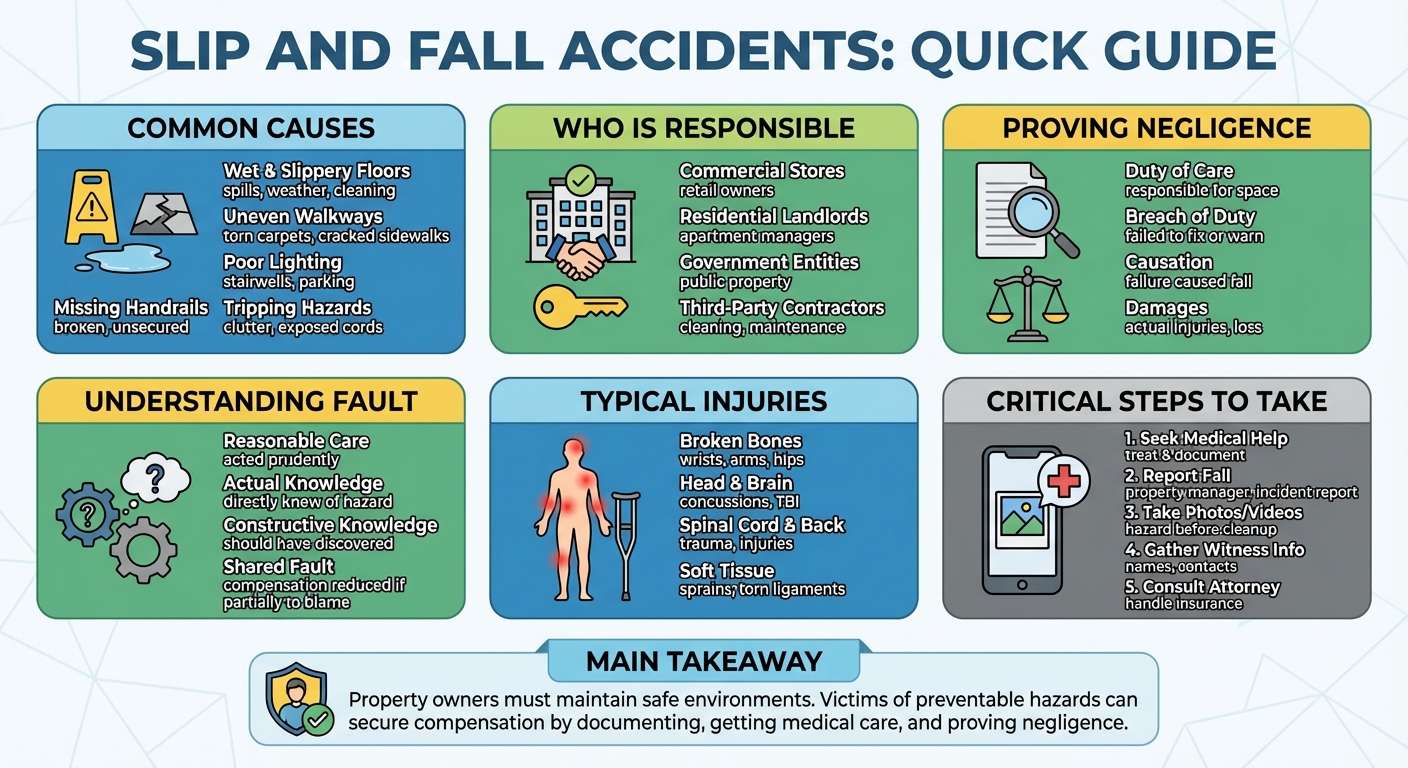
The leading causes of slip and fall accidents include wet floors, uneven walkways, poor lighting, and broken handrails. Property owners, landlords, or business operators are typically legally responsible for these accidents if they failed to exercise reasonable care in maintaining a safe environment or warning visitors of known hazards.
Slip and Fall Accidents: Leading Causes and Who Is Responsible
Falls are the second leading cause of unintentional injury-related deaths worldwide. While some falls are simple accidents, many slip and fall incidents occur due to hazardous conditions that could have been prevented. When a property owner or manager fails to maintain a safe environment, innocent people can suffer life-altering injuries.
Understanding the common causes of these accidents and knowing who is legally responsible is critical if you or a loved one has been injured. This guide breaks down the most frequent hazards, the fundamentals of premises liability, and the steps you need to take to protect your rights.
The Most Common Causes of Slip and Fall Accidents
Slip and fall accidents rarely happen without a contributing environmental factor. Whether in a grocery store, an office building, or a private residence, these hazards are the leading culprits.
Wet and Slippery Surfaces (Spills, Weather, and Cleaning)
Wet floors are arguably the most common cause of slip and fall accidents. These hazards can manifest in several ways:
- Spills: Dropped beverages or leaking products in retail aisles.
- Weather conditions: Rain, snow, or ice tracked into entryways without proper floor mats.
- Cleaning: Recently mopped or waxed floors left without highly visible warning signs.
Uneven or Damaged Walkways (Torn Carpet, Potholes, Cracked Sidewalks)
A sudden change in elevation or a compromised surface can easily cause a person to lose their footing. Common tripping hazards include torn or bunched carpeting, loose floorboards, cracked public sidewalks, and deep potholes in poorly maintained parking lots.
Inadequate Lighting in Stairwells and Parking Lots
Even if a walkway is perfectly clear, poor lighting can obscure steps, curbs, and transitions. Inadequate illumination in stairwells, parking garages, and exterior walkways prevents visitors from seeing potential hazards until it is too late.
Missing, Broken, or Unsecured Handrails
Staircases pose a significant risk, and handrails are a crucial safety feature. If a handrail is loose, broken, or entirely missing, a person who loses their balance has nothing to grab onto, often resulting in a severe tumbling fall.
Clutter, Cords, and Debris in Walkways
Walkways must be kept clear of obstructions. In office and retail settings, exposed extension cords, scattered merchandise, or improperly stored equipment can create dangerous tripping hazards for unsuspecting pedestrians.
Who Is Legally Responsible for a Slip and Fall?
In personal injury law, slip and fall cases fall under the umbrella of premises liability. Depending on where the accident occurred, different parties may be held liable.
Commercial Property Owners and Retail Businesses
Store owners, restaurant operators, and shopping mall managers have a high duty of care to their customers (legally known as “invitees”). They are required to regularly inspect their premises, promptly clean up spills, and repair known dangers.
Residential Landlords and Apartment Complexes
Landlords are responsible for maintaining safe conditions in common areas. If a tenant or guest slips on an icy communal walkway, trips on a broken staircase, or falls due to a burnt-out lightbulb in a shared hallway, the property management company or landlord may be liable.
Government Entities and Municipalities (Public Property)
If you fall on a cracked city sidewalk, inside a public school, or at a government building, the municipality may be at fault. However, claims against government entities involve strict rules, complex immunity laws, and very short filing deadlines.
Third-Party Contractors (Maintenance and Cleaning Crews)
Sometimes, the property owner is not the only party at fault. If a third-party janitorial service mops a floor and fails to place a “Wet Floor” sign, or if a landscaping company leaves debris on a walkway, those independent contractors can also be held liable.
How Liability is Determined: Proving Negligence
Getting injured on someone else’s property does not automatically mean they are legally responsible. To win a slip and fall claim, you must prove negligence.
The Four Elements of a Premises Liability Claim
- Duty of Care: The defendant owned, leased, or controlled the property and owed you a duty to keep it safe.
- Breach of Duty: The defendant failed to maintain the property or warn of a hazard.
- Causation: This specific breach directly caused your slip and fall.
- Damages: You suffered actual, quantifiable harm (medical bills, lost wages, pain).
Understanding the ‘Reasonable Care’ Standard
The law asks: Did the property owner act as a reasonably prudent person would under similar circumstances? If a customer spills a drink and another person slips on it five seconds later, the owner likely didn’t have a “reasonable” amount of time to discover and clean it. However, if the spill sat there for three hours, the owner likely failed the reasonable care standard.
Constructive Knowledge: Did the Owner Know About the Hazard?
Proving what an owner knew is the crux of most slip and fall cases. Liability hinges on two types of knowledge:
| Type of Knowledge | Definition | Example |
|---|---|---|
| Actual Knowledge | The owner or employees directly knew the hazard existed. | An employee reported a leaking roof to the manager, but nothing was done. |
| Constructive Knowledge | The owner should have known about the hazard through routine care. | A puddle of water sat in a grocery aisle for hours without being noticed. |
Comparative Negligence: What If You Were Partially at Fault?
Insurance companies will often try to blame the victim, arguing that you were distracted by your phone, wearing improper footwear, or ignoring warning signs. Under comparative negligence laws, your compensation can be reduced by your percentage of fault. If you are found to be more than 50% at fault, you may be barred from recovering any compensation at all.
Common Injuries Resulting from Slip and Falls
Slip and fall injuries range from minor bruising to catastrophic, life-altering trauma.
Fractures and Broken Bones (Hips, Wrists, Ankles)
When people fall, their natural instinct is to catch themselves with their hands, frequently resulting in broken wrists or arms. Older adults are particularly vulnerable to devastating hip fractures, which often require surgery and extensive physical therapy.
Traumatic Brain Injuries (TBIs) and Concussions
Striking your head on a hard floor or shelving unit can cause severe brain trauma. Symptoms of a concussion or TBI may not appear immediately but can lead to long-term cognitive impairment, chronic headaches, and mood changes.
Spinal Cord and Back Injuries
A hard landing on the back or tailbone can cause herniated discs, fractured vertebrae, or nerve damage. In severe cases, spinal cord injuries can result in partial or total paralysis.
Soft Tissue Damage (Sprains and Strains)
Even if no bones are broken, the sudden twisting motion of a slip and fall can tear ligaments and tendons. Ankle sprains and knee injuries (like torn ACLs or meniscus tears) are highly common and can take months to heal.
What to Do Immediately After a Slip and Fall Accident
The actions you take in the minutes and days following a fall can make or break your ability to recover compensation.
Seek Immediate Medical Attention
Your health is the top priority. Seeing a doctor immediately ensures you get necessary treatment and creates an official medical record linking your injuries directly to the fall.
Report the Incident to the Property Manager or Owner
Notify a manager, landlord, or property owner before you leave the scene. Ask them to fill out a formal incident report and request a copy. Keep your statement brief and never admit fault or apologize.
Document the Scene (Photos, Videos, and Conditions)
Hazards are often cleaned up within minutes of an accident. Use your phone to take clear photos and videos of the exact cause of your fall (e.g., the puddle, the torn carpet, the lack of warning signs) and the surrounding area.
Collect Witness Contact Information
If anyone saw you fall, ask for their name, phone number, and email address. Independent witness testimony is incredibly powerful for proving how the accident occurred and how long the hazard was present.
When to Consult a Slip and Fall Accident Lawyer
Slip and fall claims are notoriously difficult to win without legal representation. Property owners and their insurance companies will aggressively fight to deny liability or shift the blame onto you. You should consult a personal injury lawyer immediately if you suffered serious injuries, if the property owner denies fault, or if the insurance company offers a lowball settlement. An experienced attorney can secure surveillance footage, gather maintenance logs, and build a compelling case to ensure you receive the compensation you deserve.
 Call (713) 747-7777