
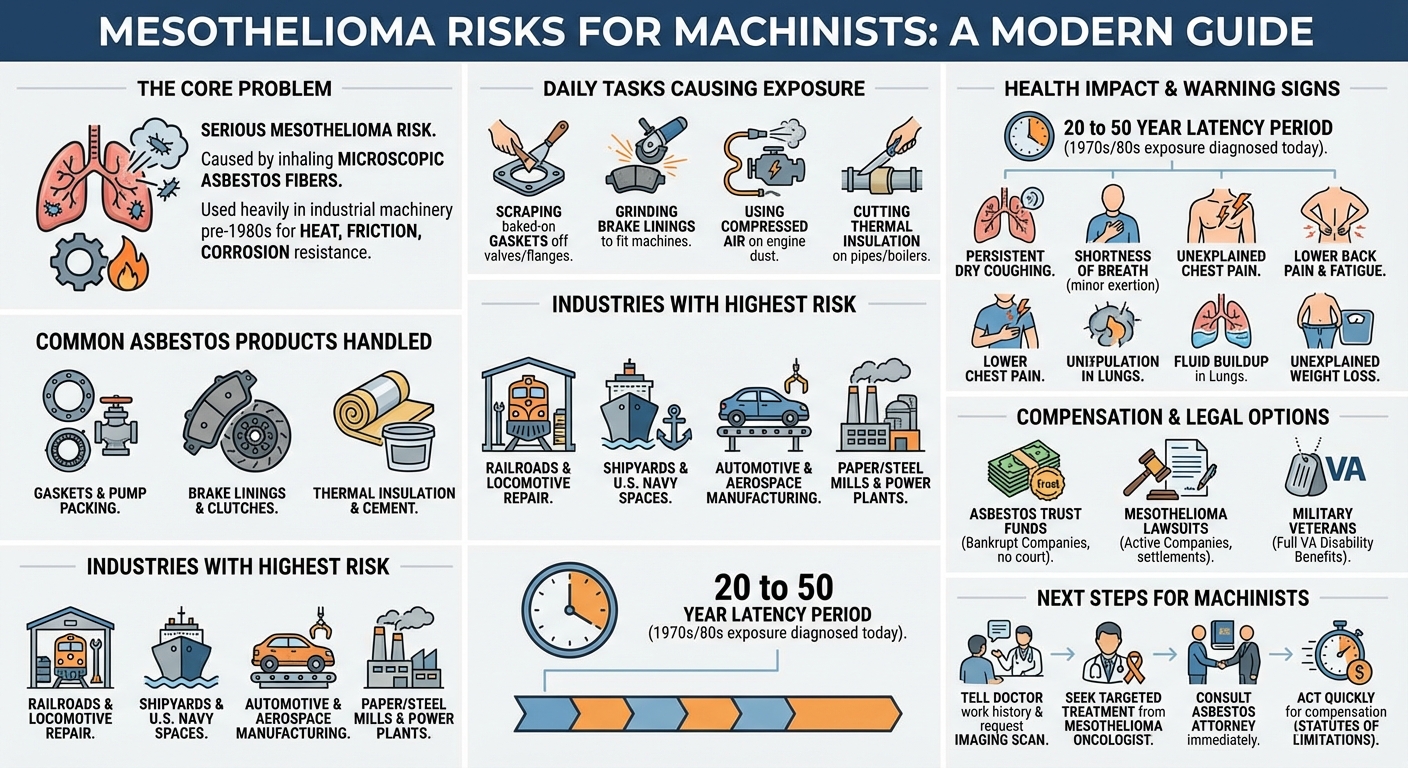
Machinists face a high risk of developing mesothelioma due to occupational asbestos exposure. Before the 1980s, industrial machinery heavily relied on asbestos-containing gaskets, valves, brakes, and insulation to resist heat and friction. Routine maintenance tasks like grinding, cutting, and sanding released toxic asbestos fibers into the air, which machinists unknowingly inhaled.
Mesothelioma in Machinists: Understanding Asbestos Exposure Risks
For decades, machinists have been the backbone of American industry, maintaining the equipment that powers railroads, ships, and factories. Unfortunately, this hands-on work placed them at a severe risk for occupational asbestos exposure. Because asbestos is highly resistant to heat, friction, and chemical corrosion, it was heavily integrated into industrial machinery throughout the 20th century. Today, many retired machinists are being diagnosed with mesothelioma, a rare and aggressive cancer caused exclusively by inhaling or ingesting asbestos fibers.
Why Were Machinists Exposed to Asbestos on the Job?
The Role of Asbestos in Industrial Machinery
Machinery generates immense heat and friction. To prevent fires and equipment failure, manufacturers historically relied on asbestos as a cheap, effective insulator and fireproofing agent. Asbestos was woven into the very components that machinists were hired to install, repair, and replace. Until federal regulations restricted its use in the late 1970s and 1980s, asbestos was an unavoidable presence in almost every industrial machine shop.
Daily Tasks That Released Dangerous Asbestos Fibers
A machinist’s daily routine involved cutting, grinding, drilling, and sanding—actions that easily disturbed brittle asbestos materials. When these products were manipulated, they released microscopic asbestos dust into the workspace. Common high-risk tasks included:
- Scraping old, baked-on asbestos gaskets off valves and flanges.
- Grinding down new brake linings to fit specific machinery.
- Using compressed air to blow out dust from engine compartments and brake assemblies.
- Cutting asbestos-laden thermal insulation to access pipes and boilers.
Common Asbestos Products Handled by Machinists
Gaskets, Valves, and Pump Packing Materials
Pumps and valves required tight seals to handle high-pressure steam and hot fluids. Machinists frequently fabricated or replaced asbestos gaskets. Removing old gaskets often required wire brushes or grinders, which pulverized the asbestos into a toxic dust cloud.
Brake Linings, Pads, and Clutches
Heavy machinery, cranes, locomotives, and automobiles utilized asbestos in their braking systems and clutches to withstand intense friction. Machinists tasked with replacing these parts were heavily exposed to asbestos dust that had accumulated inside the brake housings.
Thermal Insulation, Boiler Cement, and Tape
Machinists often worked in close proximity to boilers, turbines, and high-temperature pipes wrapped in asbestos insulation. Even if a machinist was not directly handling the insulation, the vibration of the machinery or the work of nearby pipefitters could cause asbestos fibers to become airborne, leading to secondhand inhalation.
High-Risk Industries for Machinist Asbestos Exposure
Railroad Machinists and Locomotive Repair
Railroad machinists maintained steam and diesel locomotives, both of which utilized massive amounts of asbestos. Steam engines were wrapped in asbestos blankets, while diesel engines used asbestos in their brake shoes, gaskets, and electrical panels. Working in enclosed roundhouses meant that asbestos dust lingered in the air for hours.
Shipyard and U.S. Navy Machinists
Shipyard machinists and Navy machinist’s mates faced some of the highest exposure levels. They worked in the cramped, poorly ventilated bowels of ships, maintaining boilers, turbines, and pumps. The confined spaces concentrated the asbestos fibers, making inhalation almost certain.
Automotive and Aerospace Machinists
In the automotive and aerospace sectors, machinists frequently machined brake parts, clutch facings, and engine gaskets. The aerospace industry also used asbestos in heat shields and structural insulation, exposing machinists during fabrication and repair.
General Industrial, Mill, and Factory Machinists
Machinists working in paper mills, steel mills, power plants, and general manufacturing facilities were exposed to asbestos used in heavy presses, conveyors, and generators. The ambient asbestos dust in these large industrial settings put all floor workers at risk.
Recognizing Mesothelioma Symptoms in Former Machinists
Understanding the 20 to 50-Year Latency Period
Mesothelioma has an exceptionally long latency period. It can take anywhere from 20 to 50 years after the initial asbestos exposure for symptoms to manifest. This means that machinists who worked with asbestos in the 1970s or 1980s are only now receiving diagnoses.
Early Warning Signs to Discuss with Your Doctor
Because mesothelioma symptoms mimic less serious conditions like asthma or pneumonia, it is frequently misdiagnosed. Former machinists should be vigilant for:
- Persistent, dry coughing or wheezing
- Shortness of breath during minor exertion
- Unexplained chest or lower back pain
- Fluid buildup in the lungs (pleural effusion)
- Unexplained weight loss and fatigue
If you experience these symptoms, inform your physician about your history as a machinist and request an imaging scan.
Compensation and Legal Options for Machinists
Machinists diagnosed with mesothelioma have legal rights. Because asbestos manufacturers knew about the dangers of their products but failed to warn workers, victims can seek financial relief to cover medical bills and secure their family’s future.
Filing an Asbestos Trust Fund Claim
Many asbestos product manufacturers filed for bankruptcy to avoid lawsuits. In response, courts forced them to establish asbestos trust funds. Machinists can file claims against these trusts to receive compensation without ever going to court.
Mesothelioma Lawsuits and Settlements
For companies that are still in business, victims can file personal injury lawsuits. Most of these cases result in a settlement before reaching a jury. If you are exploring this route, understanding how to file a mesothelioma lawsuit is a critical first step.
VA Benefits for Military Veteran Machinists
Veterans who served as Navy machinist’s mates or in similar roles and developed mesothelioma are eligible for VA disability benefits. The VA recognizes mesothelioma as a 100% service-connected disability, providing significant monthly compensation and access to specialized healthcare.
Next Steps: What to Do After a Mesothelioma Diagnosis
Seeking Specialized Medical Treatment
Mesothelioma is rare, and general oncologists may not have the expertise to treat it effectively. It is vital to consult a specialist. For instance, patients in Texas often seek treatment at top-tier facilities; you can learn more about MD Anderson and mesothelioma treatment options.
Consulting an Experienced Asbestos Attorney
Time is limited due to statutes of limitations. Partnering with a specialized lawyer ensures your work history is thoroughly investigated to identify the responsible asbestos companies. If you need local representation, consider reaching out to a Texas mesothelioma lawyer to protect your legal rights and maximize your compensation.
 Call (713) 747-7777