
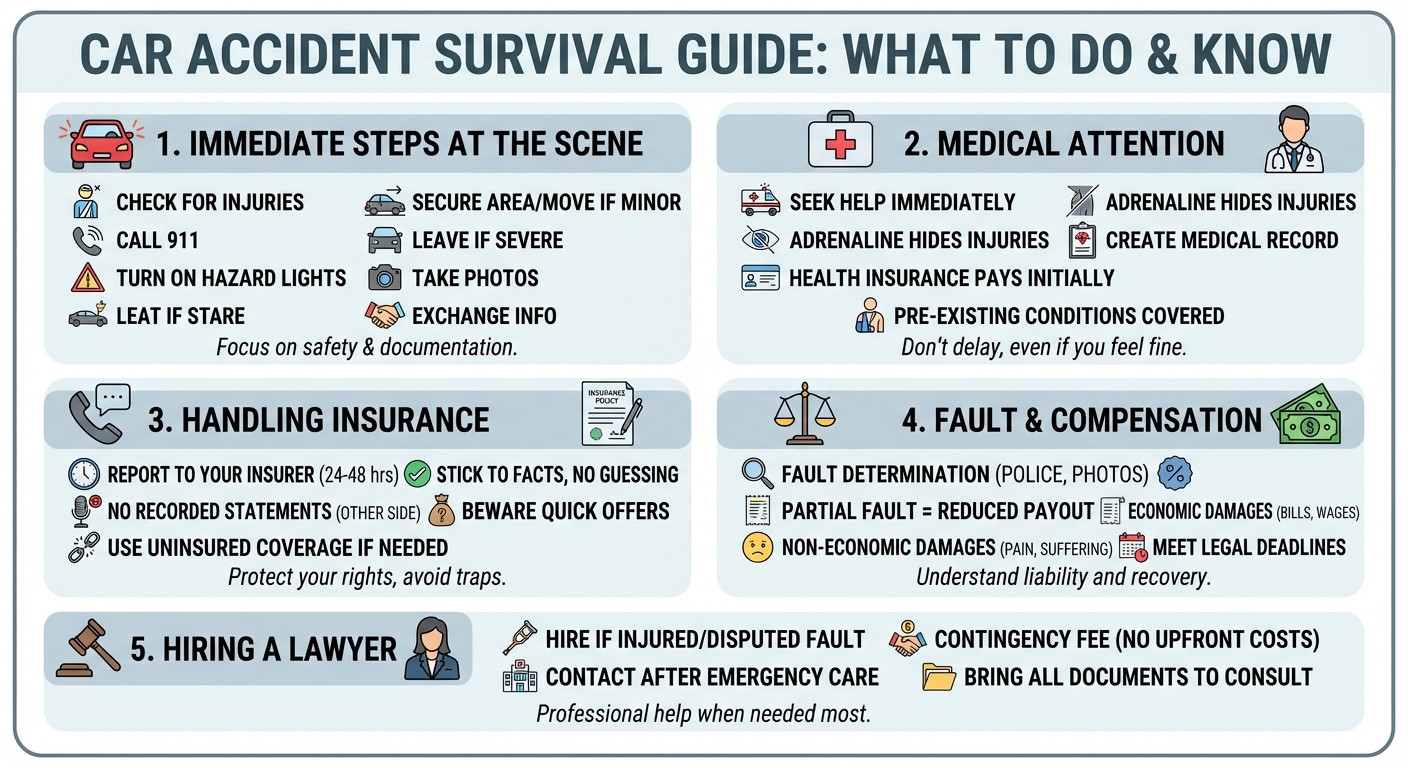
After a car accident, immediately check for injuries and call 911. Move your vehicle to safety if possible, exchange insurance information, and document the scene with photos. Always seek medical attention, even if you feel fine, and consult a lawyer before speaking to the at-fault driver’s insurance company.
Frequently Asked Questions About Car Accidents
Being involved in a car accident is a disorienting and stressful experience. In the chaotic aftermath, you likely have dozens of questions about your health, your vehicle, and your legal rights. This comprehensive guide covers the most common car accident FAQs to help you navigate the claims process, protect your right to compensation, and avoid critical mistakes.
Immediate Steps at the Accident Scene
What should I do immediately after a car accident?
Your safety is the top priority. Take these steps immediately after a collision:
- Check for injuries: Assess yourself and your passengers.
- Call 911: Request police and emergency medical services.
- Secure the scene: Turn on your hazard lights.
- Document evidence: Take photos of the vehicles, license plates, and surrounding area.
Do I need to call the police for a minor fender bender?
Yes. Even if the damage appears minor and no one seems injured, you should call the police. An official police report provides an objective record of the crash, which is essential when dealing with insurance companies. Without it, the other driver could easily change their story later.
Should I move my car out of traffic after a crash?
If the accident is minor, there are no serious injuries, and your vehicle is drivable, you should move it to the shoulder or a nearby parking lot to prevent further accidents. If the crash is severe or the vehicle is disabled, leave it where it is and wait for law enforcement.
What information should I collect from the other driver?
Before leaving the scene, ensure you exchange the following information:
- Full name and contact information
- Insurance company name and policy number
- Driver’s license number
- License plate number, make, and model of their vehicle
Medical Treatment and Injuries
Should I go to the emergency room if I don’t feel hurt?
Absolutely. The adrenaline rush following a crash can mask severe pain and symptoms. Internal bleeding, concussions, and soft tissue injuries may not manifest until hours or days later. Seeking immediate medical attention protects your health and creates a vital medical record linking your injuries directly to the crash.
Who pays for my medical bills after a car accident?
Initially, your health insurance, Personal Injury Protection (PIP), or Medical Payments (MedPay) coverage may cover your bills. Ultimately, if another driver is at fault, their bodily injury liability insurance is responsible for compensating you for your medical expenses through a settlement or verdict.
What if I had a pre-existing condition before the crash?
You are still entitled to compensation. The law states that an at-fault driver takes the victim as they find them. While you cannot claim compensation for the original condition itself, you can recover damages if the car accident aggravated, worsened, or accelerated your pre-existing injury.
What are the most common delayed-onset injuries?
Some injuries take time to present symptoms. Watch out for:
- Whiplash: Neck stiffness and pain that appears days later.
- Concussions: Headaches, dizziness, or confusion.
- Internal injuries: Deep bruising, abdominal pain, or fainting.
- Spinal disc injuries: Numbness or tingling in the arms or legs.
Dealing with Insurance Companies
When should I notify my insurance company about the accident?
You should report the accident to your own insurance company as soon as possible, typically within 24 to 48 hours. Most policies require prompt notification to activate your coverage. Stick to the basic facts and avoid speculating about fault.
Should I give a recorded statement to the other driver’s insurance?
No. You are under no legal obligation to provide a recorded statement to the at-fault driver’s insurance adjuster. They are trained to ask leading questions that could trick you into admitting partial fault or downplaying your injuries. Always consult a lawyer before speaking with the opposing insurance company.
What if the at-fault driver is uninsured or underinsured?
If the responsible driver lacks sufficient insurance, you can turn to your own Uninsured/Underinsured Motorist (UM/UIM) coverage, provided you have it on your policy. This coverage steps in to pay for your medical bills, lost wages, and pain and suffering up to your policy limits.
Why is the insurance adjuster offering me a quick settlement?
Insurance companies offer fast, early settlements to save money. They hope you will accept a lowball offer before you realize the full extent of your medical bills and future treatment needs. Once you sign a release and accept the check, you cannot ask for more money later.
Fault, Claims, and Compensation
How is fault determined in a car accident?
Fault is determined by examining the evidence, which includes the police report, photographs of the scene, witness statements, traffic camera footage, and the physical damage to the vehicles. Insurance adjusters and attorneys use this evidence to establish who violated traffic laws or acted negligently.
What happens if I am partially at fault for the crash?
In most states, you can still recover compensation under “comparative negligence” laws, as long as you are not the primary cause of the accident. However, your final compensation will be reduced by your percentage of fault. For example, if you are 20% at fault, your settlement is reduced by 20%.
How much is my car accident claim worth?
There is no standard formula. The value of your claim depends on the severity of your injuries, the total cost of your medical care, your lost income, and the impact the accident has on your quality of life. Cases involving permanent disability or surgery yield higher settlements than minor soft-tissue claims.
What types of damages can I recover?
Car accident victims can generally pursue two types of damages:
- Economic Damages: Quantifiable losses like medical bills, property damage, and lost wages.
- Non-Economic Damages: Subjective losses like pain and suffering, emotional distress, and loss of enjoyment of life.
How long do I have to file a car accident lawsuit?
The deadline to file a lawsuit is known as the statute of limitations, and it varies strictly by state. In many states, you have two years from the date of the accident to file a personal injury claim. Missing this deadline usually means losing your right to seek compensation entirely.
Hiring a Car Accident Lawyer
Do I really need a lawyer for a car accident claim?
While you can handle minor property-damage-only claims yourself, you should hire a lawyer if you suffered injuries, missed work, or if fault is being disputed. An attorney levels the playing field against aggressive insurance companies and maximizes your financial recovery.
How much does it cost to hire a car accident attorney?
Most personal injury lawyers work on a contingency fee basis. This means there are no upfront costs or hourly fees. Your attorney only gets paid if they successfully recover a settlement or verdict for you, typically taking a percentage (usually 33% to 40%) of the final award.
When is the best time to contact a personal injury lawyer?
The best time to contact a lawyer is immediately after you have received emergency medical treatment. Early legal intervention ensures critical evidence is preserved, witnesses are interviewed promptly, and you are protected from insurance company tactics from day one.
What should I bring to my free legal consultation?
To get the most out of your initial consultation, bring any documents related to the crash. This includes the police report (or the report number), photos of the scene and your injuries, medical discharge papers, your auto insurance policy, and any correspondence you have received from insurance companies.
 Call (713) 747-7777