
Table of contents
Grocery store slip and fall liability depends on proving that the store was negligent. To hold a supermarket legally responsible, you must show that employees either created the hazard, knew about it and ignored it, or should have discovered it through routine inspections but failed to clean it up or post warning signs.
Understanding Grocery Store Slip and Fall Liability
When you enter a supermarket, you expect the aisles to be safe and free of hidden dangers. However, when spills happen or equipment malfunctions, customers can suffer severe injuries. Understanding grocery store slip and fall liability is the first step toward getting the compensation you deserve.
The Duty of Care Owed to Shoppers (Invitees)
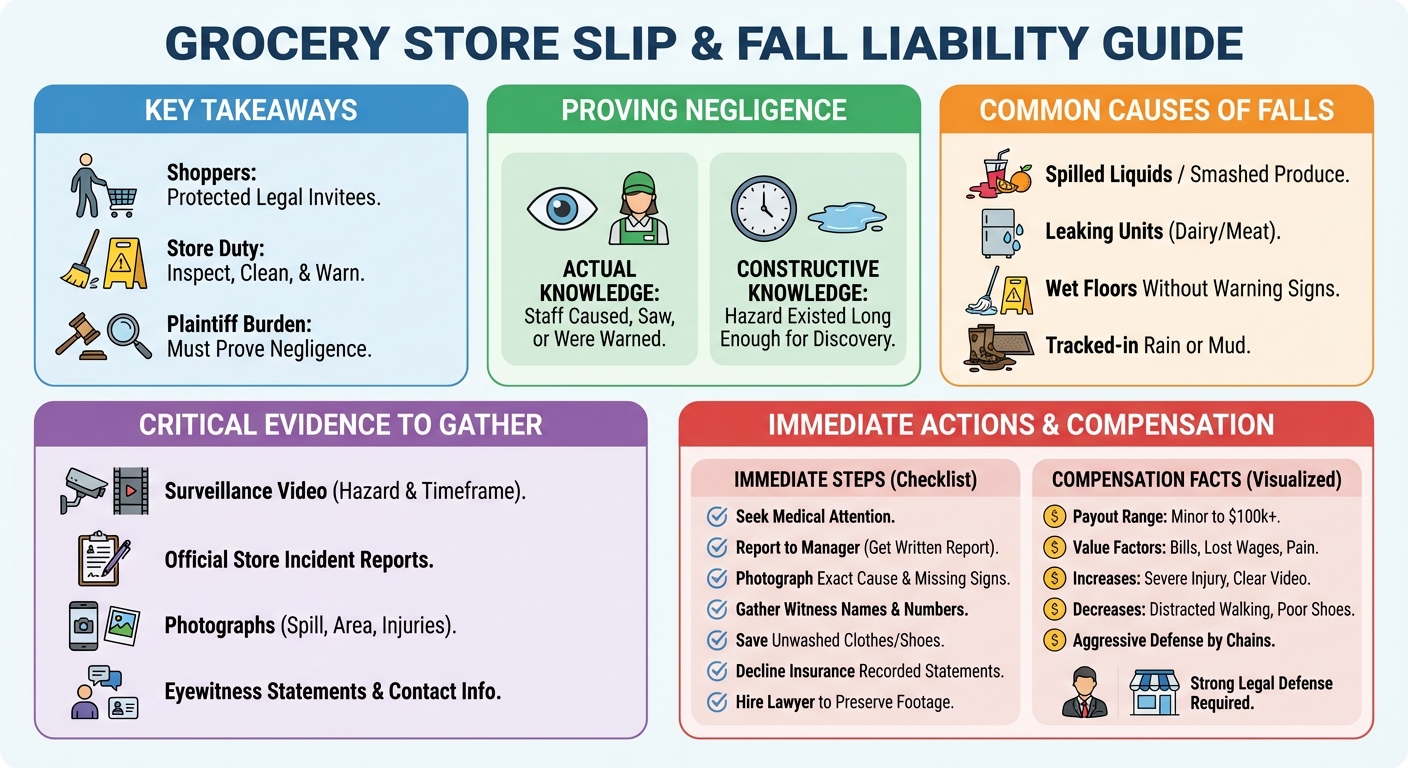
Under premises liability law, grocery store shoppers are classified as invitees. This is the highest level of legal protection afforded to a visitor. Because the store invites you in to do business and make a profit, management owes you a strict duty of care. This means they must regularly inspect the premises, promptly clean up hazards, and clearly warn customers of any dangers they cannot immediately fix.
Actual vs. Constructive Knowledge: The Key to Winning
To win a liability claim, you must prove the store knew about the hazard. The law categorizes this into two types of knowledge:
- Actual Knowledge: An employee saw the spill, caused the spill, or a customer reported it directly to a manager.
- Constructive Knowledge: The hazard existed for a long enough period that a reasonably careful staff member should have discovered it during routine checks (e.g., a puddle of milk that has started to dry and get sticky).
Can you sue a grocery store for slipping and falling?
Yes, you can sue a grocery store for slipping and falling if you can prove the store’s negligence caused your injury. To win a lawsuit, you must demonstrate that the store management or employees knew—or reasonably should have known—about the hazard and failed to clean it or warn customers.
Common Causes of Supermarket Slip and Fall Accidents
Grocery stores are filled with potential hazards. Identifying the exact cause of your fall is critical for establishing liability.
Spilled Liquids and Smashed Produce
The most common culprits are dropped items in the aisles. A smashed grape in the produce section or a shattered bottle of olive oil can turn a linoleum floor into an ice rink. If employees fail to sweep these areas frequently, the store can be held liable.
Leaking Refrigeration Units
Freezers and open refrigeration units in the dairy and meat aisles frequently leak water. Stores are required to maintain this equipment. If a known leak is left unattended without absorbent mats or wet floor signs, it constitutes negligence.
Freshly Mopped Floors Without Warning Signs
Routine cleaning is necessary, but mopping during business hours creates an immediate slip hazard. If an employee mops an aisle but fails to place high-visibility “Caution: Wet Floor” signs at all entrances to the wet area, the store is at fault for resulting falls.
Weather-Related Hazards at Entrances
Rain, snow, and mud tracked into the store entrance create dangerous conditions. Supermarkets must use heavy-duty floor mats and frequently mop the entrance area during inclement weather to prevent customers from slipping the moment they walk inside.
Proving Negligence: Evidence Needed for a Successful Claim
Grocery stores and their corporate insurance teams will rarely admit fault voluntarily. You need hard evidence to force a fair settlement.
Store Surveillance Footage
Video cameras are everywhere in modern supermarkets. Surveillance footage can prove exactly when a spill occurred, how long it sat there, and whether employees walked past it without taking action. Note: You must act quickly to send a spoliation letter so the store does not delete this footage.
Incident Reports and Employee Testimony
Filing an official incident report creates a paper trail of the event. Additionally, statements from employees—such as an admission that they “meant to clean that up earlier”—can be powerful evidence of actual knowledge.
Eyewitness Accounts and Photographs
Photos of the hazard (showing the lack of warning signs) and the surrounding area are invaluable. Statements from other shoppers who saw you fall or noticed the spill earlier can independently verify your version of events.
Grocery Store Slip and Fall Settlement Amounts
Victims often wonder what their case is worth. While every case is unique, looking at standard compensation factors can provide a baseline.
How much compensation do you get for a fall in a supermarket?
The compensation you get for a fall in a supermarket varies widely, typically ranging from $10,000 for minor injuries to over $100,000 for severe trauma requiring surgery. Settlement amounts depend heavily on your total medical bills, lost wages, pain and suffering, and the clarity of the store’s liability.
How much money can you get for a slip and fall at a store?
You can generally get anywhere from a few thousand dollars to several hundred thousand dollars for a slip and fall at a store. The exact money awarded is calculated based on your direct economic losses, future rehabilitation costs, and non-economic damages like emotional distress and diminished quality of life.
How much money does Walmart settle for slip and fall accidents?
Walmart typically settles slip and fall accidents for amounts ranging from $15,000 to $30,000 for moderate injuries, while severe cases involving surgery can settle for much more. Walmart uses aggressive defense tactics, so securing a fair settlement usually requires strong evidence and experienced legal representation.
Factors That Increase or Decrease Your Settlement
- Severity of Injuries: Broken bones, traumatic brain injuries, and spinal cord damage yield higher settlements than soft tissue sprains.
- Comparative Negligence: If you were distracted by your phone or wearing inappropriate footwear, the insurer may argue you share the blame, which can reduce your payout.
- Quality of Evidence: Clear video footage of the hazard drastically increases your negotiating power.
What to Do Immediately After a Slip and Fall in a Grocery Store
Your actions in the minutes and days following a fall can make or break your liability claim.
Step-by-Step Checklist for Victims
- Seek Medical Attention: Your health is the priority. See a doctor immediately, even if you feel fine, as adrenaline can mask serious injuries.
- Report the Incident: Notify the store manager and demand they file a written incident report. Ask for a copy.
- Document the Scene: Take photos and videos of the exact hazard, the surrounding area, and your injuries. Capture any lack of warning signs.
- Gather Witness Info: Get the names and phone numbers of anyone who saw the fall.
- Keep Your Clothes and Shoes: Do not wash the clothes or shoes you were wearing; they may contain residue from the spill.
- Do Not Give a Recorded Statement: Politely decline to give a recorded statement to the store’s insurance adjuster until you have legal counsel.
When to Consult a Premises Liability Lawyer
Corporate grocery chains have teams of lawyers dedicated to minimizing your payout. Leveling the playing field is crucial.
How Legal Representation Protects Your Rights
An experienced attorney will immediately issue a preservation letter to secure video footage, handle all communications with aggressive insurance adjusters, and accurately calculate your past and future damages to ensure you do not accept a lowball offer.
Connecting with Our Houston Injury Team
If you were injured in a Texas supermarket, you need local expertise. You can learn more about how we handle these specific cases by visiting our Houston Slip and Fall Accident Lawyers page, or explore broader property injury claims through our Houston Premises Liability Lawyer hub. Do not let a negligent grocery store leave you with the bill for their mistakes.