
Table of contents
Nursing home malnutrition occurs when an elderly resident fails to receive adequate nutrients, often due to understaffing, neglect, or lack of feeding assistance. Key warning signs include sudden weight loss, hollowed cheeks, lethargy, and frequent infections like bedsores. If left untreated, it can lead to severe health complications or death.
Nursing Home Malnutrition: Warning Signs, Causes, and Legal Action
The hidden crisis of elder malnutrition in care facilities is an alarming and widespread issue. Despite paying for comprehensive care, thousands of elderly residents suffer from preventable nutritional deficiencies every year. Malnutrition in a nursing home is not just a health crisis; it is often a glaring indicator of systemic neglect.
Proper nutrition is a legal right for nursing home residents. Under federal law, specifically the Nursing Home Reform Act, facilities are mandated to provide a diet that meets the daily nutritional and special dietary needs of each resident. When a facility fails to meet these basic human needs, they can be held legally accountable for the resulting harm.
What are the signs of malnutrition?
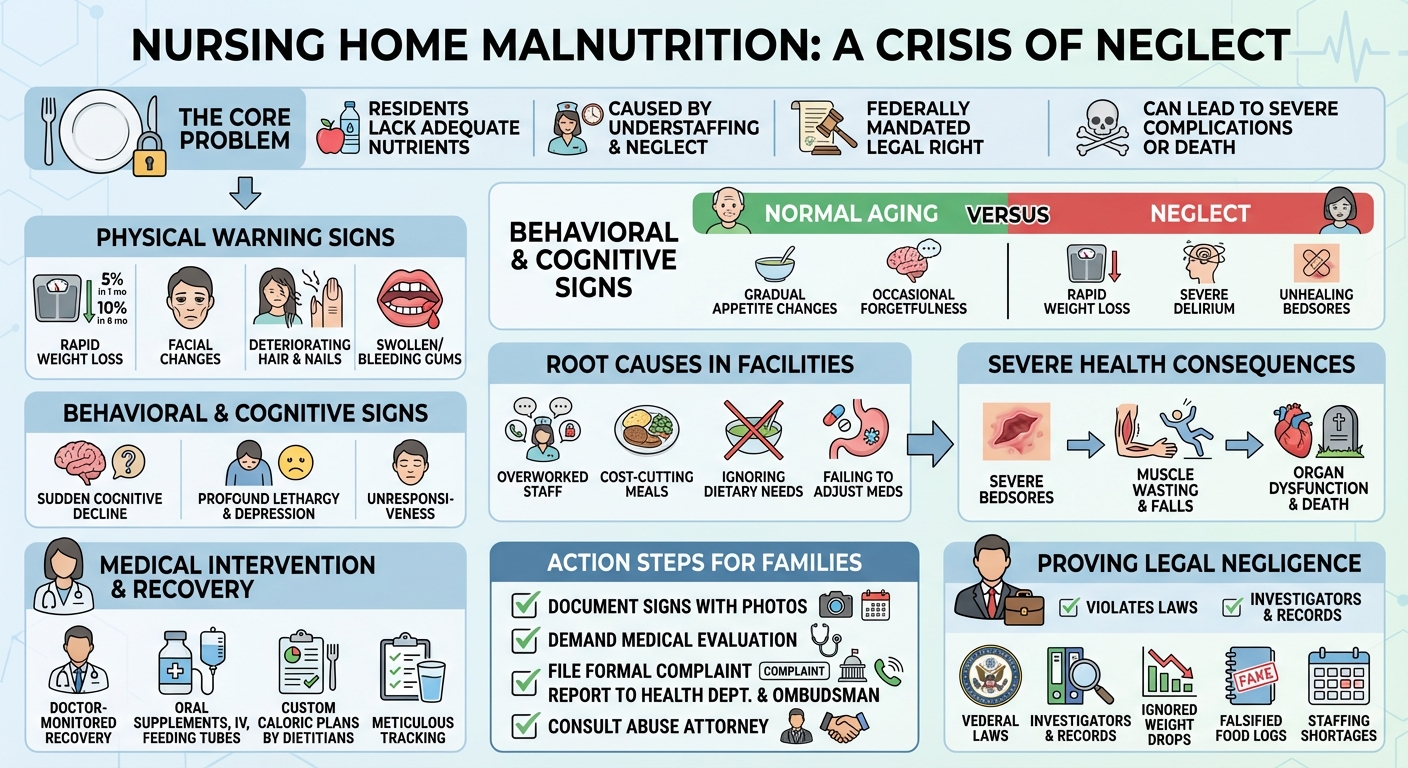
What are the signs of malnutrition? The most common signs of malnutrition in nursing home residents include sudden or unexplained weight loss, hollowed cheeks, sunken eyes, and brittle hair. Behavioral warning signs often feature increased confusion, lethargy, and weakness. You may also notice poor wound healing, frequent infections, or the sudden appearance of bedsores.
Physical Warning Signs
- Significant weight loss: Losing 5% of body weight in a month or 10% in six months.
- Changes in appearance: Pale skin, hollowed cheeks, and sunken facial features.
- Hair and nail issues: Hair that falls out easily or nails that become brittle and ridged.
- Dental deterioration: Swollen, bleeding gums that make eating painful.
Behavioral and Cognitive Changes
Malnutrition starves the brain of essential nutrients. This can lead to sudden cognitive decline, irritability, and profound lethargy. A resident who was previously alert may become unresponsive, confused, or depressed.
Differentiating Normal Aging from Nutritional Neglect
It is common for families to mistake the signs of malnutrition for the natural aging process. However, there are distinct differences:
| Normal Aging | Nutritional Neglect |
|---|---|
| Gradual, minor changes in appetite. | Rapid, unexplained weight loss. |
| Occasional forgetfulness. | Sudden, severe confusion or delirium. |
| Slower healing of minor scrapes. | Development of severe, unhealing bedsores. |
Common Causes of Malnutrition in Elderly Residents
Malnutrition rarely happens overnight. It is typically the result of ongoing operational failures within the care facility.
Understaffing and Lack of Feeding Assistance
Understaffing is the leading cause of nursing home malnutrition. Many residents suffer from motor skill deterioration or cognitive impairments like Alzheimer’s, requiring direct help to eat. When staff are overworked, meal trays are often dropped off and later removed untouched.
Poor Food Quality or Ignored Dietary Restrictions
Facilities may serve unappetizing, nutrient-poor meals to cut costs. Furthermore, staff may fail to adhere to prescribed dietary restrictions, such as providing pureed foods for residents with dysphagia (swallowing difficulties), causing the resident to refuse eating altogether.
Underlying Medical Conditions and Medication Side Effects
Certain medications suppress appetite or alter the taste of food. While underlying medical conditions can contribute to poor appetite, it is the nursing home’s legal and medical responsibility to monitor these changes and adjust the resident’s care plan accordingly.
The Severe Health Impacts of Poor Nutrition
When an elderly person is deprived of essential nutrients, their body rapidly deteriorates. Malnutrition drastically increases the risk of bedsores (pressure ulcers), as the skin loses its elasticity and the body lacks the protein needed to repair tissue. It also leads to muscle wasting, which causes devastating falls and fractures.
What are the final stages of malnutrition?
What are the final stages of malnutrition? In the final stages of malnutrition, the body begins to shut down as it consumes its own muscle and tissue for energy. Symptoms include severe organ dysfunction, extreme lethargy, loss of appetite, and significant fluid retention (edema). At this stage, the immune system collapses, making minor infections potentially fatal.
How long can a severely malnourished person live?
How long can a severely malnourished person live? How long a severely malnourished person can live depends heavily on their baseline health, age, and hydration levels. While a younger person might survive for several weeks without food, an elderly nursing home resident with underlying health conditions may succumb to starvation or related infections within a few weeks.
Medical Interventions and Recovery
If malnutrition is caught in time, medical intervention can reverse many of its effects, though the process requires careful professional oversight.
How to cure malnutrition fast?
How to cure malnutrition fast? To cure malnutrition fast, medical professionals must carefully administer nutrient-dense oral supplements, intravenous (IV) fluids, or feeding tubes. However, rapid nutritional recovery must be strictly monitored by a doctor to prevent “refeeding syndrome,” a dangerous shift in fluids and electrolytes that can occur when severely malnourished patients are fed too quickly.
The Role of Dietitians and Specialized Feeding Tubes
A registered dietitian should be involved to create a customized caloric recovery plan. In severe cases where the resident cannot swallow, a temporary or permanent feeding tube (PEG tube) may be surgically inserted to deliver liquid nutrition directly to the stomach.
Monitoring Hydration and Caloric Intake Safely
Recovery requires meticulous record-keeping. Nursing staff must track daily caloric intake, monitor hydration levels to prevent concurrent dehydration, and weigh the resident frequently to ensure the intervention is working.
When is Malnutrition Considered Nursing Home Neglect?
Not all weight loss is neglect, but malnutrition caused by a failure to provide adequate care is a direct violation of federal and state laws.
Federal Regulations Regarding Dietary Standards
Federal regulations stipulate that nursing homes must ensure residents maintain acceptable parameters of nutritional status, unless their clinical condition demonstrates that this is not possible. Facilities must provide therapeutic diets when prescribed by an attending physician.
Proving Negligence: Staffing Logs, Medical Records, and Weight Charts
To prove negligence, investigators and attorneys will look at specific facility records:
- Weight charts: Were monthly weight drops documented and ignored?
- Food intake logs: Did staff falsely document that a resident ate 100% of their meal?
- Staffing logs: Was the facility severely understaffed during meal times?
Connecting Malnutrition to Other Forms of Elder Abuse
Malnutrition rarely exists in a vacuum. It is frequently accompanied by dehydration, poor hygiene, and untreated bedsores. Together, these are the hallmark signs of systemic nursing home neglect.
Steps to Protect Your Loved One and Seek Justice
If you suspect your loved one is suffering from malnutrition in a care facility, immediate action is required to protect their health and legal rights.
Documenting the Physical Signs and Requesting Medical Intervention
Take clear, dated photographs of physical changes, such as hollowed cheeks or loose-fitting clothing. Demand an immediate medical evaluation by an independent physician or transfer your loved one to a hospital if they are in critical condition.
Filing a Formal Grievance
File a formal complaint with the nursing home’s administration. Additionally, report the facility to your state’s long-term care ombudsman and the state department of health to trigger an official investigation.
Consulting a Nursing Home Abuse Attorney
Nutritional neglect can cause irreversible damage and immense suffering. Consulting with an experienced nursing home abuse attorney can help you explore compensation for medical bills, pain and suffering, and the cost of relocating your loved one to a safer facility. Legal action not only secures justice for your family but also forces the facility to improve its standards, protecting other vulnerable residents.