

Table of contents
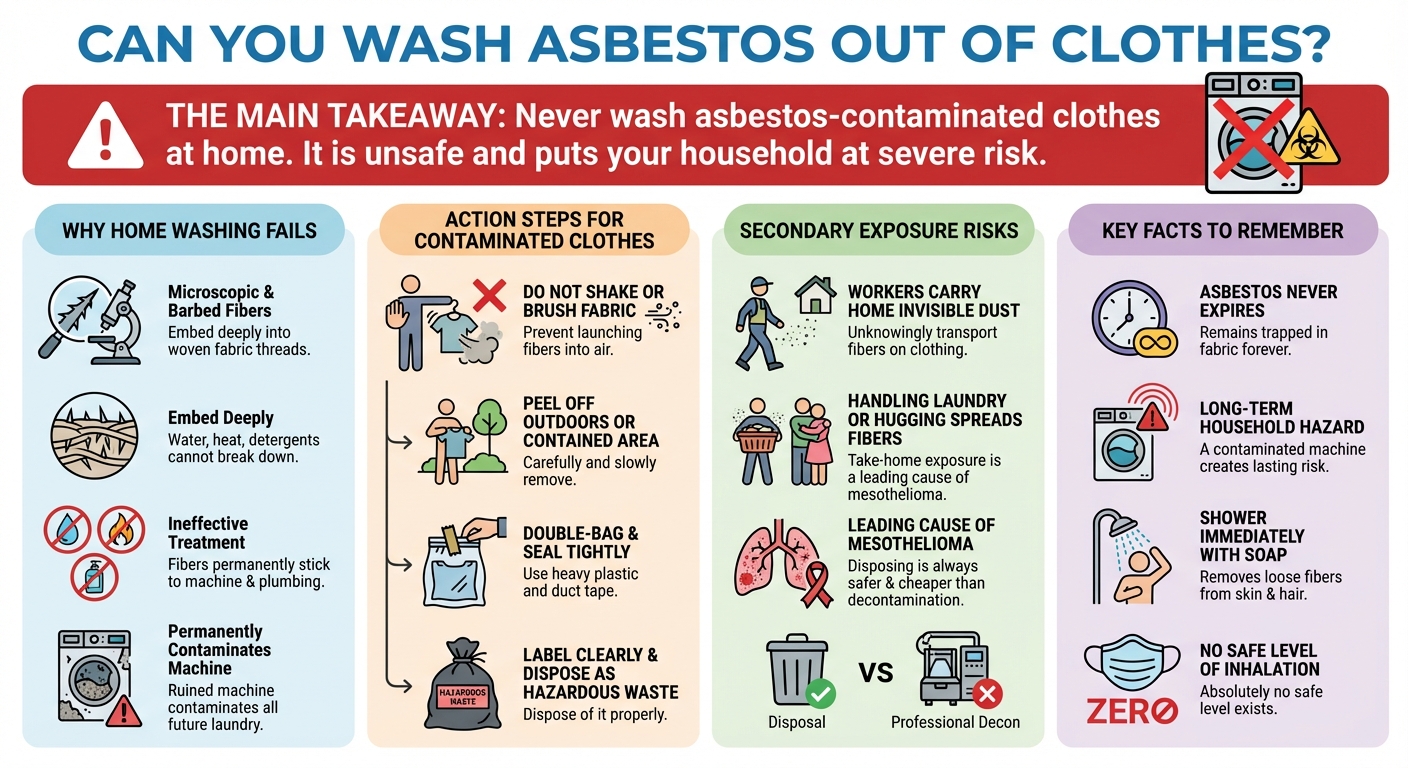
No, you cannot safely wash asbestos out of clothes at home. Regular washing machines cannot remove the microscopic, barbed fibers. Instead, washing contaminated clothing will trap asbestos inside your machine, contaminating all future laundry. Contaminated clothes should be double-bagged and disposed of as hazardous waste.
Can You Wash Asbestos Out of Clothes? (The Short Answer)
The short answer is a strict no. You should never attempt to wash asbestos-contaminated clothing at home. While professional industrial facilities have methods to decontaminate specific safety gear, attempting DIY asbestos removal puts you and your household at severe risk.
When you try to wash asbestos out of fabric, the microscopic fibers become dislodged but do not wash away safely. Instead, they become airborne when handled or permanently contaminate your washing machine, turning a single exposure event into a long-term household hazard.
Why Regular Washing Machines Can’t Remove Asbestos
Standard home laundering is entirely ineffective against asbestos for several key reasons:
- Asbestos fibers are microscopic and barbed: Unlike normal dirt or dust, asbestos fibers have tiny, hook-like barbs that embed themselves deeply into the woven threads of your clothing.
- Water, heat, and standard detergents are ineffective: Asbestos is a naturally occurring mineral designed to withstand extreme heat, chemical corrosion, and water. No household laundry detergent or hot water cycle will break it down.
- The severe risk of machine contamination: If you put asbestos-laden clothes in a washing machine, the fibers will detach and stick to the inside of the drum, the agitator, and the plumbing. Every subsequent load of laundry you wash will pick up these trapped fibers, spreading asbestos to your family’s everyday clothing, towels, and bedding.
What to Do If Your Clothes Are Contaminated with Asbestos
If you suspect your clothing has been exposed to asbestos dust, immediate and careful action is required to prevent inhaling the fibers. Follow these safety steps:
- Step 1: Do not shake, brush, or blow off the fabric. Any aggressive movement will launch the microscopic fibers into the air, where they can be easily inhaled into your lungs.
- Step 2: Carefully remove the clothing. Do this outdoors or in a contained, easily washable area. Peel the clothes off slowly to minimize fiber release.
- Step 3: Double-bag and seal the garments. Place the contaminated clothing into a heavy-duty, 6-mil plastic bag. Seal it tightly with duct tape, then place that bag inside a second heavy-duty bag and seal it again.
- Step 4: Label and dispose of as hazardous waste. Do not throw the bags in your regular household trash. Label the bag clearly as containing asbestos and contact your local waste management authority for instructions on hazardous disposal.
Professional Asbestos Decontamination: Is It Possible?
While you cannot wash asbestos out of clothes at home, specialized industrial laundries do exist. These facilities are strictly regulated and use advanced filtration systems, specialized chemical washes, and controlled environments to decontaminate heavy-duty workwear, such as fire brigade turnout gear.
However, for the average person, the cost of professional asbestos decontamination far outweighs the value of the clothing. In almost all cases, safely disposing of the contaminated garments is the safest, most cost-effective solution.
Secondary Exposure: The Hidden Danger of Asbestos on Clothes
Handling asbestos-contaminated clothing is one of the leading causes of secondary exposure (also known as take-home exposure).
- What is ‘take-home’ asbestos exposure? This occurs when a worker comes into contact with asbestos on the job site and unknowingly brings the microscopic dust home on their clothes, shoes, skin, or hair.
- Who is most at risk? Historically, the spouses who shook out and washed the contaminated laundry, as well as children who hugged their parents after work, faced the highest risks. Many of these family members developed mesothelioma decades later despite never working directly with asbestos.
- Legal rights and claims: Because the dangers of take-home exposure have been known for decades, individuals diagnosed with mesothelioma due to secondary exposure often have the right to file legal claims against the companies responsible for the original asbestos use.
Frequently Asked Questions (Asbestos & Clothing)
How long does asbestos live on clothes?
Asbestos is an inorganic mineral, meaning it does not break down, expire, or die. It can remain embedded in clothing fabrics indefinitely. Unless the garment undergoes specialized industrial decontamination, the microscopic fibers will stay trapped in the material forever.
Will a washing machine get rid of asbestos?
No, a standard residential washing machine will not get rid of asbestos. Instead of washing the fibers away, the machine will trap them inside the drum and agitator. This severely contaminates the appliance, meaning every future load of laundry will also become contaminated with asbestos.
Does showering remove asbestos?
Yes, showering is an effective and critical step for removing loose asbestos fibers from your skin and hair. If you are exposed to asbestos, you should shower immediately at the facility using plenty of soap and water before changing into clean street clothes.
Is breathing in a little bit of asbestos ok?
There is no safe level of asbestos exposure. While a single, brief incident carries a lower risk than years of daily occupational exposure, inhaling even a small amount of microscopic asbestos fibers can potentially lead to severe diseases like mesothelioma or asbestosis decades later.