

Table of contents
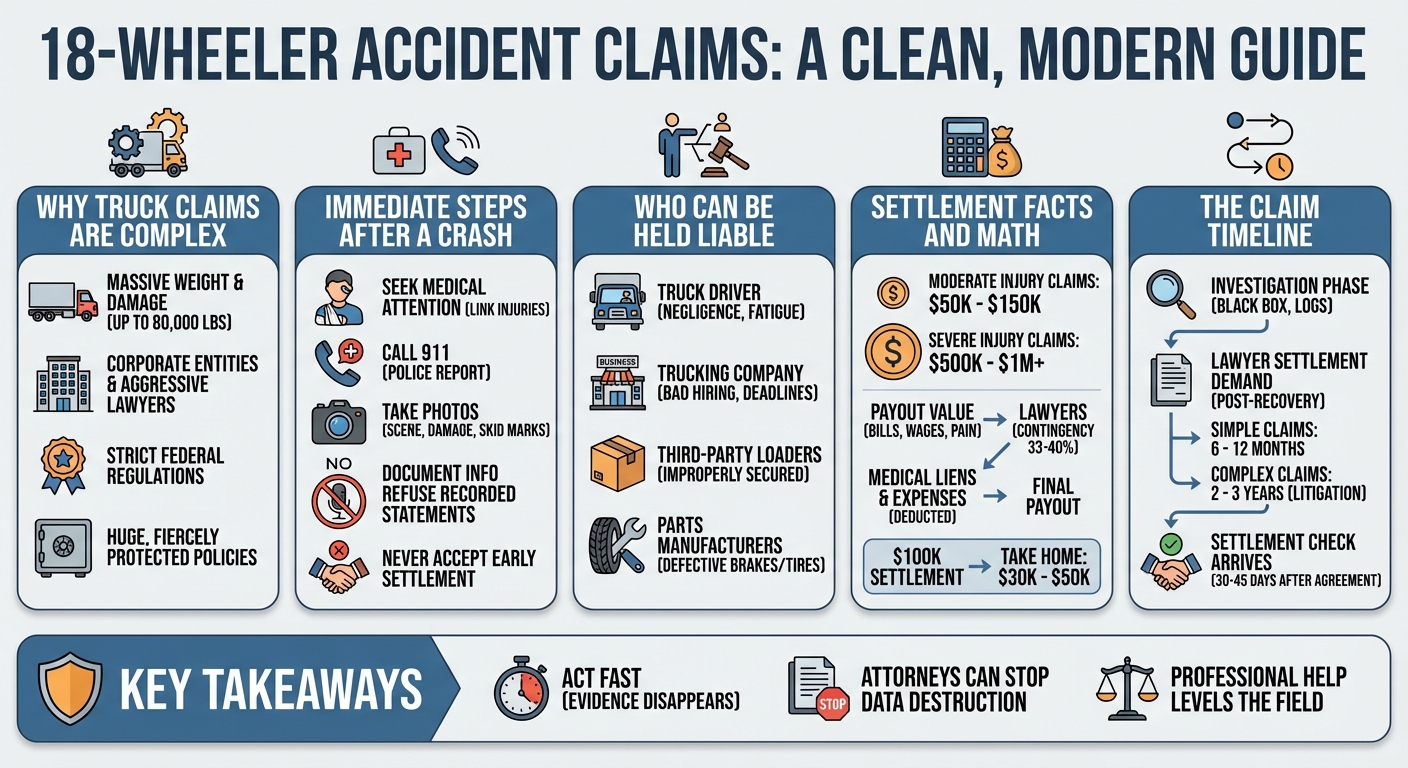
To make a claim for an 18-wheeler truck crash, you must first seek medical attention and report the accident to the police. Next, identify all liable parties—including the driver and trucking company—gather evidence like logbooks and dashcam footage, and file a claim against the trucking company’s commercial insurance policy.
Understanding 18-Wheeler Accident Claims
Filing a claim for an 18-wheeler truck crash is vastly different from handling a standard fender bender. Because commercial trucks weigh up to 80,000 pounds, the resulting damage is often catastrophic, and the legal process to secure compensation is highly complex.
How Trucking Claims Differ from Standard Car Accidents
When two passenger cars collide, the claim usually involves two drivers and their personal auto insurance policies. In a commercial truck crash, the web of liability expands. You are not just dealing with the driver; you are facing a corporate entity, a team of aggressive defense lawyers, and specialized commercial insurance adjusters whose sole job is to minimize your payout.
The Role of the FMCSA and Federal Regulations
The Federal Motor Carrier Safety Administration (FMCSA) heavily regulates the commercial trucking industry. Truck drivers and companies must adhere to strict rules regarding hours of service, vehicle maintenance, and cargo loading. Violations of these federal regulations—such as a driver skipping mandatory rest breaks—serve as powerful evidence of negligence in your claim.
Why Commercial Insurance Policies Complicate the Process
Commercial trucks are required by law to carry massive insurance policies, often ranging from $750,000 to over $5 million. While this means there is more money available to compensate victims, it also means the insurance company will fight much harder to protect its bottom line. They will deploy rapid-response teams to the crash site immediately to gather evidence and build a defense against your claim.
Steps to Take After a Semi-Truck Crash to Protect Your Claim
The actions you take in the hours and days following an 18-wheeler crash can make or break your case. Protecting your health and your legal rights must be your top priorities.
Seek Immediate Medical Attention
Never refuse medical treatment at the scene. Even if you feel fine, adrenaline can mask severe injuries like traumatic brain injuries (TBIs) or internal bleeding. Going to the emergency room establishes a direct, documented link between the crash and your injuries, which is critical for your claim.
Preserve Evidence and Obtain the Police Report
If you are physically able, take photos of the crash scene, vehicle damage, skid marks, and the truck’s license plate and DOT number. Always call 911 so law enforcement can create an official police report. This report will contain vital details, witness statements, and the officer’s initial assessment of fault.
Handle Insurance Adjusters Carefully (Do Not Give Recorded Statements)
Within days of the crash, the trucking company’s insurance adjuster will likely call you. They may sound friendly, but their goal is to get you to say something that damages your claim. Decline to give a recorded statement and never accept an early settlement offer without consulting an attorney.
Determining Liability: Who Pays for the Crash?
One of the most complex aspects of an 18-wheeler claim is identifying every liable party. Multiple entities may share the blame, and you can file claims against each of them.
The Truck Driver (Negligence and Error)
The driver is often the primary at-fault party. Common causes of driver negligence include distracted driving, speeding, driving under the influence, or extreme fatigue from violating FMCSA hours-of-service regulations.
The Trucking Company (Vicarious Liability and Poor Hiring Practices)
Under the legal doctrine of vicarious liability, a trucking company can be held responsible for the actions of its employees. Furthermore, the company can be sued directly for negligent hiring, failing to train drivers properly, or forcing drivers to meet unrealistic delivery deadlines.
Third-Party Cargo Loaders and Parts Manufacturers
If the crash was caused by shifting cargo, the third-party company responsible for loading the trailer may be liable. If a mechanical failure—such as blown tires or defective brakes—caused the wreck, the manufacturer of those parts or the maintenance company could be held accountable.
18-Wheeler Settlement Amounts and Compensation
Victims often want to know what their case is worth. While every crash is unique, understanding average payouts and the factors that influence them can help set realistic expectations.
How much do victims of an 18-wheeler crash and survive get?
Victims who survive an 18-wheeler crash typically receive settlements ranging from tens of thousands to over a million dollars. The exact amount depends heavily on the severity of injuries, total medical expenses, lost earning capacity, and the degree of long-term disability or permanent disfigurement sustained in the accident.
How much are most truck accident settlements?
Most truck accident settlements average between $50,000 and $150,000 for moderate injuries. However, cases involving severe injuries, traumatic brain damage, or wrongful death frequently settle for $500,000 to well over $1 million, largely due to the higher commercial insurance policy limits required for semi-trucks.
Factors That Increase Your Claim Value (Medical Bills, Lost Wages, Pain and Suffering)
Your settlement is calculated based on economic and non-economic damages. Factors that drive up the value include extensive hospital stays, surgery costs, the inability to return to work, and severe physical pain and emotional trauma. Punitive damages may also be awarded if the trucking company’s actions were grossly negligent.
Breaking Down Your Settlement Payout (The Math)
Winning a settlement is only part of the equation; understanding how those funds are distributed is just as important.
How much of a $100K settlement will I get?
From a $100,000 settlement, you will typically receive between $30,000 and $50,000. After deducting standard attorney contingency fees (usually 33% to 40%), case expenses, and reimbursing your health insurance or medical providers for outstanding liens, the remaining balance goes directly into your pocket.
How much will I get from a $25,000 settlement?
If you receive a $25,000 settlement, your final take-home amount is usually between $8,000 and $12,000. This accounts for an average attorney fee of roughly $8,333 (33%), plus any out-of-pocket legal costs and outstanding medical bills or liens that must be paid before funds are dispersed.
Understanding Attorney Contingency Fees and Medical Liens
Most personal injury lawyers work on a contingency fee basis, meaning they take a percentage of your final settlement and charge nothing upfront. Before you receive your check, your attorney is also legally obligated to pay off any medical liens—bills from hospitals or health insurers that covered your initial care.
The Timeline of a Commercial Truck Accident Claim
Patience is essential when pursuing a commercial trucking claim. These cases rarely resolve overnight.
The Investigation and Discovery Phase
Your attorney will spend months gathering evidence. This includes subpoenaing the truck’s black box (ECM) data, reviewing the driver’s logbooks, analyzing maintenance records, and consulting accident reconstruction experts. This phase is critical for proving liability.
Negotiation vs. Litigation
Once you reach maximum medical improvement (MMI), your lawyer will send a demand letter to the insurance company. If the insurer refuses to offer a fair settlement, your attorney will file a lawsuit. While most cases settle during negotiations or mediation, some do go to trial.
How Long It Takes to Receive Your Settlement Check
A straightforward claim with clear liability and moderate injuries might settle in 6 to 12 months. However, complex cases involving severe injuries, disputed liability, or multiple defendants can take two to three years to fully resolve. Once an agreement is signed, the actual check usually arrives within 30 to 45 days.
Why You Need a Truck Accident Attorney
Attempting to handle a commercial truck claim on your own is a massive risk. The trucking company has a team of experts fighting for them; you need someone fighting for you.
Leveling the Playing Field Against Corporate Insurers
An experienced truck accident lawyer knows how to counter the tactics used by commercial insurers. They know how to send spoliation letters to prevent the trucking company from destroying evidence, and they have the financial resources to hire top-tier medical and accident reconstruction experts.
How to Get Started with Your Claim Today
Time is of the essence. Evidence disappears, and state statutes of limitations restrict how long you have to file a lawsuit. Contact a dedicated personal injury attorney for a free consultation to evaluate your case, protect your rights, and begin the process of securing the compensation you deserve.