

Table of contents
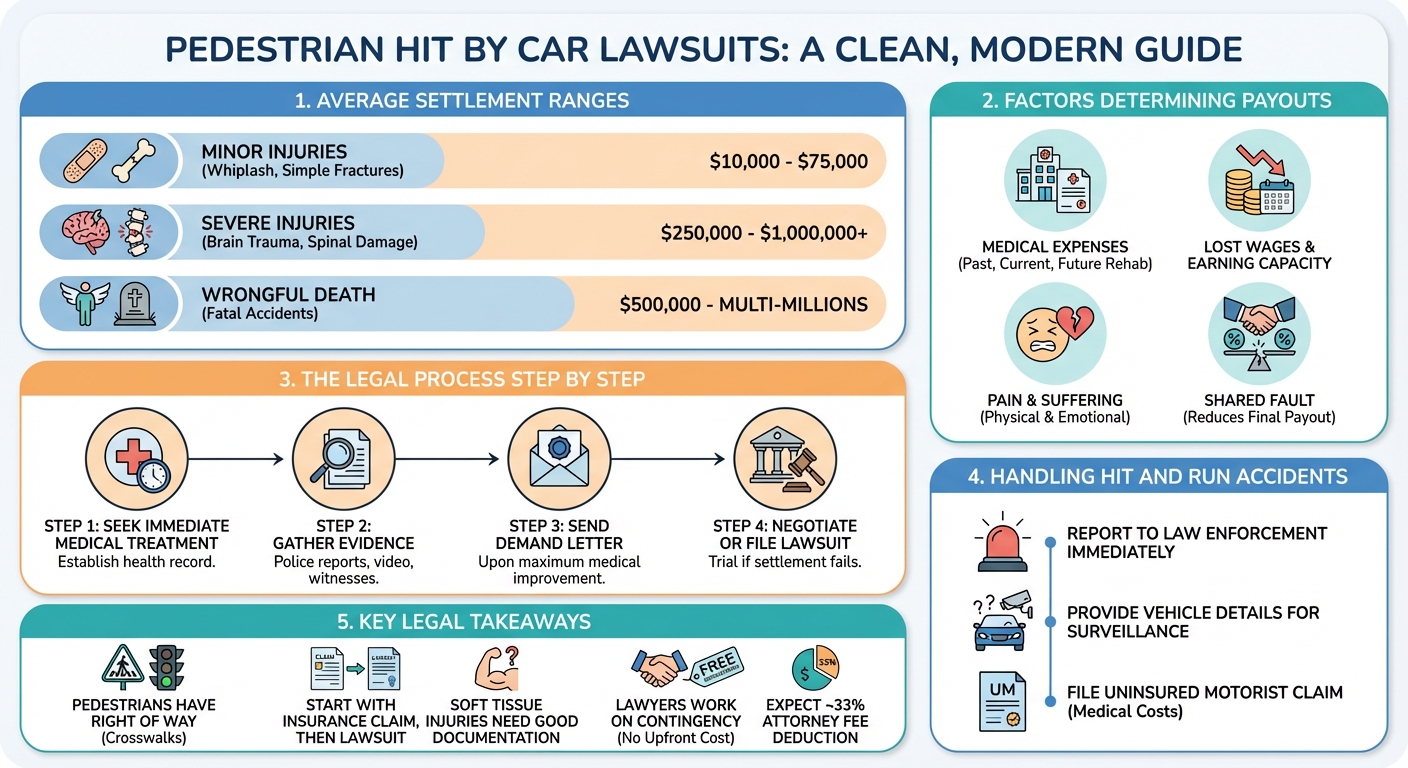
The average settlement for a pedestrian hit by a car ranges from $10,000 to $75,000 for minor injuries like whiplash or simple fractures. For severe injuries, such as traumatic brain injuries or spinal cord damage, payouts typically range between $250,000 and over $1,000,000, depending on medical costs and liability.
Understanding Pedestrian Hit by Car Lawsuits
Being struck by a vehicle is a traumatic experience that often results in devastating physical and financial consequences. If you or a loved one has been involved in a pedestrian accident, pursuing a pedestrian hit by car lawsuit or insurance claim is the primary path to recovering your damages.
Your Legal Rights as an Injured Pedestrian
Pedestrians generally have the right of way at crosswalks and intersections. When a driver breaches their duty of care—whether through distracted driving, speeding, or failing to yield—you have the legal right to seek compensation. This includes recovering costs for emergency medical care, ongoing rehabilitation, lost income, and the physical pain you endured.
When to File an Insurance Claim vs. a Lawsuit
Most pedestrian accident cases begin as a claim against the at-fault driver’s auto insurance policy. If the insurance company accepts liability and offers a fair settlement that covers your losses, a formal lawsuit may not be necessary. However, you should file a lawsuit if the insurer denies your claim, disputes who was at fault, or refuses to offer a settlement that adequately covers your long-term medical needs.
What is the Average Settlement for a Pedestrian Hit by a Car?
Because every accident is unique, there is no single “average” settlement. Payouts are directly tied to the severity of the injuries, the economic losses incurred, and the available insurance policy limits.
| Injury Severity | Typical Settlement Range | Common Examples |
|---|---|---|
| Minor | $10,000 – $75,000 | Whiplash, minor concussions, simple fractures, road rash |
| Severe / Catastrophic | $250,000 – $1,000,000+ | Traumatic brain injuries (TBI), spinal cord damage, amputations |
| Wrongful Death | $500,000 – Multi-Millions | Fatal injuries resulting in loss of life and financial support |
Minor Injuries ($10,000 to $75,000)
If you suffered injuries that heal completely within a few months, such as sprains, minor lacerations, or simple broken bones, your settlement will likely fall in the lower tier. These payouts primarily cover emergency room bills, a few weeks of missed work, and short-term physical therapy.
Severe and Catastrophic Injuries ($250,000 to $1,000,000+)
When a pedestrian is hit by a heavy vehicle, the injuries are often life-altering. Cases involving permanent disability, traumatic brain injuries, or paralysis demand much higher compensation. These settlements account for a lifetime of medical care, home modifications, permanent loss of earning capacity, and profound a loss of quality of life.
Wrongful Death Claims in Pedestrian Accidents
Tragically, many pedestrian accidents are fatal. In these instances, surviving family members can file a wrongful death lawsuit. Compensation in these cases covers funeral and burial expenses, the deceased’s pre-death medical bills, loss of expected future income, and loss of companionship.
Key Factors That Determine Your Lawsuit Payout
Insurance adjusters and juries look at several specific elements when calculating the value of a pedestrian accident claim.
Medical Bills and Future Rehabilitation Costs
Your settlement must cover all past, current, and projected future medical expenses. This includes surgeries, hospital stays, prescription medications, mobility aids, and years of physical or occupational therapy.
Lost Wages and Diminished Earning Capacity
If your injuries keep you out of work, you are entitled to reimbursement for those lost wages. If you can never return to your previous profession—or cannot work at all—your lawyer will calculate your diminished earning capacity over the remainder of your expected working years.
Pain and Suffering (Noneconomic Damages)
Noneconomic damages compensate you for the physical pain and emotional trauma caused by the accident. Conditions like PTSD, anxiety about crossing streets, and chronic pain significantly increase the value of a settlement.
Shared Fault and Comparative Negligence
If you were jaywalking or distracted by your phone when hit, the defense may argue you share the blame. Most states follow comparative negligence rules, meaning your settlement will be reduced by your percentage of fault. For example, if you are awarded $100,000 but found 20% at fault, you will receive $80,000.
The Pedestrian Accident Lawsuit Process (Step-by-Step)
Navigating a legal claim requires following a strategic process to protect your rights and build a strong case.
1. Seeking Immediate Medical Treatment
Your health is the top priority. Go to the emergency room immediately, even if you feel fine. Adrenaline can mask severe injuries. Establishing a medical record on the day of the accident is critical for your legal claim.
2. Evidence Gathering and Investigation
Your legal team will collect police reports, intersection camera footage, dashcam video, and eyewitness testimonies. They will also gather your medical records and consult with accident reconstruction experts if liability is disputed.
3. Sending the Demand Letter
Once you reach maximum medical improvement (MMI), your attorney will send a comprehensive demand letter to the driver’s insurance company. This document outlines your injuries, proves the driver’s negligence, and requests a specific financial payout.
4. Negotiation, Settlement, or Trial
The insurer will typically respond with a counteroffer, initiating negotiations. Most pedestrian accident cases settle out of court during this phase. If the insurer refuses to offer a fair amount, your attorney will file a formal lawsuit and prepare to take the case to trial.
Frequently Asked Questions About Pedestrian Accidents
How long does a pedestrian accident settlement take?
A pedestrian accident settlement typically takes between a few months to over a year. Minor injury claims with clear liability often settle within three to six months. However, if your injuries are severe, require ongoing treatment, or the insurance company disputes fault, the process can take one to three years.
What is the hardest injury to prove?
Soft tissue injuries, such as whiplash, muscle sprains, and nerve damage, are often the hardest injuries to prove. Unlike broken bones visible on an X-ray, soft tissue damage relies heavily on your subjective reports of pain, making insurance adjusters more likely to dispute the severity of your claim.
How much of a $100K settlement will I get?
From a $100,000 settlement, you will typically receive between $50,000 and $60,000 after deductions. Your personal injury attorney usually takes a contingency fee of 33%, which is $33,000. The remaining funds must then cover any outstanding medical liens, court costs, and expert witness fees before you receive your net payout.
What is the penalty for hitting a pedestrian with a car?
The penalty for hitting a pedestrian depends on the driver’s negligence. Civilly, the driver is liable for the victim’s medical bills and damages. Criminally, penalties range from minor traffic citations and fines to license suspension or even prison time if the driver was intoxicated, speeding recklessly, or fled the scene.
What to Do If the Driver Fled the Scene (Hit and Run)
Hit-and-run accidents leave pedestrians feeling helpless, but you still have avenues for financial recovery.
Uninsured Motorist (UM) Coverage
If the fleeing driver is never found, you can often turn to your own auto insurance policy. Uninsured Motorist (UM) coverage typically applies to you even when you are struck as a pedestrian, allowing you to recover medical costs and lost wages up to your policy limits.
Working with Law Enforcement
Report the hit-and-run immediately. Provide police with any details you remember about the vehicle (make, model, color, partial license plate). Law enforcement can pull nearby surveillance footage and query local body shops to track down the responsible driver.
Why You Need a Personal Injury Lawyer for a Pedestrian Accident
Insurance companies are highly motivated to minimize your payout. Having legal representation levels the playing field.
Maximizing Your Settlement Value
An experienced attorney knows how to accurately calculate your future medical needs and pain and suffering. They will protect you from predatory insurance tactics, such as early lowball settlement offers or recorded statements designed to trick you into admitting fault.
Free Case Evaluation
Most personal injury lawyers work on a contingency fee basis, meaning you pay nothing upfront. They only get paid if they win your case. If you have been hit by a car, schedule a free case evaluation immediately to understand your legal options and start building your claim.