

Table of contents
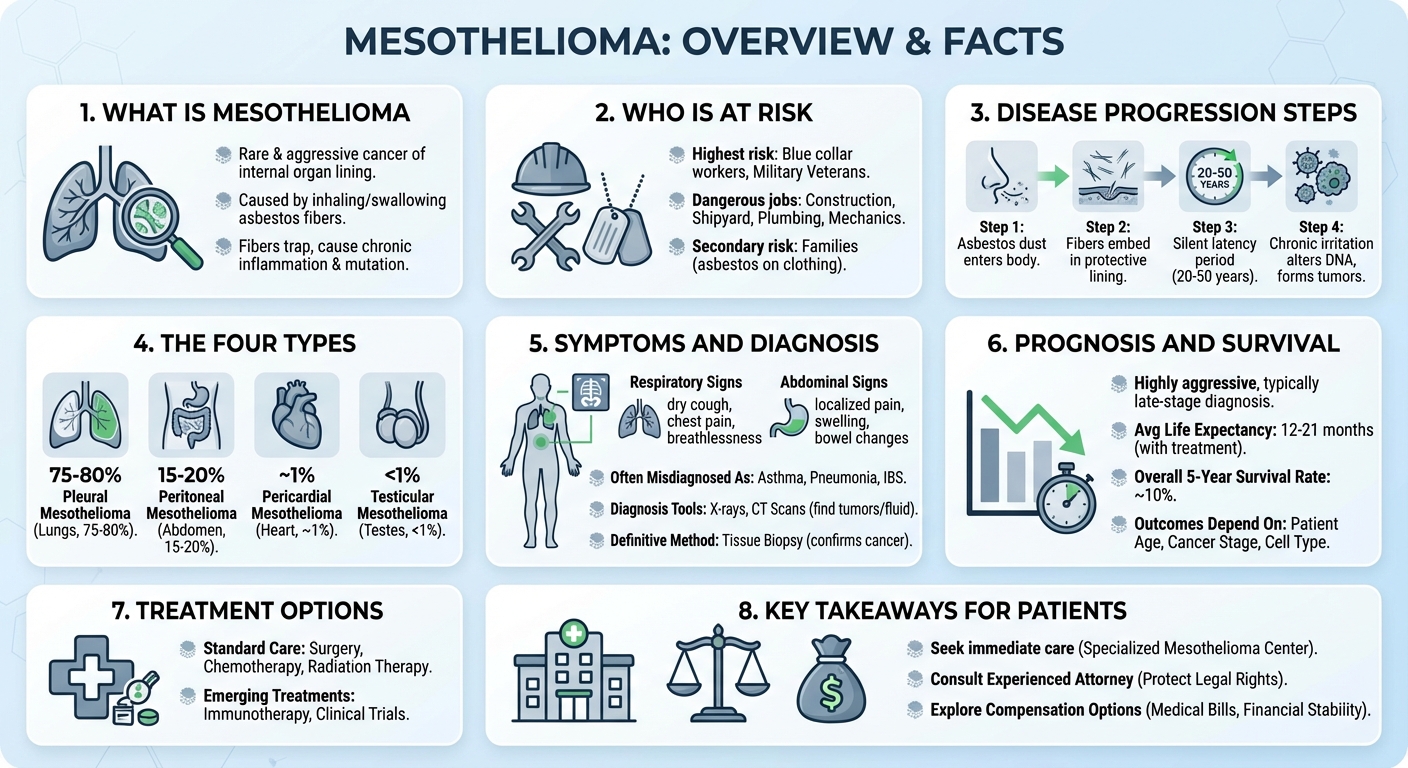
Mesothelioma is a rare, aggressive cancer caused primarily by inhaling or ingesting asbestos fibers. These microscopic fibers lodge in the protective lining of the lungs, abdomen, or heart, causing chronic inflammation and cellular mutation. Symptoms typically take 20 to 50 years to appear after the initial asbestos exposure.
Understanding Mesothelioma Asbestos Cancer
What is a rare cancer caused by asbestos?
Mesothelioma is a rare, aggressive cancer caused almost exclusively by asbestos exposure. It develops in the thin layer of tissue covering most of your internal organs, known as the mesothelium. While asbestos can cause other cancers, mesothelioma is the most distinct and rare malignancy directly linked to inhaling or ingesting these toxic fibers.
The Direct Link Between Asbestos Exposure and Mesothelioma
For decades, asbestos was prized for its heat resistance and durability, making it a staple in construction, shipbuilding, and manufacturing. However, when asbestos-containing materials are disturbed, they release microscopic fibers into the air. When individuals inhale or swallow these invisible fibers, they become permanently trapped in the body. Over time, the body’s inability to break down or expel these fibers leads to chronic inflammation, scarring, and eventually, the cellular mutations that cause mesothelioma.
Who is Most at Risk? (Occupational Exposure)
The vast majority of mesothelioma cases stem from occupational exposure. Blue-collar workers and military veterans face the highest risks. High-risk occupations include construction workers, shipyard workers, electricians, plumbers, mechanics, and factory workers. Additionally, family members of these workers were often put at risk through secondary exposure, as asbestos dust could easily be carried home on clothing, skin, and hair.
How Asbestos Fibers Damage the Body
Inhalation and Ingestion of Asbestos Dust
The journey of mesothelioma begins the moment asbestos dust enters the body. Inhalation is the most common route, drawing sharp, microscopic fibers deep into the lungs and the pleural lining. Ingestion occurs when fibers are swallowed, often after clearing them from the respiratory tract, allowing them to settle in the abdominal cavity.
The 20 to 50-Year Latency Period
One of the most insidious aspects of mesothelioma asbestos cancer is its prolonged latency period. It typically takes 20 to 50 years after the initial exposure for symptoms to manifest. Because the fibers cause damage at a microscopic level, the disease progresses silently for decades before tumors grow large enough to cause noticeable health issues.
Cellular Mutation and Tumor Growth
Once lodged in the mesothelium, asbestos fibers irritate the surrounding tissue. This persistent irritation triggers an immune response that fails to clear the foreign bodies, resulting in chronic inflammation. Over decades, this continuous cycle of damage and repair alters the DNA of the mesothelial cells, causing them to divide uncontrollably and form malignant tumors.
The Four Main Types of Mesothelioma
Pleural Mesothelioma (Lungs)
Accounting for roughly 75% to 80% of all diagnoses, pleural mesothelioma affects the pleura, the protective lining surrounding the lungs. Patients typically experience chest pain, chronic coughing, and fluid buildup around the lungs (pleural effusion), which severely restricts breathing.
Peritoneal Mesothelioma (Abdomen)
Peritoneal mesothelioma develops in the peritoneum, the tissue lining the abdominal cavity, and makes up about 15% to 20% of cases. This type is primarily caused by ingesting asbestos fibers. Symptoms often include severe abdominal swelling, unexplained weight loss, and gastrointestinal distress.
Pericardial Mesothelioma (Heart)
This is an exceptionally rare form of the disease, accounting for about 1% of cases. It originates in the pericardium, the lining around the heart. Tumors in this area restrict the heart’s ability to pump effectively, leading to chest pain, irregular heartbeats, and heart murmurs.
Testicular Mesothelioma
Testicular mesothelioma is the rarest type, representing less than 1% of all cases. It forms in the tunica vaginalis, the lining of the testes. It is usually discovered incidentally during surgery for a hernia or other scrotal issues, presenting as a painless lump or swelling.
Early Warning Signs and Symptoms
Respiratory Symptoms (Coughing, Shortness of Breath)
Because pleural mesothelioma is the most common form, respiratory issues are the most frequent early warning signs. Patients often develop a persistent, dry cough, shortness of breath even during light activity, and a heavy, aching pain in the chest or lower back.
Abdominal Symptoms (Swelling, Pain)
For those with peritoneal mesothelioma, early signs are localized to the gut. Patients may notice sudden abdominal swelling or bloating, localized pain, changes in bowel habits, and a feeling of fullness even after eating very little.
Why Mesothelioma is Often Misdiagnosed
Mesothelioma symptoms are notoriously vague and closely mimic common, less severe conditions like pneumonia, asthma, or irritable bowel syndrome (IBS). Combined with the decades-long latency period, doctors may not immediately suspect an asbestos-related cancer unless the patient explicitly details their occupational history.
Prognosis and Life Expectancy
Is mesothelioma aggressive?
Yes, mesothelioma is highly aggressive. Because it typically remains asymptomatic for decades, it is often diagnosed in its later stages when the tumors have already spread. This rapid progression and resistance to many traditional treatments make it one of the most aggressive and challenging forms of cancer to treat.
What is the survival rate for mesothelioma?
The overall five-year survival rate for mesothelioma is approximately 10%. Survival rates vary significantly based on the cancer’s stage at diagnosis, the specific type of mesothelioma, and the patient’s overall health. Early detection and aggressive treatment can improve these statistics for some patients.
What is the life expectancy of asbestos patients?
The average life expectancy for asbestos patients diagnosed with mesothelioma is typically 12 to 21 months with treatment. However, life expectancy depends heavily on the stage of the disease, the cell type, and how well the patient responds to therapies like surgery, chemotherapy, or immunotherapy.
Factors That Impact Your Prognosis (Age, Stage, Cell Type)
Several variables influence a patient’s prognosis. Younger, healthier patients generally withstand aggressive treatments better. The cancer’s stage at diagnosis is critical; localized tumors are easier to treat than widespread metastasis. Additionally, the cellular makeup of the tumor matters: epithelioid cells tend to respond better to treatment than sarcomatoid or biphasic cells.
Diagnosis and Treatment Options
Imaging Tests and Biopsies
Diagnosing mesothelioma requires a multi-step approach. Physicians begin with imaging tests like X-rays, CT scans, or MRIs to identify tumors or fluid buildup. However, the only way to definitively confirm mesothelioma is through a biopsy, where a tissue or fluid sample is extracted and examined under a microscope for cancer cells.
Standard Treatments: Surgery, Chemotherapy, and Radiation
Treatment plans are highly individualized but generally involve a multimodal approach. Surgery aims to remove as much of the tumor as possible. Chemotherapy is used to shrink tumors and kill remaining cancer cells, while radiation therapy helps relieve pain and prevent the cancer from spreading further.
Emerging Therapies and Clinical Trials
Medical advancements are providing new hope for mesothelioma patients. Immunotherapy, which trains the body’s immune system to attack cancer cells, has become a frontline treatment option. Many patients also participate in clinical trials to access cutting-edge therapies like gene therapy and targeted drug treatments.
Next Steps After a Mesothelioma Diagnosis
Seeking Specialized Medical Care
If you or a loved one has just been diagnosed with mesothelioma, securing treatment from a specialized cancer center is vital. General oncologists rarely see this disease. Connecting with leading facilities, such as MD Anderson in Houston, ensures you receive care from experts who understand the nuances of asbestos-related cancers.
Protecting Your Legal Rights
Because mesothelioma is almost always caused by corporate negligence regarding asbestos exposure, you have specific legal rights. Consulting with an experienced Texas mesothelioma lawyer can help you identify exactly when and where you were exposed, holding the responsible parties accountable.
Exploring Compensation and Lawsuits
The financial toll of cancer treatment is immense. Fortunately, victims can pursue mesothelioma compensation to cover medical bills, lost wages, and pain and suffering. Understanding how to file a mesothelioma lawsuit or access asbestos trust funds is a critical step in securing your family’s financial future during this difficult time.