

Table of contents
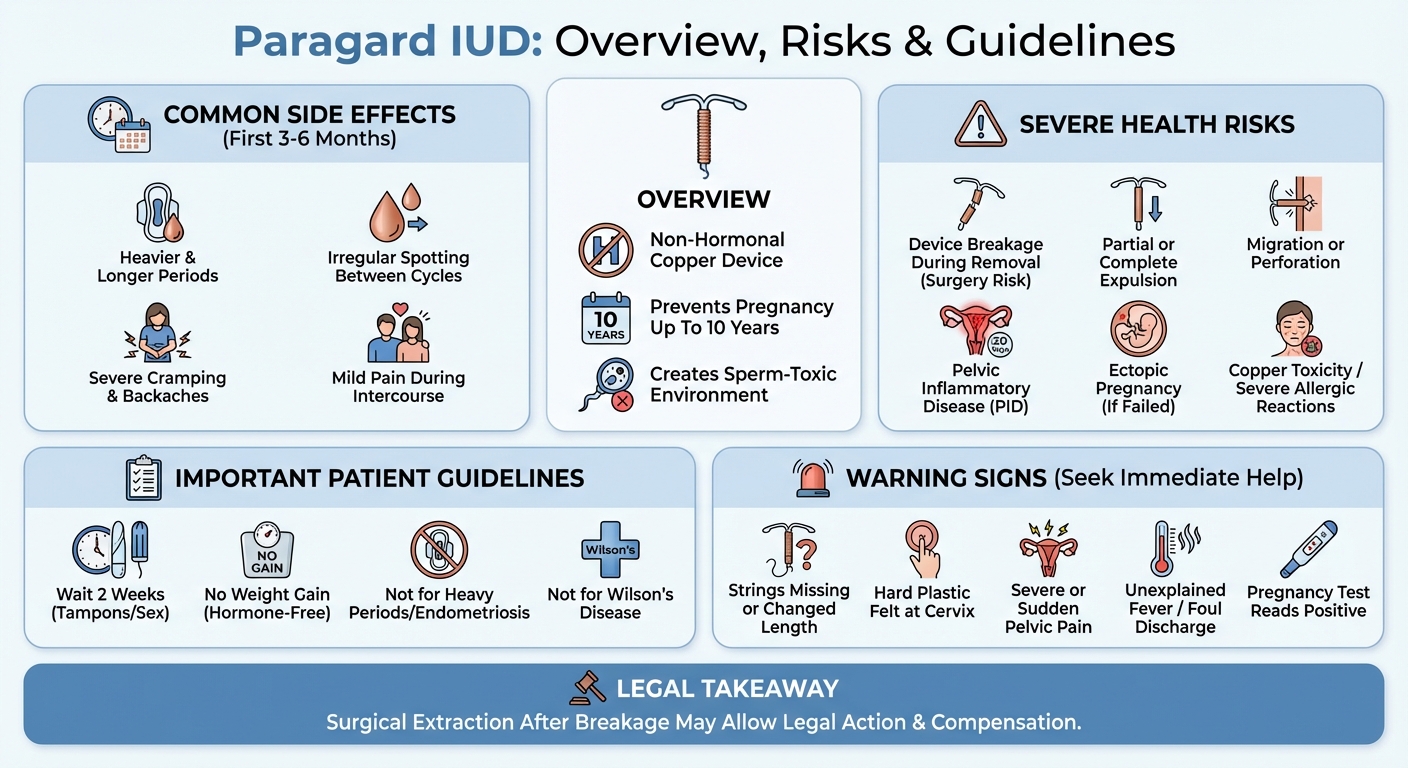
The most common Paragard IUD side effects include heavier and longer periods, severe menstrual cramping, irregular spotting, and backaches. While these symptoms often improve within a few months, severe risks like device expulsion, pelvic inflammatory disease (PID), and device breakage during removal require immediate medical attention.
Understanding Paragard IUD Side Effects
Choosing the right birth control is a major health decision. For many, the Paragard copper intrauterine device (IUD) is an appealing option because it offers long-lasting, hormone-free pregnancy prevention. However, like any medical device, it comes with a specific profile of side effects and potential risks.
What is the Paragard Copper IUD?
The Paragard IUD is a small, T-shaped piece of flexible plastic wrapped in thin copper wire. A healthcare provider inserts it into the uterus to prevent pregnancy for up to 10 years. Because it is the only non-hormonal IUD available in the United States, it is a popular choice for individuals who want to avoid synthetic hormones.
How a Non-Hormonal IUD Affects Your Body
Instead of releasing hormones to stop ovulation, Paragard uses copper to create a localized inflammatory response in the uterus. This environment is highly toxic to sperm, preventing them from fertilizing an egg. While this non-hormonal approach means you will still experience your natural menstrual cycle, the localized inflammation is the primary cause of the most common Paragard side effects.
Most Common Side Effects of Paragard
Most users will experience some side effects after getting a copper IUD. For many, these symptoms are most intense during the first three to six months as the body adjusts to the device.
| Side Effect Type | Typical Symptoms | Expected Duration |
|---|---|---|
| Menstrual Changes | Heavier bleeding, longer periods, spotting | Often improves after 3-6 months |
| Pain & Discomfort | Severe cramping, backaches, pelvic pain | Peaks during menstruation |
| Sexual Intercourse | Pinching or mild pain during sex | Varies; strings may soften over time |
Heavier and Longer Menstrual Bleeding
The most frequently reported side effect of the Paragard IUD is a significant change in menstrual bleeding. Because the copper induces inflammation in the uterine lining, periods often become noticeably heavier and last longer than they did prior to insertion.
Severe Cramping and Backaches
Along with heavier bleeding, users often report intensified menstrual cramps and lower backaches. The uterus naturally contracts to expel the thickened uterine lining, and the presence of the IUD can make these contractions feel sharper and more severe.
Irregular Spotting Between Periods
Breakthrough bleeding, or spotting between your regular periods, is highly common during the first few months. While annoying, this is generally a harmless side effect that tends to subside as your uterus adapts to the device.
Pain During Insertion and Intercourse
Insertion itself can cause a sharp pinch, dizziness, or a brief fainting spell. Afterward, some users experience mild pain or discomfort during sex. In some cases, a partner may feel the IUD strings, though these strings typically soften and curl around the cervix over time.
Severe Risks and Rare Complications
While common side effects are manageable for most, Paragard carries risks of severe, sometimes life-altering complications. If you experience extreme pain or abnormal symptoms, immediate medical evaluation is necessary.
Device Breakage During Removal
A highly publicized and severe risk associated with Paragard is device breakage. In some instances, the plastic arms of the T-shaped device become brittle and break off inside the uterus during removal. This complication often requires invasive procedures, such as hysteroscopy or even a hysterectomy, to retrieve the broken pieces.
IUD Expulsion or Migration
- Expulsion: The uterus may partially or completely push the IUD out of the cervix. This is most common in the first year and leaves you unprotected against pregnancy.
- Migration and Perforation: Rarely, the IUD can pierce the uterine wall (perforation) and migrate into the abdominal cavity, requiring surgical removal.
Pelvic Inflammatory Disease (PID) and Infections
There is a slightly increased risk of developing Pelvic Inflammatory Disease (PID) within the first 20 days following insertion. This occurs if bacteria are introduced into the uterus during the procedure. Symptoms include fever, unusual discharge, and severe pelvic pain.
Ectopic Pregnancy Risks
Paragard is over 99% effective at preventing pregnancy. However, if a pregnancy does occur while the IUD is in place, there is a significantly higher risk that it will be an ectopic pregnancy (occurring outside the uterus, typically in the fallopian tubes). This is a life-threatening medical emergency.
Copper Toxicity and Allergic Reactions
Though extremely rare, some individuals may experience an allergic reaction to the copper. Furthermore, Paragard is strictly contraindicated for anyone with Wilson’s disease, a rare genetic disorder that causes copper to accumulate in the body’s vital organs.
Frequently Asked Questions About Paragard
What are the long-term side effects of copper IUD?
Long-term side effects of a copper IUD are generally minimal since it contains no hormones. Most users experience heavier periods and increased cramping that persist for the duration of use. However, rare long-term risks include device embedding, migration, or breakage upon removal after years of use.
Why wait 2 weeks after IUD?
Doctors recommend waiting at least one to two weeks after IUD insertion before having unprotected sex or inserting anything into the vagina, such as tampons. This waiting period helps reduce the risk of pelvic infections and ensures the device remains properly positioned while your cervix heals.
Why do doctors not recommend copper IUD?
Doctors may not recommend a copper IUD if you already suffer from heavy, painful periods, endometriosis, or severe anemia, as Paragard can worsen these conditions. It is also contraindicated for individuals with a copper allergy, Wilson’s disease, or a history of certain pelvic infections.
Does copper IUD make you gain weight?
No, the copper IUD does not make you gain weight. Because Paragard is completely non-hormonal, it does not cause the metabolic changes, water retention, or increased appetite sometimes associated with hormonal birth control methods. Any weight changes experienced are likely unrelated to the device.
When to Seek Medical and Legal Help
Warning Signs of IUD Failure
You should contact your healthcare provider immediately if you experience any of the following warning signs:
- You cannot feel the IUD strings, or the strings feel longer/shorter than usual.
- You can feel the hard plastic of the device at your cervix.
- Severe, sudden abdominal or pelvic pain.
- Unexplained fever, chills, or foul-smelling vaginal discharge.
- A positive pregnancy test.
Transitioning from Medical Complication to Legal Action
If you have suffered a severe complication—specifically if your Paragard IUD broke during removal and required surgery to extract the fragments—your situation may extend beyond a medical issue. Many patients who experienced device breakage have pursued compensation. If you have been injured by a fractured device, exploring Paragard IUD lawsuit settlement amounts and updates can help you understand your legal rights and options for recovery.