
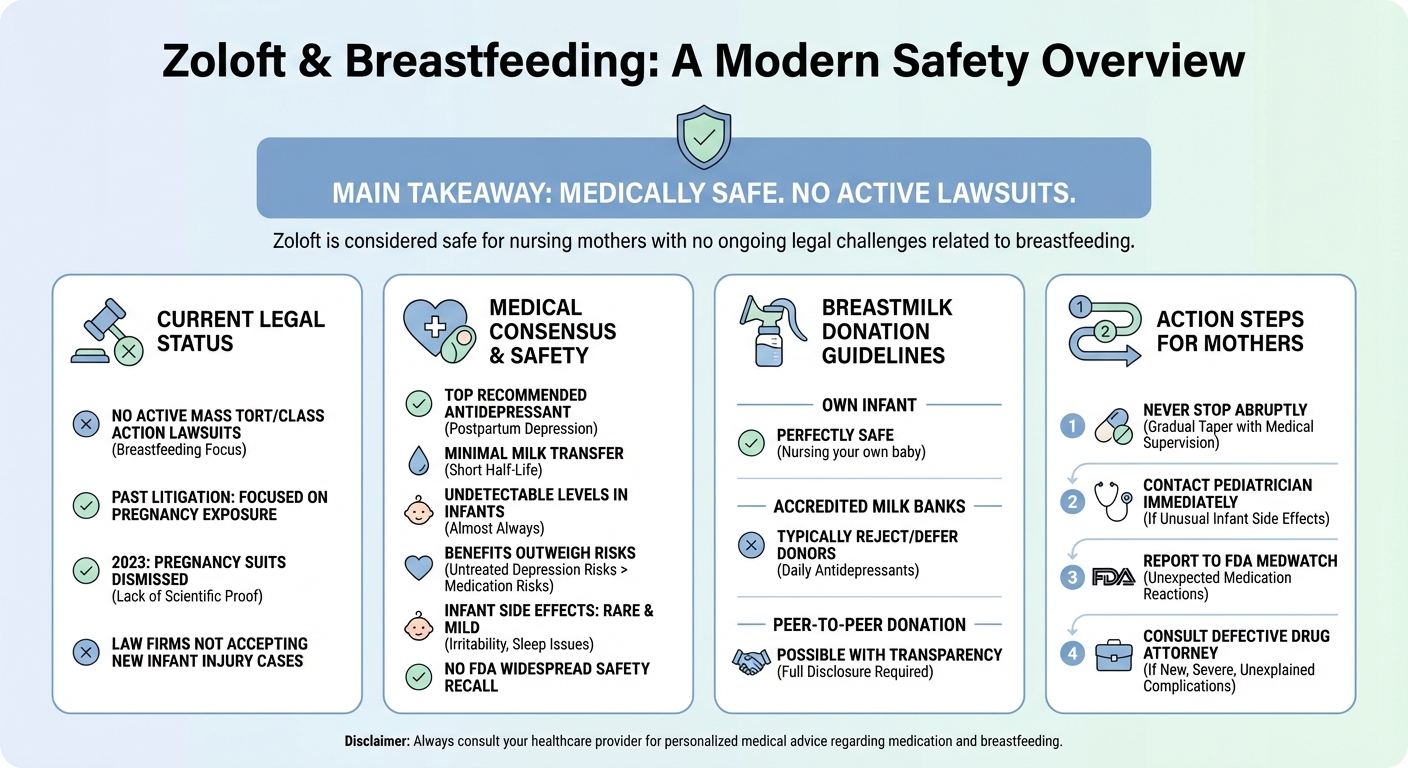
Currently, there is no active mass tort or class action lawsuit specifically targeting Zoloft use while breastfeeding. Past Zoloft litigation focused on birth defects from use during pregnancy, but those cases were largely dismissed in 2023. Medical consensus generally considers Zoloft one of the safest antidepressants for nursing mothers.
Zoloft While Breastfeeding Lawsuit: Current Status and Legal Updates
Mothers seeking treatment for postpartum depression often wonder about the legal and medical implications of taking SSRIs. Currently, there is no active, widespread mass tort or class action lawsuit specifically targeting Zoloft (sertraline) use while breastfeeding. While the internet contains lingering information about Zoloft lawsuits, it is crucial to separate historical litigation regarding pregnancy from current medical guidelines regarding nursing.
Is There an Active Lawsuit for Zoloft Use While Breastfeeding?
As of 2024, courts are not actively litigating a multidistrict litigation (MDL) for injuries caused by Zoloft exposure through breast milk. Most legal claims against Pfizer, the manufacturer of Zoloft, centered on a failure to warn regarding congenital birth defects when the drug was taken during pregnancy, not during the postpartum nursing period.
The Difference Between Pregnancy Birth Defects and Breastfeeding Claims
Understanding the distinction between pregnancy exposure and breast milk exposure is vital for evaluating legal claims:
- Pregnancy Claims: Alleged that taking Zoloft during the first trimester caused congenital heart defects and other structural anomalies in utero.
- Breastfeeding Claims: Would theoretically allege that trace amounts of sertraline in breast milk caused developmental or health issues in the infant. No substantial scientific link or legal precedent currently supports this.
| Exposure Window | Medical Consensus | Legal Status |
|---|---|---|
| During Pregnancy | Higher risk of placental transfer; weighed against risks of untreated depression. | MDL dismissed; individual claims highly restricted. |
| While Breastfeeding | Considered highly safe; minimal transfer to breast milk. | No active mass tort or class action. |
2023 Update: The Dismissal of the Zoloft MDL
The legal landscape for Zoloft birth defect claims effectively closed recently. In 2023, the 1st U.S. Circuit Court of Appeals affirmed a lower court’s ruling that excluded the plaintiffs’ expert testimonies due to a lack of reliable scientific methodology. This decision effectively ended the Zoloft birth defect MDL, meaning law firms are generally no longer accepting new cases for Zoloft-related infant injuries.
Medical Consensus on Sertraline (Zoloft) and Nursing
Why Doctors Often Recommend Zoloft for Postpartum Depression
Sertraline is widely considered the first-line antidepressant for nursing mothers. Studies consistently show that Zoloft has a very short half-life and produces incredibly low, often undetectable, levels of the drug in infant blood serum. Because untreated maternal depression poses severe risks to both mother and child, pediatricians and OB-GYNs routinely prescribe Zoloft as a safe intervention.
What are the risks of taking Zoloft while breastfeeding?
The risks of taking Zoloft while breastfeeding are generally very low. Because only trace amounts of the medication pass into breast milk, infant side effects are rare. Occasionally, a newborn might experience mild irritability, poor feeding, or slight sleep disturbances. Always consult your pediatrician to monitor your baby’s health.
Can I donate breastmilk if I take Zoloft?
While Zoloft is safe for direct breastfeeding, donating to a formal milk bank is different. Most accredited milk banks have strict guidelines and will temporarily defer or reject donors who take daily SSRIs, including Zoloft. Peer-to-peer milk donation is possible but requires full transparency with the recipient parent.
Zoloft Safety, Recalls, and Patient Experiences
Was Zoloft recalled?
Zoloft (sertraline) has never been subject to a widespread FDA recall for safety issues, birth defects, or breastfeeding risks. Occasional, lot-specific recalls have occurred in the past strictly due to minor manufacturing or packaging errors, but the medication remains fully FDA-approved and widely prescribed.
Why did you stop Zoloft?
Patients typically stop taking Zoloft because their depressive or anxiety symptoms have fully resolved. Others may discontinue the medication due to unwanted side effects, such as weight gain, sexual dysfunction, or emotional blunting. Stopping Zoloft should always be done via a gradual taper under medical supervision to avoid withdrawal symptoms.
What to Do If You Suspect Infant Injury from Antidepressants
Reporting Adverse Events to the FDA MedWatch Program
If you believe your infant has suffered an adverse reaction due to any medication transferred through breast milk, your first step should be contacting your healthcare provider. Afterward, you or your doctor can submit a report to the FDA’s MedWatch program. This database helps federal regulators track unexpected side effects and issue new warnings if a pattern emerges.
When to Consult a Defective Drug Attorney
While the Zoloft MDL has been dismissed, pharmaceutical litigation is constantly evolving. If new scientific evidence emerges linking an antidepressant to severe infant injuries via breast milk, and the manufacturer failed to provide adequate warnings, legal avenues may reopen. If your child suffered severe, unexplained complications and you suspect a medication error or failure to warn, consulting a defective drug attorney can help you understand your current legal rights.
 Call (713) 747-7777