
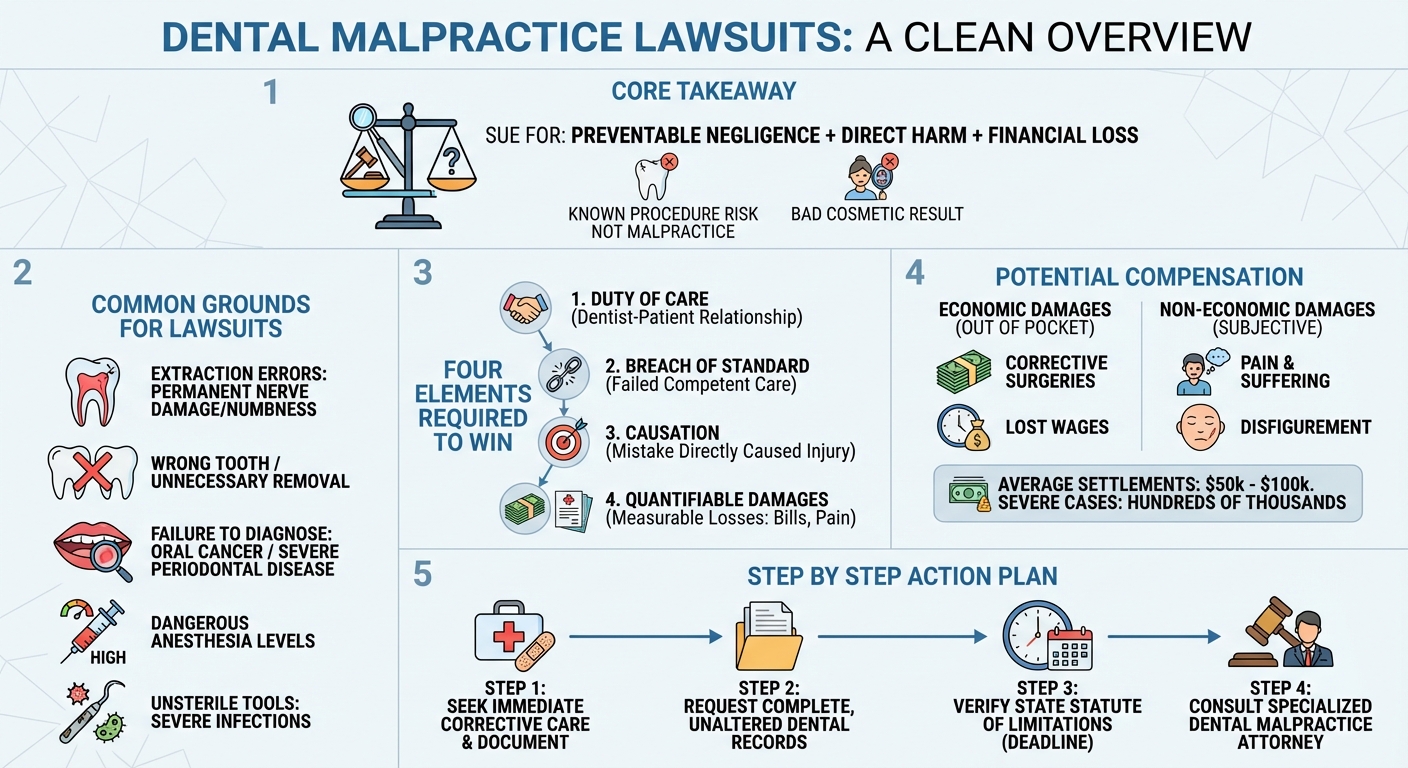
Yes, you can sue a dentist for medical malpractice if their treatment falls below the acceptable standard of care and directly causes you injury. To win a lawsuit, you must prove that the dentist was negligent and that this negligence resulted in quantifiable damages, such as additional medical bills or permanent pain.
Can You Sue a Dentist? Understanding Dental Malpractice
Yes, you can sue a dentist if they made a preventable error that caused you significant harm. However, dental malpractice claims are complex legal battles. To win, you must prove that your dentist failed to meet the accepted medical standard of care and that their failure directly resulted in your injuries and financial losses.
The Difference Between a Bad Result and Malpractice
It is crucial to understand that a painful procedure or a less-than-perfect cosmetic outcome does not automatically give you grounds to sue. Dentistry inherently involves risks. If a known complication occurs despite the dentist performing the procedure correctly, it is generally considered a bad result, not malpractice. Malpractice only occurs when the dentist makes a mistake that a reasonably competent professional would not have made.
What qualifies as dental negligence?
Dental negligence qualifies when a dental professional fails to provide the acceptable standard of care that a reasonably competent dentist would provide under similar circumstances, directly resulting in patient injury. Examples include misdiagnosis, surgical errors, improper extractions, or a complete lack of informed consent before a procedure.
Common Grounds for Dental Lawsuits
Dental malpractice can take many forms, ranging from minor oversights to catastrophic surgical errors. Understanding the most frequent claims can help you determine if your experience warrants legal action.
What is the most common reason patients sue dentists?
The most common reason patients sue dentists is for complications related to tooth extractions, particularly those causing nerve damage or severe infections. Other frequent grounds for lawsuits include the failure to diagnose oral cancer, botched root canals, improperly placed dental implants, and dangerous anesthesia errors.
Nerve Damage and Permanent Numbness
Procedures like wisdom tooth extractions and dental implant placements carry a risk of damaging the lingual or inferior alveolar nerves. If a dentist severs or severely damages a nerve due to poor technique or misreading an X-ray, patients can be left with permanent numbness, loss of taste, or chronic pain in their jaw, lips, or tongue.
Improper or Unnecessary Tooth Extractions
Extracting the wrong tooth is a clear-cut example of dental negligence. Additionally, pulling a tooth that could have easily been saved through standard endodontic therapy (like a root canal) may also be considered malpractice if it causes the patient unnecessary physical and financial hardship.
Failure to Diagnose Oral Cancer or Periodontal Disease
Dentists are often the first line of defense in detecting oral cancer and severe gum disease. If a dentist ignores obvious lesions, fails to perform standard screenings, or delays a necessary biopsy, the disease can progress to a life-threatening stage. This failure to diagnose is a frequent basis for high-value malpractice lawsuits.
Anesthesia Errors and Infections
Administering too much anesthesia, failing to review a patient’s medical history for drug interactions, or using improperly sterilized equipment can lead to severe complications. Infections caused by unsterile tools can spread rapidly to the bloodstream or brain, resulting in hospitalization or even death.
The 4 Elements Needed to Prove Dental Malpractice
To successfully sue a dentist, your attorney must establish four specific legal elements. If even one element is missing, your case will likely be dismissed.
1. Duty of Care (The Dentist-Patient Relationship)
You must prove that a formal dentist-patient relationship existed. This establishes that the dentist owed you a legal duty of care to provide safe, competent treatment.
2. Breach of Standard of Care
You must demonstrate that the dentist breached their duty. This usually requires an independent dental expert to testify about what the standard of care should have been and exactly how your dentist deviated from it.
3. Causation (Linking the Breach to Your Injury)
It is not enough to show that the dentist made a mistake; you must prove that their specific mistake directly caused your injury. If your injury was caused by a pre-existing condition, the causation element fails.
4. Quantifiable Damages
You must have suffered actual, measurable damages as a result of the injury. This can include additional medical bills, lost wages, and documented pain and suffering.
Dental Malpractice Settlements and Compensation
If you successfully prove malpractice, you may be entitled to financial compensation. The value of your settlement will depend on the specific details of your case.
How much money can you get from suing a dentist?
The amount of money you can get from suing a dentist depends entirely on the severity of your injuries and your resulting financial losses. Minor cases may settle for $10,000 to $30,000, while severe cases involving permanent nerve damage, wrongful death, or extensive reconstructive surgery can yield hundreds of thousands of dollars.
What is the average payout for dental negligence?
The average payout for dental negligence typically ranges between $50,000 and $100,000 for cases that reach a settlement. However, this average is heavily skewed by the specifics of each case. Minor, easily correctable errors settle for much less, while catastrophic permanent injuries command significantly higher compensation.
Economic Damages: Medical Bills and Lost Wages
Economic damages reimburse you for out-of-pocket expenses. This includes the cost of corrective surgeries, future dental care, prescription medications, and any wages you lost because you were unable to work during your recovery.
Non-Economic Damages: Suing for Pain and Suffering
Non-economic damages compensate you for the subjective impact of your injuries. This covers physical pain, emotional distress, facial disfigurement, and a reduced quality of life. Because these damages are harder to quantify, they are often heavily negotiated during settlement discussions.
How to Sue Your Dentist: A Step-by-Step Guide
If you believe you have been a victim of dental malpractice, taking the right steps early on is critical to preserving your claim.
Step 1: Seek Corrective Medical Attention Immediately
Your health is the top priority. See another dentist, an oral surgeon, or visit an emergency room to stabilize your condition and prevent further damage. This also creates a medical record of your injuries from an independent provider.
Step 2: Request Your Complete Dental Records
Before mentioning a lawsuit to your original dentist, request a complete copy of your dental records, including X-rays, treatment notes, and consent forms. Having these records unaltered is essential for your legal case.
Step 3: Check Your State’s Statute of Limitations
Every state imposes a strict deadline, known as the statute of limitations, for filing a medical malpractice lawsuit. If you miss this window, you lose your right to sue.
| State | Typical Dental Malpractice Statute of Limitations |
|---|---|
| California | 1 year from discovery or 3 years from injury |
| New York | 2.5 years from the date of the error |
| Texas | 2 years from the date of the breach |
| Florida | 2 years from discovery (max 4 years) |
Step 4: Consult a Specialized Dental Malpractice Attorney
Do not attempt to navigate a malpractice claim alone. General personal injury lawyers often lack the specific medical knowledge required. Seek out an attorney who specializes in dental malpractice. They will have a network of dental experts ready to review your records and testify on your behalf.
 Call (713) 747-7777