
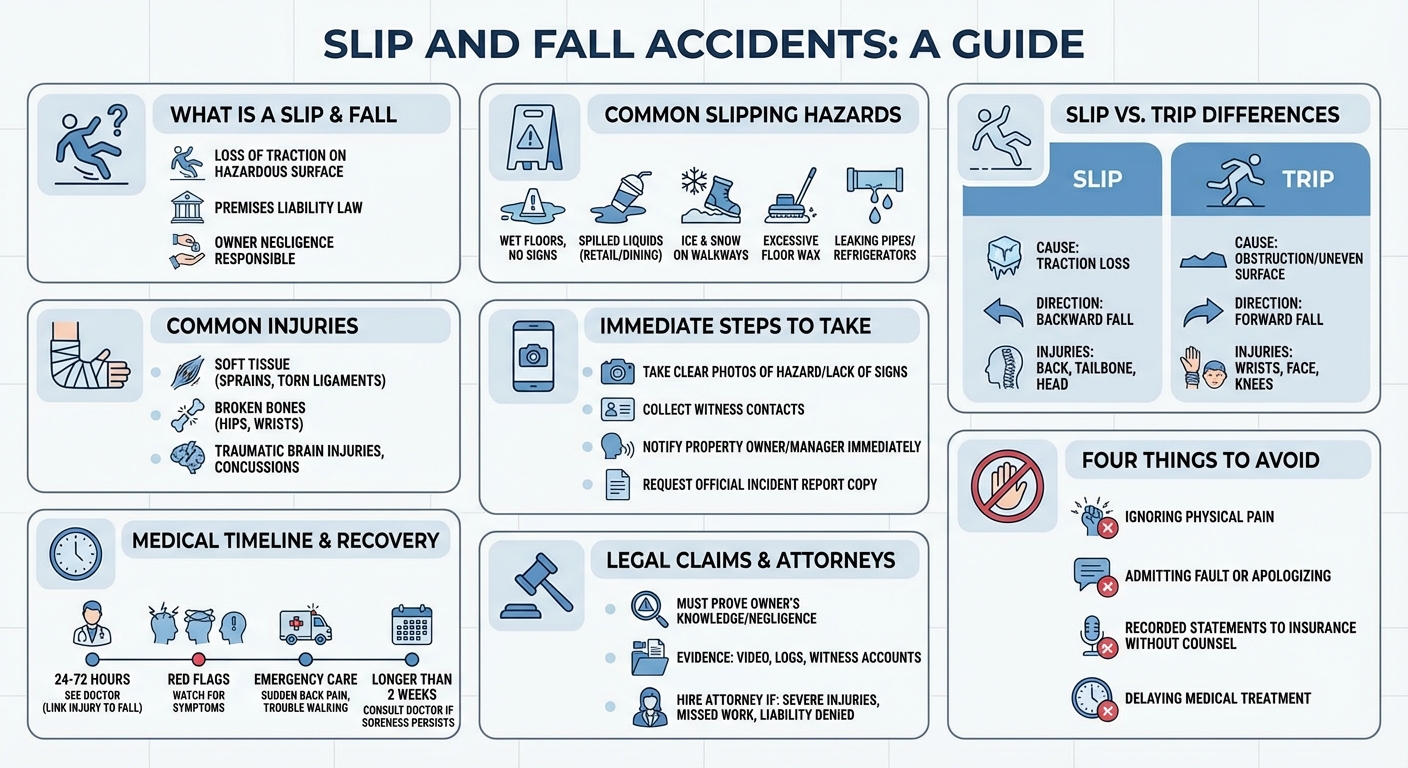
A slip and fall accident occurs when a person loses traction on a slippery or hazardous surface, causing them to fall and sustain an injury. These incidents fall under premises liability law, meaning property owners can be held legally responsible if their negligence caused the dangerous condition.
What is a Slip and Fall Accident?
A slip and fall accident occurs when a person loses traction on a slippery or hazardous surface, causing them to fall and sustain an injury. These incidents are among the most common causes of accidental injuries and can happen anywhere, from grocery stores to private residences.
Definition of Premises Liability
Slip and falling cases fall under a specialized area of personal injury law known as premises liability. This legal concept dictates that property owners, managers, and businesses have a legal duty of care to maintain safe conditions for visitors. If they fail to identify and fix hazards, they can be held financially responsible for resulting injuries.
Common Causes of Slipping Hazards
Slipping hazards often appear suddenly, making them difficult to avoid. The most frequent causes include:
- Wet or recently mopped floors without proper warning signs
- Spilled liquids in retail aisles or restaurants
- Ice, snow, or sleet on outdoor walkways
- Excessive floor wax or polish
- Leaking pipes or refrigeration units
Slip and Fall vs. Trip and Fall: What is the Difference?
While often used interchangeably, slipping and tripping involve different physical mechanics and distinct types of hazards.
Mechanics of a Slip
A slip happens when there is too little friction between a person’s footwear and the walking surface. The foot slides forward and outward, causing the person’s center of gravity to shift backward. This typically results in a backward fall, often impacting the back, neck, or back of the head.
Mechanics of a Trip
A trip occurs when a person’s foot catches on an object or an uneven surface while their upper body continues moving. The momentum throws the center of gravity forward, usually resulting in a forward fall where the person instinctively uses their hands and arms to brace themselves.
| Feature | Slip and Fall | Trip and Fall |
|---|---|---|
| Primary Cause | Loss of traction (wet, icy, or slick surfaces) | Obstruction or uneven surface (cords, broken concrete) |
| Direction of Fall | Usually backward | Usually forward |
| Common Injuries | Back injuries, tailbone fractures, back-of-head trauma | Broken wrists, facial injuries, knee abrasions |
Most Common Injuries from Slipping and Falling
The severity of a fall depends on the surface, the angle of impact, and the victim’s age. Injuries can range from minor bruising to life-altering trauma.
Soft Tissue Damage and Sprains
Soft tissue injuries are incredibly common but often go unnoticed until hours or days after the adrenaline wears off. Victims frequently suffer from sprained wrists, twisted ankles, and torn knee ligaments. While not always visible, these injuries can cause chronic pain and require extensive physical therapy.
Broken Bones and Fractures
The impact of hitting a hard floor can easily shatter bones. Hip fractures are particularly common and devastating for older adults, often requiring surgery and long-term rehabilitation. Wrist and arm fractures are also frequent as victims attempt to break their fall.
Traumatic Brain Injuries (TBI)
When a slipping victim falls backward, their head is highly vulnerable to striking the ground. This can result in concussions or severe traumatic brain injuries (TBIs). Symptoms might include confusion, memory loss, and chronic headaches, requiring immediate neurological evaluation.
Immediate Steps to Take After a Slip and Fall
What you do in the moments following a fall can significantly impact both your physical recovery and any future premises liability claim.
Documenting the Scene
If you are physically able, take clear photographs of the exact hazard that caused your fall before it is cleaned up or removed. Capture wide angles of the area to show the lack of warning signs. Additionally, collect contact information from any bystanders who witnessed the incident.
Reporting the Incident
Notify the property owner, store manager, or landlord immediately. Request that they fill out an official incident report and ask for a copy for your records. Do not leave the premises without ensuring the event has been officially documented.
What are the four things you should avoid immediately after injury?
The four things you should avoid immediately after a slip and fall injury are: ignoring your pain, admitting fault or apologizing for the fall, giving a recorded statement to an insurance adjuster without legal counsel, and delaying necessary medical treatment.
How long do you have to go to the hospital after a slip and fall?
You should go to the hospital or see a doctor within 24 to 72 hours after a slip and fall. Immediate medical evaluation documents your injuries and links them directly to the accident, which is crucial for your health and any future legal claims.
Recovery and Warning Signs After a Fall
Monitoring your body in the days following a fall is critical. Some severe injuries have delayed onset symptoms.
What are red flag symptoms after a fall?
Red flag symptoms after a fall include severe headaches, dizziness, vomiting, numbness or tingling in your extremities, sudden back pain, and difficulty walking. If you experience any of these signs, seek emergency medical attention immediately, as they may indicate a traumatic brain injury or spinal cord damage.
How long should you hurt after a fall?
Minor soreness from a slip and fall typically lasts a few days to a couple of weeks. However, if your pain persists beyond two weeks, worsens over time, or is accompanied by swelling and restricted movement, you should consult a doctor to check for underlying fractures or tissue tears.
Do You Have a Valid Slip and Fall Claim?
Not every fall results in a valid legal claim. To secure compensation, specific legal criteria must be met.
Proving Negligence
To win a slip and fall case, you must prove that the property owner was negligent. This means demonstrating that they either created the hazard, knew about the hazard and ignored it, or should have reasonably known about it through routine property maintenance. Evidence like security footage, maintenance logs, and witness testimony are vital here.
When to Consult a Personal Injury Attorney
If you sustained significant injuries that require ongoing medical care, missed time from work, or if the property owner’s insurance company is denying liability, it is time to consult a personal injury attorney. A lawyer can help preserve evidence, negotiate with aggressive insurance adjusters, and ensure you receive fair compensation for your damages.
 Call (713) 747-7777