
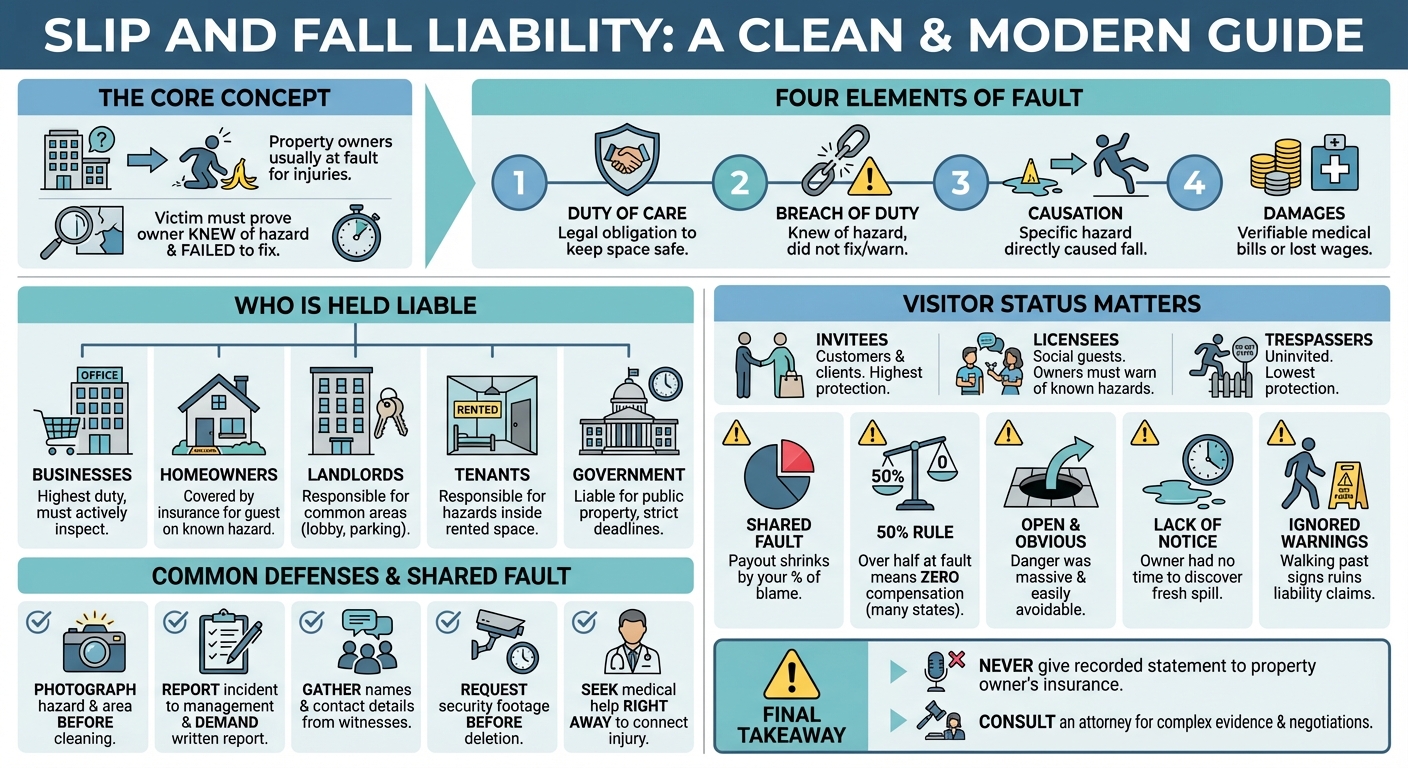
In a slip and fall case, the property owner or manager is typically at fault. To establish liability, you must prove they knew or should have known about a hazardous condition—such as a wet floor or broken stair—and negligently failed to fix it or warn visitors.
Slip and Fall Liability Explained: Who Is at Fault?
The Short Answer: Who Is Liable for a Slip and Fall?
In most slip and fall cases, the property owner, business manager, or landlord is at fault. However, liability is not automatic just because you fell on someone else’s property. To win a claim, you must prove that the responsible party was negligent in maintaining a safe environment and that their negligence directly caused your injury.
The 4 Elements Needed to Prove Fault
To establish liability in a premises liability claim, you must successfully prove four distinct legal elements:
Duty of Care Owed by the Property Owner
First, you must show that the property owner or occupier had a legal obligation to keep the premises reasonably safe for visitors.
Breach of Duty (Negligence)
Second, you must prove the owner failed to meet this obligation. A breach occurs when an owner knows (or reasonably should have known) about a hazard—such as a spilled liquid, broken stair, or icy walkway—and failed to fix it or provide adequate warning.
Direct Causation
Third, you must demonstrate that this specific breach of duty was the direct cause of your slip and fall accident. If you tripped over your own shoelaces near a puddle, the puddle didn’t cause the fall.
Actual Damages Suffered
Finally, you must have verifiable losses resulting from the fall. This includes medical bills, lost wages, and documented pain and suffering.
Commonly Liable Parties in Slip and Fall Accidents
Commercial Property Owners and Businesses
Grocery stores, restaurants, and retail shops owe the highest duty of care to their customers. They are legally required to actively inspect their aisles, entryways, and parking lots for hidden dangers.
Residential Homeowners
Homeowners can be held liable if a guest slips on a known hazard, such as a rotting porch step or an unsecured rug. These claims are typically paid out through the homeowner’s property insurance, not from the homeowner’s personal bank account.
Landlords vs. Tenants: Who Takes the Blame?
Liability often depends on exactly where the fall occurred:
- Landlords: Generally responsible for maintaining common areas like lobbies, shared stairwells, and parking lots.
- Tenants: Usually responsible for hazards that occur inside their specific rented apartment or leased commercial space.
Government Entities and Municipalities
If you trip on a cracked public sidewalk or slip inside a government building, the city, county, or state may be liable. However, suing a government entity involves strict, shortened filing deadlines and complex sovereign immunity laws.
How Your Visitor Status Affects Liability
Your legal reason for being on the property dictates the level of protection you receive under the law.
| Visitor Status | Definition | Duty of Care Owed |
|---|---|---|
| Invitee | Customers, clients, or members of the public invited for business purposes. | Highest Duty. Owners must actively inspect for hidden dangers, fix them, and warn visitors. |
| Licensee | Social guests, friends, or family members. | Moderate Duty. Owners must warn guests about known hazards but aren’t required to actively inspect the property. |
| Trespasser | Uninvited individuals on the property illegally. | Lowest Duty. Owners generally owe no duty to keep the property safe, though they cannot intentionally set traps. (Exceptions exist for trespassing children). |
What Happens If You Are Partially at Fault?
Understanding Comparative Negligence
Property owners and their insurance companies will almost always argue that you caused your own fall. They may claim you were texting, running, or wearing improper footwear. Most U.S. states handle this using “comparative negligence” rules, meaning fault can be shared between both parties.
How Shared Fault Impacts Your Compensation
Under comparative negligence, your financial recovery is reduced by your percentage of fault. For example, if you are awarded $100,000 but found 20% at fault for not paying attention, you will only receive $80,000. In many states, if you are found to be 50% or 51% at fault, you are legally barred from recovering any money at all.
Common Defenses Used by Property Owners
The Open and Obvious Doctrine
If a hazard was so obvious that a reasonable person would have easily noticed and avoided it (e.g., a massive, brightly lit sinkhole in a parking lot), the property owner may avoid liability.
Lack of Constructive Notice
An owner is not liable if they did not have a reasonable amount of time to discover and fix the hazard. If a customer drops a jar of pickles and you slip on the spill five seconds later, the store likely isn’t at fault because they lacked “constructive notice.”
Restricted Areas and Ignoring Warning Signs
If you bypassed a clearly visible “Caution: Wet Floor” sign or wandered into an “Employees Only” area where you were not permitted, the property owner’s liability is significantly reduced or entirely eliminated.
Crucial Evidence to Prove Slip and Fall Liability
To defeat the insurance company’s defenses, you need strong evidence:
Photographs and Video Surveillance
- Take pictures of the exact hazard (ice, puddle, torn carpet) immediately, before it is cleaned up or repaired.
- Request security camera footage as soon as possible before it is automatically overwritten or deleted.
Incident Reports and Witness Statements
- Always report the fall to a store manager or property owner before leaving the scene. Request a written copy of the incident report.
- Collect the names and phone numbers of anyone who saw you fall or noticed the hazard beforehand.
Medical Records Linking Injuries to the Fall
- Seek medical attention immediately. A gap in medical treatment gives insurance adjusters room to argue that your injuries were caused by a separate, unrelated event.
When to Consult a Slip and Fall Lawyer
How an Attorney Proves Negligence
Proving who is at fault requires gathering maintenance logs, subpoenaing unreleased video footage, interviewing employees, and negotiating with aggressive insurance adjusters. A premises liability attorney handles this complex legal legwork so you can focus on recovering.
Next Steps for Your Claim
If you have suffered a serious injury, do not give a recorded statement to the property owner’s insurance company. Adjusters are trained to ask leading questions that trick you into admitting fault. Instead, consult with a qualified slip and fall attorney to evaluate your case and protect your right to maximum compensation.
 Call (713) 747-7777