
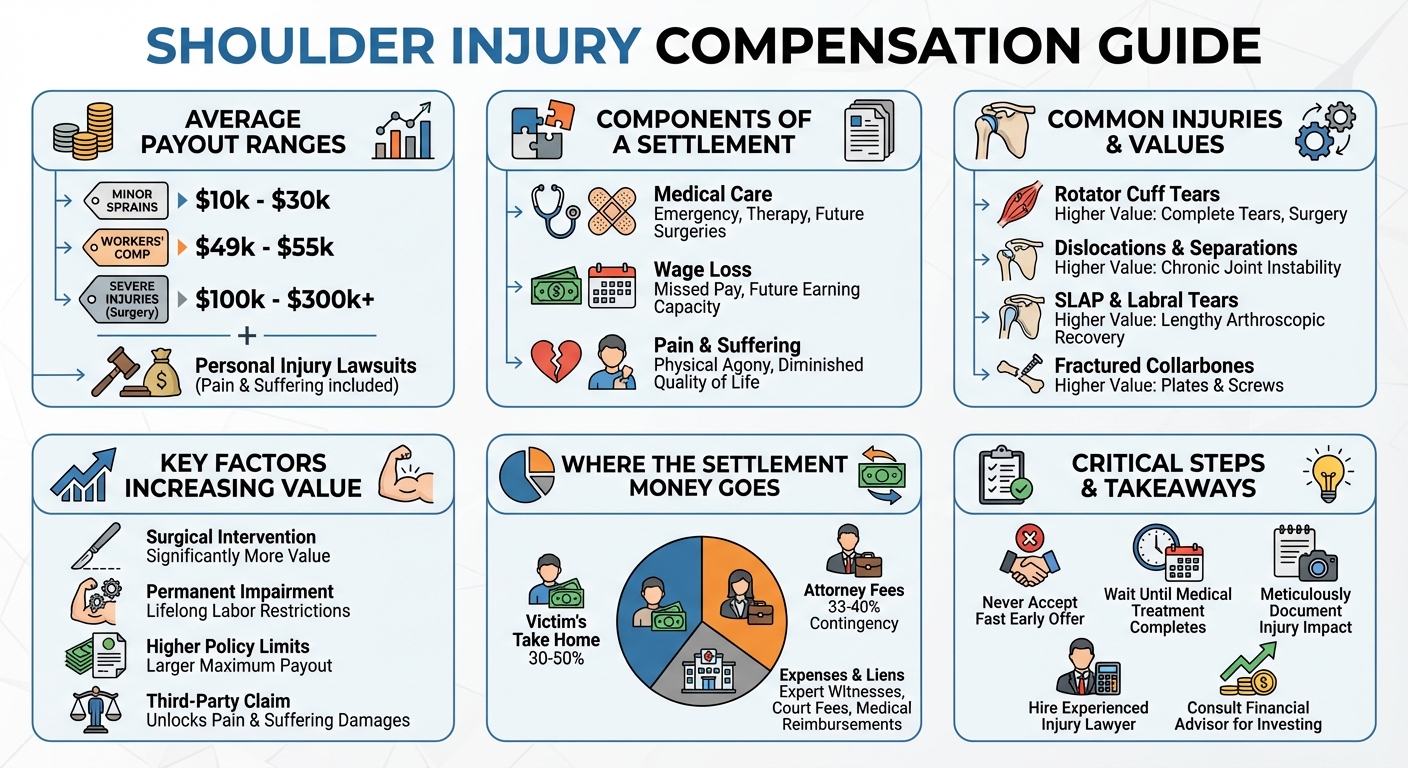
Shoulder injury compensation typically ranges from $20,000 for minor sprains to over $300,000 for severe injuries requiring surgery. According to the National Safety Council, the average workers’ compensation settlement for a shoulder injury is around $50,000 to $55,000. Personal injury lawsuit payouts are often higher because they include pain and suffering damages.
Understanding Shoulder Injury Compensation
A severe shoulder injury can instantly derail your life. Between the inability to lift objects, drive, or even sleep comfortably, the physical toll is immense. Financially, the burden of emergency room visits, MRI scans, physical therapy, and potential surgery can quickly drain your savings, especially if you are forced to miss work.
Despite these hardships, insurance companies frequently undervalue shoulder injury claims. Adjusters often try to minimize the damage by labeling a torn rotator cuff or labrum as a “pre-existing condition” or a natural result of aging and degeneration. Securing fair shoulder injury compensation requires proving the exact cause of the injury and meticulously documenting how it impacts your daily life and earning capacity.
What is the average settlement for a shoulder injury?
According to the National Safety Council, the average workers’ compensation settlement for a shoulder injury is between $49,000 and $55,000. However, personal injury settlements are often significantly higher because they allow victims to recover additional compensation for physical pain, emotional suffering, and long-term lifestyle limitations.
The Breakdown: Medical Care, Wage Loss, and Pain
When calculating an average settlement, the final number is typically divided into three main categories of damages:
- Medical Care: This covers past emergency bills, orthopedic consultations, physical therapy, and future projected medical costs (such as a future joint replacement).
- Wage Loss: Compensation for the paychecks you missed while recovering, as well as “loss of earning capacity” if you cannot return to your previous line of work.
- Pain and Suffering: Available in personal injury claims (not workers’ comp), this compensates you for the physical agony and diminished quality of life caused by the injury.
What is the payout for a shoulder injury?
The payout for a shoulder injury varies widely based on the specific diagnosis. Minor sprains may settle for $10,000 to $30,000, while severe rotator cuff tears or fractures requiring reconstructive surgery can result in payouts exceeding $100,000 to $300,000, depending on liability and insurance limits.
Common Shoulder Injuries and Their Claim Values
- Rotator Cuff Tears: One of the most common and debilitating injuries. Payouts depend heavily on whether the tear is partial (often treated with physical therapy and injections) or complete (requiring surgical repair and months of rehab).
- Shoulder Dislocation and Separation: A dislocated shoulder tears the surrounding ligaments and cartilage. If the joint becomes chronically unstable, the settlement value increases to account for future medical interventions.
- SLAP Tears and Labral Tears: Damage to the ring of cartilage surrounding the shoulder socket often requires arthroscopic surgery. These claims frequently yield higher payouts due to the long, painful recovery process.
- Fractured Collarbone (Clavicle): A broken collarbone from a car accident or fall can require plates and screws to heal properly, driving up medical costs and the overall settlement value.
Key Factors That Increase Your Settlement Value
No two shoulder injuries are exactly alike. Insurance adjusters and juries look at several key variables when determining how much a claim is worth.
Conservative Treatment vs. Surgical Intervention
The type of medical treatment you receive is the biggest driver of your settlement value. Claims involving “conservative treatment”—such as rest, ice, and a few weeks of physical therapy—will settle for less. Conversely, if your injury requires invasive procedures like arthroscopy, rotator cuff repair, or a total shoulder replacement, your medical bills and pain and suffering damages will exponentially increase the claim’s value.
Permanent Impairment and Loss of Earning Capacity
If your doctor determines you have reached Maximum Medical Improvement (MMI) but you still suffer from a restricted range of motion, you may be assigned a permanent impairment rating. If this permanent damage prevents you from performing your job (especially in manual labor, construction, or nursing), your settlement must compensate you for a lifetime of reduced earning capacity.
Liability and Insurance Policy Limits
Even if your shoulder injury is worth $500,000, your payout is often capped by the at-fault party’s insurance policy limits. If a driver with a state-minimum $30,000 policy hits you, recovering more than that amount can be difficult unless you have Underinsured Motorist (UIM) coverage or there is a liable third party, such as a commercial trucking company.
Workers’ Compensation vs. Personal Injury Claims
How you were injured dictates the type of claim you file, which drastically affects your compensation.
How Workplace Shoulder Injuries Are Calculated
If you hurt your shoulder on the job, you will likely file a workers’ compensation claim. Workers’ comp is a “no-fault” system. It covers your medical bills and a portion of your lost wages (usually two-thirds). However, it strictly forbids you from suing your employer for pain and suffering, which naturally keeps average payouts lower.
Third-Party Claims: Unlocking Pain and Suffering Damages
If your workplace injury was caused by a negligent third party—such as a defective piece of machinery, a negligent subcontractor, or a careless driver who hit you while you were making a delivery—you can file a personal injury lawsuit in addition to your workers’ comp claim. This is crucial because a personal injury claim allows you to recover full lost wages and substantial pain and suffering damages.
Understanding Your Net Payout: Where Does the Money Go?
When you hear about a large settlement, it is important to understand that the victim does not pocket the entire amount. Before the final check is cut, several deductions must be made.
- Attorney Fees: Most personal injury lawyers work on a contingency fee basis, meaning they take a percentage (usually 33% to 40%) of the final settlement.
- Case Expenses: Costs advanced by your lawyer to build your case, such as expert witness fees, court filing fees, and medical record retrieval costs.
- Medical Liens: Your health insurance provider, Medicare, or the hospital has the right to be reimbursed for the medical bills they paid on your behalf related to the accident.
How much of a $100K settlement will I get?
If you receive a $100,000 settlement, you will typically take home between $30,000 and $50,000. Before you receive your net payout, deductions are made for attorney contingency fees (usually 33% to 40%), case expenses, and outstanding medical liens or health insurance reimbursements.
What to do with a $500,000 settlement?
If you receive a $500,000 settlement, first pay off any remaining high-interest debt and set aside an emergency fund. Because large settlements must cover future medical care and lost earning capacity, it is highly recommended to consult a financial advisor to invest the remaining funds for long-term stability.
Why You Shouldn’t Rush Your Shoulder Injury Claim
Insurance companies love to offer fast, early settlements to victims with shoulder injuries. They know that if you accept a quick $15,000 check before you realize you need a $50,000 surgery, they save money. Once you sign a release, you can never go back and ask for more.
Patience is critical. You should never settle a shoulder injury claim until you have completed your medical treatment or your doctor has provided a concrete prognosis for your future medical needs. Partnering with an experienced Houston personal injury lawyer ensures that your claim is fully investigated, your damages are accurately calculated, and the insurance company is forced to pay the true value of your injury.
 Call (713) 747-7777