

Table of contents
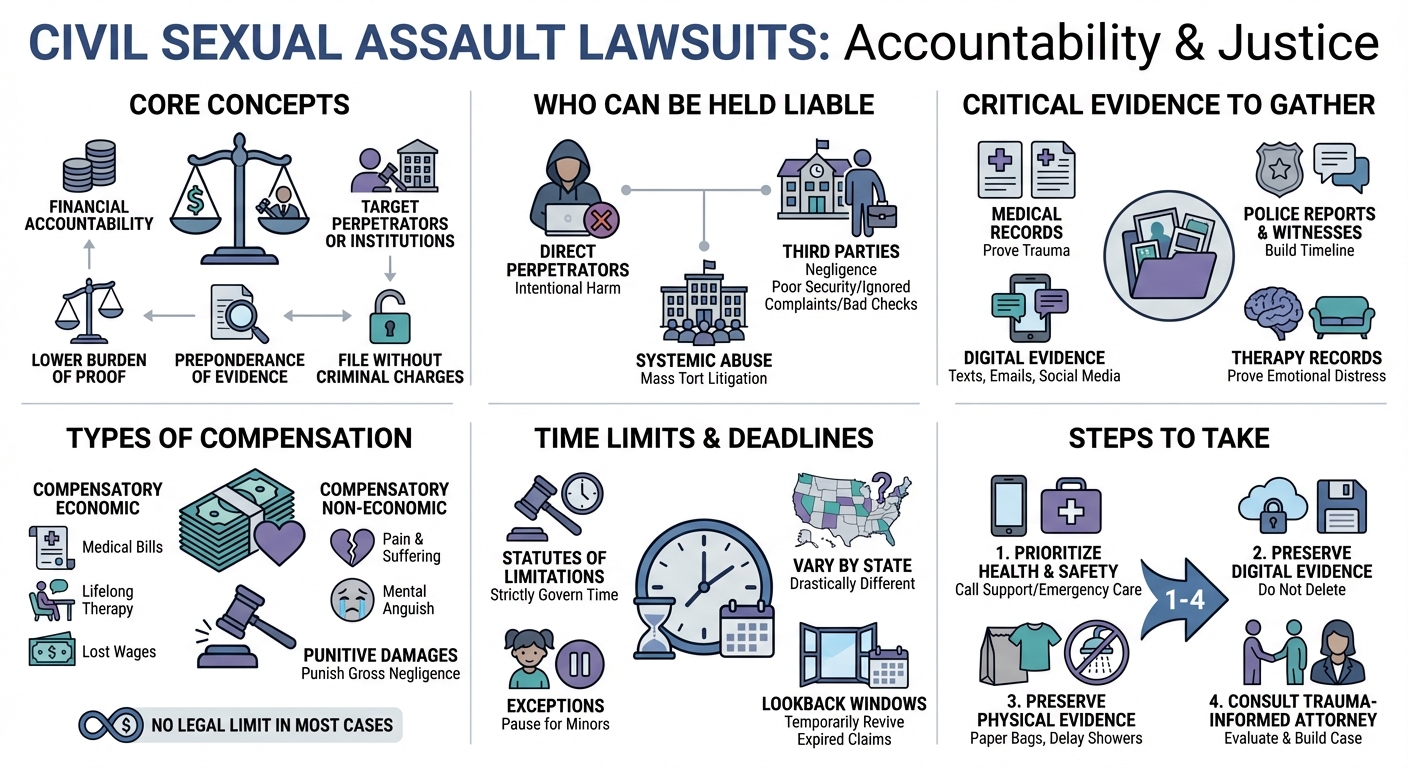
A sexual assault lawsuit is a civil claim filed by a survivor to hold perpetrators or negligent institutions financially accountable. You can seek compensatory damages for medical bills, therapy, and emotional distress, alongside punitive damages to punish the abuser. Unlike criminal cases, civil lawsuits require a lower burden of proof.
Filing a Sexual Assault Lawsuit: Your Guide to Civil Justice and Compensation
Surviving sexual assault is a profoundly traumatic experience. While the criminal justice system focuses on punishing the perpetrator with jail time, a civil sexual assault lawsuit empowers survivors to seek financial compensation and hold abusers—and the institutions that enabled them—accountable. This guide explains how civil claims work, who can be held liable, and what to expect during the legal process.
What is a Civil Sexual Assault Lawsuit?
A civil sexual assault lawsuit is a legal action filed by a survivor (the plaintiff) against an abuser or a negligent third party (the defendant). The primary goal is to secure financial compensation for the physical, emotional, and financial damages caused by the assault.
Criminal vs. Civil Cases: Understanding the Difference
It is entirely possible to file a civil lawsuit even if criminal charges were never filed or if the abuser was acquitted in criminal court. Here is how the two systems differ:
| Feature | Criminal Case | Civil Lawsuit |
|---|---|---|
| Purpose | Punish the offender (prison, probation) | Compensate the victim financially |
| Who Files? | The government (Prosecutor/District Attorney) | The survivor (Plaintiff) via a private attorney |
| Burden of Proof | Beyond a reasonable doubt (very high) | Preponderance of the evidence (lower) |
| Outcome | Guilty or Not Guilty verdict | Liable or Not Liable (financial settlement/award) |
The Burden of Proof in Civil Court
In a civil lawsuit, your attorney only needs to prove liability by a preponderance of the evidence. This means demonstrating that it is “more likely than not” (greater than 50% probability) that the assault occurred and caused your damages. Because this standard is lower than the criminal “beyond a reasonable doubt” standard, many survivors win civil cases even when criminal convictions fail.
Who Can Be Held Liable in a Sexual Assault Lawsuit?
Liability in a civil lawsuit can extend beyond the person who committed the act. Identifying all liable parties is crucial for securing adequate compensation.
Suing the Direct Perpetrator
You can sue the individual who assaulted you directly for intentional torts such as assault, battery, and intentional infliction of emotional distress. However, if the perpetrator lacks significant personal assets or insurance, collecting a judgment can be challenging.
Third-Party Liability (Institutions, Employers, and Property Owners)
Often, sexual assault occurs because a business, school, or organization failed to protect individuals on their premises. You may have grounds to sue a third party for negligence if they:
- Failed to conduct adequate background checks on employees.
- Ignored previous complaints of harassment or abuse.
- Provided inadequate security (e.g., broken locks, poor lighting, lack of security personnel).
- Violated Title IX regulations (in the case of educational institutions).
Active Mass Torts and Institutional Cases
When systemic abuse occurs within large organizations, survivors often join forces in mass torts or consolidated litigations. Our firm is actively monitoring and representing clients in several major institutional cases. Learn more about specific ongoing litigations through our dedicated resource pages:
- Uber Sexual Assault Lawsuits
- Roblox Child Sex Abuse Lawsuits
- Mormon Church Sex Abuse Lawsuits
- New York Sex Abuse Lawsuits and Settlements
What evidence is needed for a sexual assault case?
To build a strong civil claim, the evidence needed for a sexual assault case typically includes medical records, forensic exams, police reports, and witness testimonies. Additionally, digital evidence like text messages or emails, alongside therapy records documenting emotional distress, play a crucial role in proving liability.
Medical Records and Forensic Evidence
If you sought medical attention after the assault, records from a hospital visit or a Sexual Assault Nurse Examiner (SANE) exam provide powerful, objective evidence of physical trauma and DNA presence.
Witness Testimonies and Police Reports
Even if there were no eyewitnesses to the assault itself, “outcry witnesses”—friends, family members, or colleagues you confided in immediately afterward—can provide vital corroborating testimony. Official police reports also help establish a timeline of events.
Digital Evidence (Texts, Emails, and Social Media)
Perpetrators often leave a digital trail. Apologetic text messages, threatening emails, or social media direct messages can serve as admissions of guilt or help establish the abuser’s state of mind.
Psychological Evaluations and Therapy Records
Because emotional distress makes up a massive portion of civil damages, notes from therapists, psychiatrists, or counselors are essential to prove the ongoing psychological impact of the trauma, such as PTSD, anxiety, or depression.
Compensation and Settlements in Sexual Assault Cases
Financial recovery is the primary objective of a civil claim. Understanding how damages are calculated can help set expectations for your case.
What is the average settlement for sexual assault?
Because every case involves unique damages and varying defendant resources, there is no single average settlement for sexual assault. Payouts can range from tens of thousands to multi-million dollar verdicts, particularly when a negligent institution or corporation is held liable for failing to protect the victim.
How much can someone sue for sexual assault?
There is generally no legal limit to how much someone can sue for sexual assault, though some states cap punitive damages. The amount you demand depends heavily on the defendant’s financial assets, available insurance policies, and the total calculated cost of your physical and emotional injuries.
How much compensation can you get for sexual assault?
The amount of compensation you can get for sexual assault depends on your specific economic and non-economic losses. Victims can recover funds for past and future medical bills, lifelong therapy costs, lost earning capacity, and substantial compensation for severe physical pain, mental anguish, and loss of life enjoyment.
Types of Damages Awarded (Compensatory vs. Punitive)
Settlements and verdicts are generally broken down into two main categories:
- Compensatory Damages: Designed to make the victim “whole.” This includes economic damages (medical bills, lost wages) and non-economic damages (pain and suffering, emotional distress).
- Punitive Damages: Awarded in cases of gross negligence or malicious intent, these damages are specifically designed to punish the defendant and deter similar behavior in the future.
Statutes of Limitations: How Long Do You Have to File?
The legal window to file a civil lawsuit is strictly governed by the statute of limitations, which dictates how much time you have to initiate legal action.
State-by-State Deadlines
Statutes of limitations vary drastically by state. Some states require you to file within one to two years of the assault, while others have entirely eliminated the statute of limitations for civil sexual assault claims. Missing this deadline usually means losing your right to sue forever.
Exceptions, Tolling, and Lookback Windows
Many states recognize the complex trauma of sexual assault and offer exceptions. “Tolling” may pause the clock if the victim was a minor at the time of the abuse. Additionally, several states have passed “lookback windows” (such as the Adult Survivors Act in New York), which temporarily revive expired claims, allowing survivors to sue decades after the abuse occurred.
Steps to Take if You Are Considering a Civil Lawsuit
If you are contemplating legal action, taking the right steps early can protect your well-being and strengthen your potential case.
Prioritize Your Safety and Health
Your immediate physical and mental health must come first. If you are in crisis, contact the RAINN National Sexual Assault Hotline at 800-656-HOPE or seek emergency medical care.
Preserve All Potential Evidence
Do not delete text messages, emails, or voicemails from the perpetrator. If the assault was recent, preserve the clothing you were wearing in a paper bag (not plastic) and avoid showering before a forensic exam if possible.
Consult with a Trauma-Informed Sexual Assault Attorney
Navigating the legal system is daunting, but you do not have to do it alone. A trauma-informed attorney will evaluate your case confidentially, identify all liable parties, and fight fiercely for the justice and compensation you deserve while shielding you from unnecessary stress.