
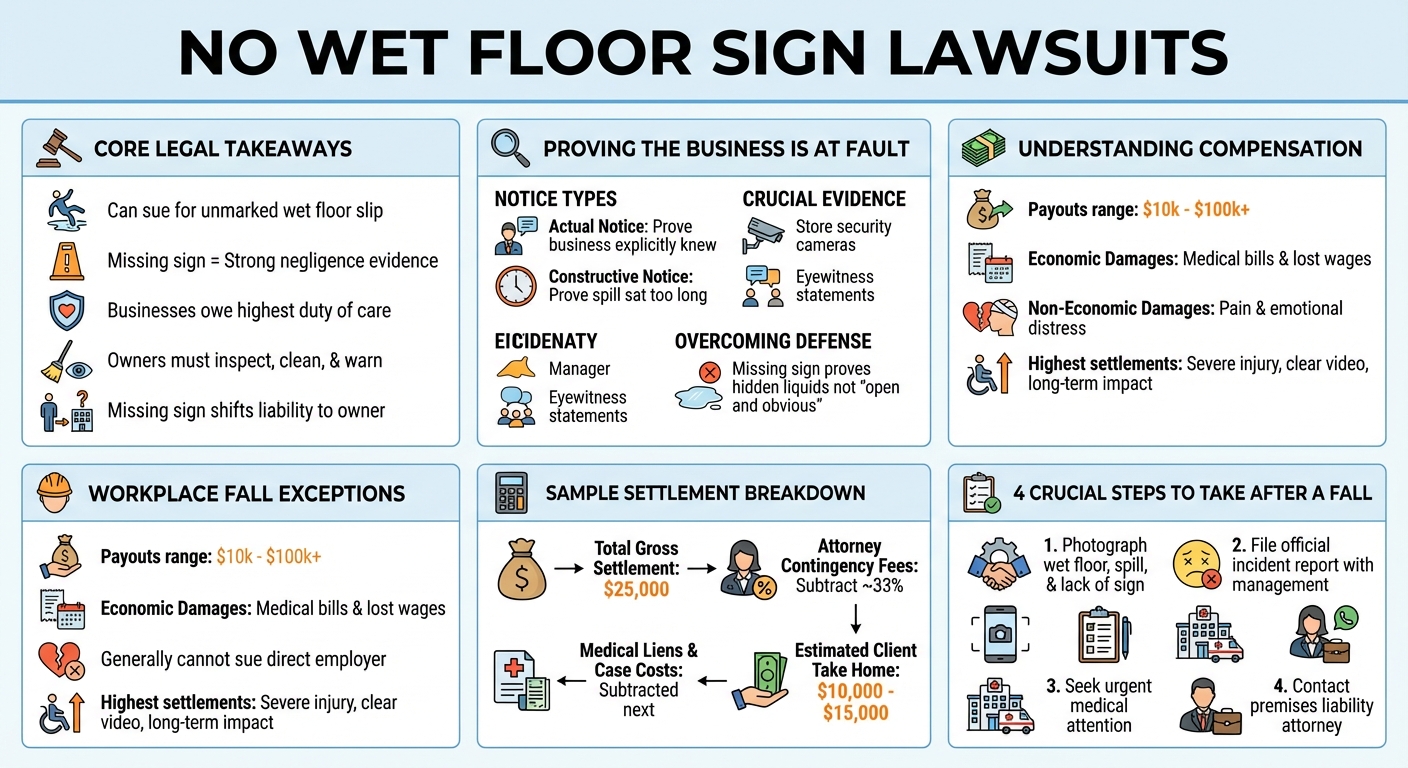
Yes, you can sue a business for a slip and fall if there was no wet floor sign. A missing warning sign is strong evidence of negligence. To win your lawsuit, you must prove the property owner knew or should have known about the wet floor and failed to warn you.
No Wet Floor Sign Lawsuit: Understanding Your Legal Rights
Slipping on a wet floor can cause devastating injuries, from broken bones to traumatic brain injuries. When a business or property owner fails to place a warning sign over a spill or freshly mopped area, they put every visitor at risk. If you were injured because a hazard was left unmarked, you may have grounds for a no wet floor sign lawsuit. Under premises liability law, businesses are legally obligated to keep their property safe. Failing to warn visitors of a slick surface is a classic example of negligence.
Can you sue a company for not having a wet floor sign?
Yes, you can sue a company for not having a wet floor sign if their failure to warn you about a hazard caused your slip and fall injury. Property owners have a legal duty to maintain safe premises, and a missing warning sign often serves as strong evidence of negligence.
The Duty of Care Owed to Customers and Visitors
In legal terms, customers are considered ‘invitees.’ This means the business owes you the highest duty of care. They must actively inspect their property for hazards, clean up spills promptly, and provide clear warnings—like a bright yellow wet floor sign—until the danger is resolved.
When a Missing Sign Equals Negligence
Negligence occurs when a business breaches its duty of care. If an employee mops an aisle and walks away without placing a caution sign, they have created an invisible hazard. In a lawsuit, proving that the sign was missing is often the linchpin of demonstrating that the business acted carelessly.
What happens if there is no wet floor sign?
If there is no wet floor sign, liability for any resulting slip and fall accidents typically shifts to the property owner or business operator. Because they failed to warn visitors of a known hazard, the injured party can file a personal injury claim to recover damages for their injuries.
How Liability Shifts to the Property Owner
When a warning sign is absent, the assumption that a customer should have ‘watched their step’ weakens significantly. The burden shifts to the property owner to explain why a known hazard was left unmarked. If they cannot provide a valid reason, they are generally held liable for your medical bills and other losses.
The Role of Video Surveillance and Witness Testimony
Proving the absence of a sign requires evidence. Store security cameras are crucial; they can show exactly when the spill occurred, how long it sat there, and the fact that no employee placed a warning sign. Witness statements from other shoppers who saw the unmarked spill also strengthen your claim.
Proving Fault: Actual Notice vs. Constructive Notice
To win a slip and fall lawsuit, you must prove the business knew or should have known about the wet floor. This is established through either actual or constructive notice.
Actual Notice: They Knew About the Spill
Actual notice means the business was directly aware of the hazard. For example, if a customer dropped a jar of pickles and told a manager, or if an employee just finished mopping the floor, the business had actual notice. Failing to place a sign in these scenarios is clear negligence.
Constructive Notice: They Should Have Known
Constructive notice applies when a spill was left unattended for so long that a reasonable business owner would have discovered it during routine checks. If a puddle of water sat in a grocery aisle for two hours, the court will likely determine the store had constructive notice, even if no employee actually saw it.
Overcoming the ‘Open and Obvious’ Defense
Defense attorneys often argue that the puddle was ‘open and obvious,’ meaning you should have seen it and avoided it. A missing wet floor sign helps defeat this defense. Clear liquids like water or clear soaps blend into tile floors, making them nearly invisible without a brightly colored warning sign.
How much compensation for slipping on a wet floor?
Compensation for slipping on a wet floor varies widely based on injury severity, ranging from $10,000 for minor sprains to over $100,000 for severe fractures or spinal injuries. Settlements typically cover medical expenses, lost wages, and non-economic damages like pain and suffering.
Economic Damages: Medical Bills and Lost Wages
Economic damages reimburse you for out-of-pocket financial losses. This includes emergency room visits, physical therapy, surgery costs, and any wages you lost while recovering from your injuries. Keep meticulous records of all receipts and pay stubs.
Non-Economic Damages: Pain and Suffering
Non-economic damages compensate you for the physical pain and emotional distress caused by the fall. If a shattered hip prevents you from enjoying your hobbies or playing with your children, these damages account for that loss of quality of life.
Factors That Increase Your Settlement Value
- Severity of Injury: Brain injuries, spinal cord damage, and fractures yield higher payouts than soft tissue injuries.
- Clear Liability: Video evidence showing an employee ignoring a spill drives up settlement offers.
- Long-Term Impact: Permanent disabilities or the need for lifelong medical care significantly increase case value.
Settlement Breakdown: How much will I get from a $25,000 settlement?
From a $25,000 settlement, you will typically take home between $10,000 and $15,000. First, your attorney deducts their contingency fee, usually around 33 percent or $8,250. Then, any outstanding medical liens or case expenses are paid from the remaining balance before you receive your final check.
Deducting Attorney Contingency Fees (Typically 33%)
Most personal injury lawyers work on a contingency fee basis. This means they take a percentage of your settlement (usually 33.3%) and charge nothing if you lose. On a $25,000 settlement, the fee is approximately $8,333.
Paying Off Medical Liens and Out-of-Pocket Costs
Before you receive your funds, your lawyer must pay off any medical providers or health insurance companies that placed a lien on your settlement. They will also deduct case expenses, such as court filing fees or costs for obtaining medical records.
Calculating Your Final Take-Home Amount
| Expense Category | Estimated Amount |
|---|---|
| Gross Settlement | $25,000 |
| Attorney Fees (33.3%) | -$8,333 |
| Medical Liens & Case Costs (Example) | -$4,000 |
| Estimated Client Take-Home | $12,667 |
What if You Slip and Fall on a Wet Floor at Work?
Slipping on a wet floor at your workplace involves a different legal process than falling at a grocery store or restaurant.
Workers’ Compensation vs. Personal Injury Lawsuits
If you fall at work, you generally cannot sue your employer. Instead, you must file a workers’ compensation claim, which covers your medical bills and a portion of your lost wages regardless of who was at fault. However, workers’ comp does not pay for pain and suffering.
Third-Party Liability (e.g., Suing a Cleaning Company)
If an outside vendor—such as an independent janitorial service—mopped the floor and failed to leave a sign, you may be able to file a third-party personal injury lawsuit against them. This allows you to recover full damages, including pain and suffering, in addition to your workers’ comp benefits.
Crucial Steps to Take Immediately After Your Fall
The actions you take in the minutes and days following a slip and fall can make or break your lawsuit.
Document the Scene (Photos of the Floor and Lack of Sign)
Use your phone to take immediate photos of the wet floor, the surrounding area, and the specific absence of any warning signs. Capture the source of the liquid if possible (e.g., a leaking freezer).
File an Official Incident Report
Notify a manager immediately and insist on filling out an incident report. Ask for a copy of the report before you leave. Do not sign anything admitting fault or downplaying your injuries.
Seek Immediate Medical Attention
Go to urgent care or the emergency room right away. A prompt medical evaluation links your injuries directly to the fall, preventing the insurance company from arguing that you were hurt elsewhere.
Contact a Premises Liability Attorney
Before speaking to the store’s insurance adjuster, consult with a personal injury lawyer. An attorney will send a spoliation letter to preserve video evidence and handle all negotiations to ensure you receive a fair settlement.
 Call (713) 747-7777