
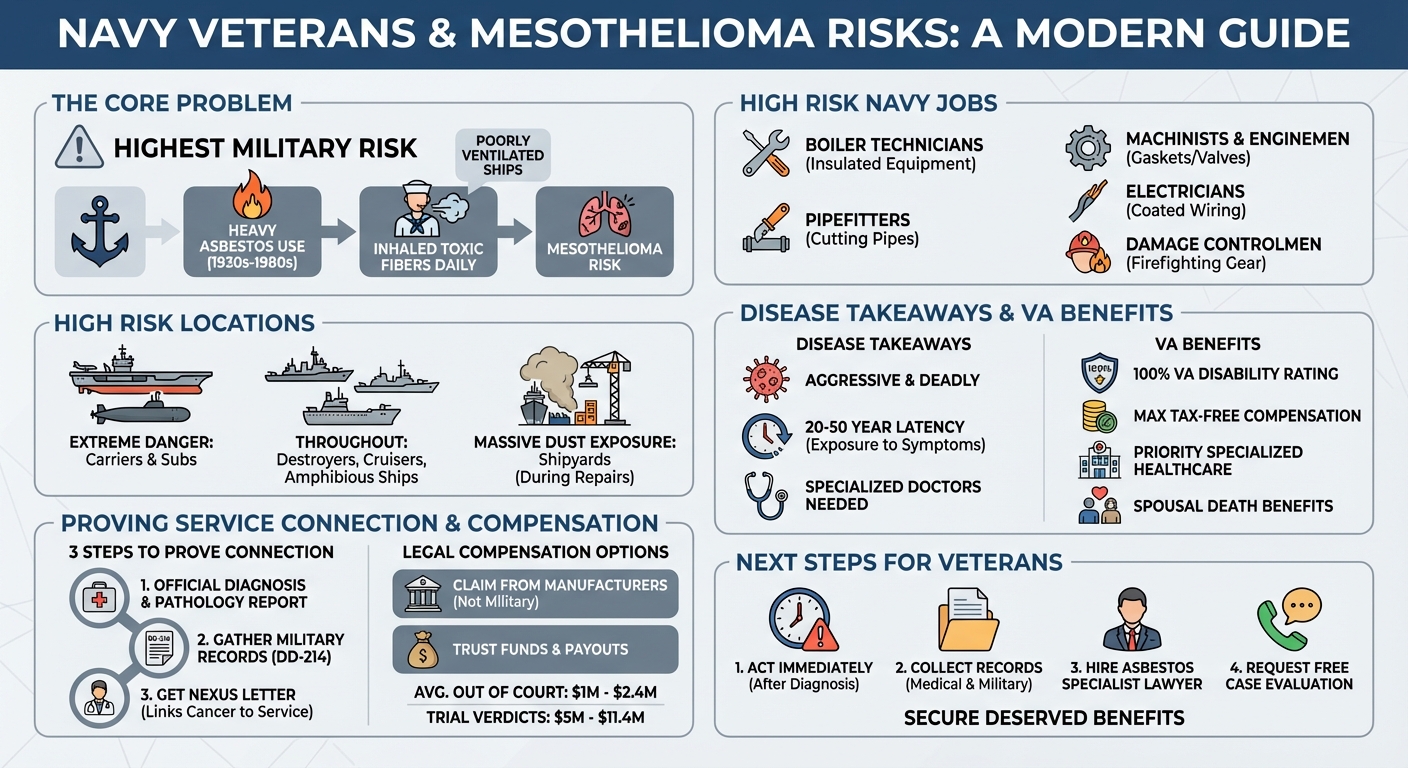
U.S. Navy veterans face the highest risk of developing mesothelioma due to the military’s extensive use of asbestos for fireproofing and insulation between the 1930s and 1980s. Veterans diagnosed with this aggressive cancer are often eligible for a 100% VA disability rating, specialized healthcare, and significant financial compensation.
Navy Veterans and Mesothelioma: Understanding Asbestos Exposure Risks
Of all the United States military branches, Navy veterans face the highest risk of developing mesothelioma. For decades, the Navy relied heavily on asbestos, a highly toxic mineral, to build, insulate, and fireproof its fleet. Today, thousands of veterans are facing the devastating health consequences of that exposure.
The History of Asbestos Use in the U.S. Navy
From the 1930s through the early 1980s, the U.S. Navy mandated the use of asbestos in shipbuilding. Because asbestos is highly resistant to heat, fire, and chemical damage, it was considered the ideal material to protect vessels and their crews from fires at sea. It was woven into the very fabric of naval vessels, lining boiler rooms, engine spaces, sleeping quarters, and mess halls. The military did not begin phasing out asbestos until the late 1970s, meaning generations of sailors were unknowingly exposed to carcinogenic dust on a daily basis.
Why do veterans get mesothelioma?
Veterans get mesothelioma because the U.S. military heavily relied on asbestos for fireproofing and insulation from the 1930s through the 1980s. Service members, especially in the Navy, lived and worked in poorly ventilated spaces filled with toxic asbestos dust, inhaling fibers that cause this aggressive cancer decades later.
High-Risk Navy Occupations and Ship Classes
While anyone who served on an asbestos-containing ship was at risk, certain occupations and environments carried a significantly higher danger of heavy, prolonged exposure.
Navy Jobs with the Highest Asbestos Exposure
Sailors who worked below deck in poorly ventilated areas faced the highest concentration of airborne asbestos fibers. High-risk ratings included:
- Boiler Technicians: Maintained boilers insulated with thick layers of asbestos.
- Pipefitters: Cut and installed asbestos-wrapped pipes, releasing millions of microscopic fibers into the air.
- Machinists and Enginemen: Replaced asbestos gaskets, valves, and brake linings in cramped engine rooms.
- Electricians: Handled asbestos-coated wiring and electrical panels.
- Damage Controlmen: Repaired battle damage and maintained firefighting gear, which often contained woven asbestos.
Types of Navy Ships Containing Asbestos
Virtually every class of Navy ship commissioned between World War II and the Vietnam War contained asbestos. Below is a breakdown of the most hazardous vessels:
| Ship Class | Primary Asbestos Locations | Exposure Risk Level |
|---|---|---|
| Aircraft Carriers | Boiler rooms, catapult systems, pipe insulation | Very High |
| Submarines | Cramped engine rooms, torpedo rooms, ventilation systems | Very High |
| Destroyers & Cruisers | Turbines, gaskets, mess halls, sleeping quarters | High |
| Amphibious Assault Ships | Vehicle storage areas, engine spaces, bulkheads | High |
The Role of Naval Shipyards in Asbestos Exposure
Exposure was not limited to active duty at sea. Naval shipyards were massive hubs of asbestos exposure. During ship overhauls, repairs, and decommissioning, civilian contractors and Navy personnel worked side-by-side tearing out old asbestos insulation. This process, known as “rip-out,” created massive clouds of toxic dust that contaminated entire shipyards, affecting workers even if they did not directly handle the materials.
Mesothelioma Diagnosis and Prognosis for Veterans
Mesothelioma is an aggressive cancer that attacks the lining of the lungs (pleural), abdomen (peritoneal), or heart (pericardial). For Navy veterans, a diagnosis often comes as a shock long after their military service has ended.
The 20 to 50-Year Latency Period
Asbestos fibers inhaled during military service do not cause immediate illness. Instead, they become permanently lodged in the body’s tissues, causing inflammation and genetic mutation over decades. This 20 to 50-year latency period means a Navy veteran exposed to asbestos in 1975 might not show symptoms or receive a mesothelioma diagnosis until 2025.
Is mesothelioma one of the worst cancers?
Yes, mesothelioma is considered one of the most aggressive and deadly cancers. Because it has a latency period of 20 to 50 years, it is usually diagnosed in its later stages when it is harder to treat, resulting in a generally poor prognosis and short life expectancy.
Seeking Specialized Treatment
Because mesothelioma is rare, standard oncology centers often lack the expertise to treat it effectively. Navy veterans must seek care from specialized mesothelioma doctors who offer advanced treatments like cytoreductive surgery, heated intraperitoneal chemotherapy (HIPEC), and immunotherapy. For veterans in Texas or those willing to travel, exploring MD Anderson and Mesothelioma in Houston is a critical step, as it is home to some of the nation’s top specialists and cutting-edge clinical trials.
VA Benefits for Navy Veterans with Mesothelioma
The Department of Veterans Affairs recognizes mesothelioma as a service-connected disability, provided the veteran’s asbestos exposure occurred during their military service.
What is the VA rating for mesothelioma?
The Department of Veterans Affairs (VA) typically assigns a 100% disability rating for veterans diagnosed with active malignant mesothelioma. Because this cancer is entirely disabling, a 100% rating guarantees the maximum monthly tax-free compensation and grants priority access to specialized VA healthcare services.
VA Disability Compensation and Healthcare Access
With a 100% disability rating, Navy veterans receive substantial tax-free monthly compensation. Additionally, this rating grants veterans priority access to the VA healthcare system. The VA operates several specialized mesothelioma treatment centers across the country, allowing veterans to receive world-class care at little to no out-of-pocket cost.
Dependency and Indemnity Compensation (DIC) for Surviving Spouses
If a Navy veteran passes away from mesothelioma, their surviving spouse and dependent children may be eligible for Dependency and Indemnity Compensation (DIC). This provides a tax-free monthly benefit to help ease the financial burden following the loss of a loved one.
How to Prove Service Connection for Asbestos Exposure
To secure VA benefits, veterans must prove their mesothelioma is connected to their military service. This requires:
- A Medical Diagnosis: Official pathology reports confirming malignant mesothelioma.
- Service Records: A DD-214 and documentation showing service on specific ships or in shipyards during the asbestos era.
- A Nexus Letter: A statement from a qualified medical professional explicitly linking the veteran’s cancer to their military asbestos exposure.
Legal Compensation Options Outside the VA
Many Navy veterans mistakenly believe that filing a legal claim means suing the U.S. military. This is false. Veterans cannot sue the Navy, but they can seek compensation from the private corporations that manufactured and sold toxic asbestos products to the military.
Filing Claims Against Asbestos Manufacturers (Not the Military)
Companies that supplied asbestos pumps, valves, boilers, and insulation to the Navy knew about the health risks but hid them to protect their profits. Veterans have the right to file personal injury lawsuits against these negligent manufacturers to recover damages for medical bills, lost income, and pain and suffering.
Asbestos Trust Funds for Navy Veterans
Many of the companies that supplied asbestos to the Navy eventually filed for bankruptcy to avoid lawsuits. However, federal bankruptcy courts forced these companies to establish multi-million-dollar Asbestos Trust Funds to compensate current and future victims. Navy veterans can file claims against these trusts to receive compensation without ever going to court.
What’s the average payout for mesothelioma?
The average payout for a mesothelioma claim ranges between $1 million and $2.4 million for out-of-court settlements, while trial verdicts can average between $5 million and $11.4 million. Compensation amounts depend on the veteran’s age, medical expenses, lost wages, and the specific asbestos products they were exposed to.
Next Steps: Taking Action After a Diagnosis
A mesothelioma diagnosis requires immediate action to protect your health and your family’s financial future.
Gathering Your Military and Medical Records
Start by collecting your DD-214, military service records, and all medical documentation related to your diagnosis. These documents form the foundation of both your VA claim and any private legal claims you pursue.
Why You Need a Specialized Mesothelioma Lawyer
Filing VA claims and asbestos trust fund claims simultaneously is a complex legal process. You need an attorney who specializes exclusively in asbestos litigation and understands the intricacies of Navy exposure. A specialized lawyer will identify the specific asbestos products you handled on your ship, build a rock-solid case, and maximize your compensation while you focus on treatment.
Free Case Evaluation for Navy Veterans
If you or a loved one served in the U.S. Navy and have been diagnosed with mesothelioma, you do not have to fight this battle alone. Contact our legal team today for a free, no-obligation case evaluation. We will review your service history, explain your legal rights, and help you secure the compensation and benefits you deserve.
 Call (713) 747-7777