
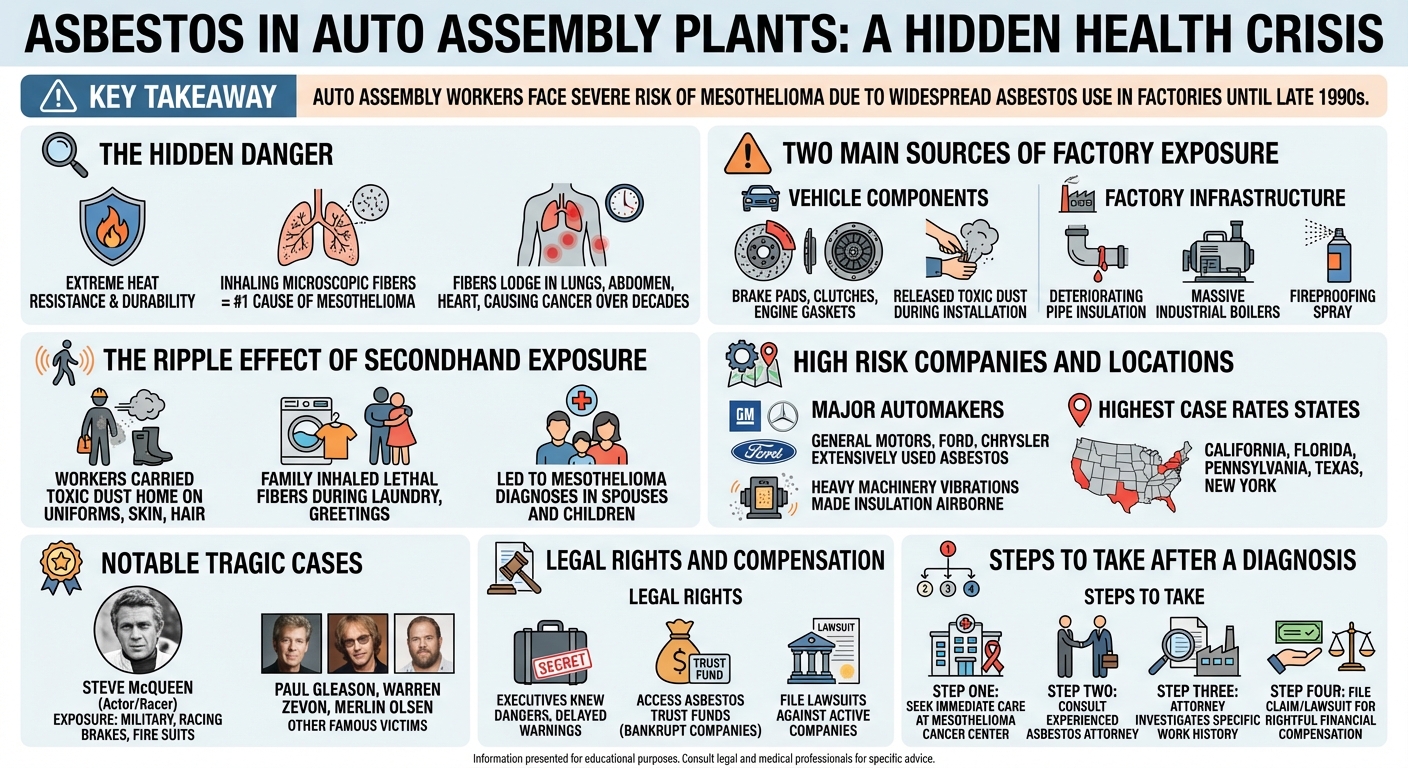
Automobile assembly plant workers face a high risk of mesothelioma due to heavy asbestos exposure. Until the late 1990s, auto manufacturers used asbestos in brakes, clutches, and gaskets. Workers were also exposed to toxic asbestos insulation, boilers, and heat shields within the factory infrastructure itself.
The Hidden Danger of Asbestos in Automobile Assembly Plants
For decades, automobile assembly plants were the backbone of American manufacturing. However, these massive facilities harbored a deadly secret: widespread asbestos use. Because of its exceptional heat resistance and durability, asbestos was heavily integrated into both the car parts being assembled and the factories themselves. Today, thousands of former auto workers are being diagnosed with mesothelioma, a rare and aggressive cancer caused exclusively by asbestos exposure.
How Auto Assembly Workers Were Exposed to Asbestos
Auto workers faced a dual threat of asbestos exposure on the assembly line. They were exposed not only to the components they installed but also to the industrial environment around them.
Handling Asbestos-Laced Brakes, Clutches, and Gaskets
Friction products in vehicles required materials that could withstand extreme temperatures without degrading. Until the late 1990s, asbestos was the industry standard. Assembly line workers frequently handled:
- Brake linings and pads: Installing or grinding brakes released clouds of toxic asbestos dust.
- Clutch facings: Manual transmission components contained high concentrations of asbestos.
- Gaskets and seals: Engine and exhaust gaskets were often cut from asbestos sheets, releasing microscopic fibers into the air.
Factory Infrastructure: Insulation, Heat Shields, and Boilers
Beyond the vehicles, the assembly plants themselves were built with asbestos. To protect against the extreme heat of welding, stamping, and painting processes, factories utilized asbestos-containing materials extensively. Workers inhaled fibers from deteriorating pipe insulation, massive industrial boilers, fireproofing spray on steel beams, and protective heat shields.
Secondhand Exposure for Families of Auto Workers
The danger did not stay on the factory floor. Auto workers unknowingly brought asbestos dust home on their uniforms, skin, and hair. When spouses washed these work clothes or children hugged their parents after a shift, they inhaled the lethal fibers. This secondhand exposure has led to numerous mesothelioma diagnoses among the family members of auto plant workers.
High-Risk Automobile Manufacturing Plants in the U.S.
Several major automakers operated facilities where asbestos exposure was rampant. Workers stationed in states with heavy automotive manufacturing, such as Michigan, Ohio, and New York, face some of the highest risks.
General Motors (GM) Assembly Plants
General Motors operated dozens of massive assembly and stamping plants across the country. Facilities like the GM Assembly Plant in Sleepy Hollow, NY, and various Chevrolet Motor plants in Michigan and Ohio heavily utilized asbestos in both vehicle components and plant infrastructure, putting thousands of line workers, mechanics, and maintenance staff at risk.
Ford Motor Company Stamping and Assembly Plants
Ford stamping plants, such as the facility in Buffalo, N.Y., required immense heat and pressure to mold automotive body parts. These plants relied on asbestos insulation to protect machinery and workers from burns. Over time, the constant vibration of the heavy machinery caused the asbestos insulation to degrade and become airborne.
Chrysler and Other Major Manufacturers
Chrysler assembly lines and parts manufacturing facilities also used asbestos-containing friction parts and gaskets. Mechanics, millwrights, and assembly workers at these plants were routinely exposed to asbestos dust during routine operations and equipment maintenance.
Understanding Mesothelioma: Causes and High-Risk States
Understanding the root cause of mesothelioma and where it is most prevalent is crucial for former auto workers seeking medical and legal help.
What is the number one cause of mesothelioma?
The number one cause of mesothelioma is exposure to asbestos. When microscopic asbestos fibers are inhaled or ingested, they become permanently lodged in the lining of the lungs, abdomen, or heart. Over decades, these trapped fibers cause inflammation and genetic scarring that ultimately leads to mesothelioma cancer.
What state has the most mesothelioma cases?
California currently reports the highest number of mesothelioma cases in the United States, followed closely by Florida, Pennsylvania, Texas, and New York. These states have high rates of diagnosis due to their extensive histories in heavy industries, including automobile manufacturing, shipbuilding, oil refining, and construction.
Famous Cases of Mesothelioma in the Auto and Racing World
The automotive and racing industries share a tragic history with asbestos, affecting even high-profile figures who spent their lives around cars.
How did Steve McQueen get mesothelioma?
Actor and avid racer Steve McQueen likely developed mesothelioma from multiple asbestos exposure sources. He was exposed to asbestos while removing insulation from pipes during his service in the U.S. Marines. Additionally, his auto racing career exposed him to asbestos-lined brakes, clutches, and fire-retardant racing suits.
What famous person died from mesothelioma?
Several famous people have died from mesothelioma, with actor Steve McQueen being the most well-known. Other notable figures who lost their lives to this aggressive asbestos-related cancer include actor Paul Gleason, musician Warren Zevon, and former NFL player and actor Merlin Olsen.
Legal Rights and Compensation for Former Auto Plant Workers
Because the dangers of asbestos were known by corporate executives long before workers were warned, diagnosed auto workers have strong legal rights to pursue compensation.
Filing an Asbestos Trust Fund Claim vs. Lawsuit
Many manufacturers of asbestos-containing auto parts have filed for bankruptcy to avoid liability. However, they were forced to establish Asbestos Trust Funds to compensate current and future victims. Auto workers can often file claims against these trusts without ever going to court. Alternatively, if the companies responsible for the exposure are still in business, workers may pursue a mesothelioma lawsuit to secure compensation for medical bills, lost wages, and pain and suffering.
Seeking Treatment and Next Steps After a Diagnosis
If you or a loved one worked in an automobile assembly plant and have been diagnosed with mesothelioma, your first step is to seek treatment from a specialized mesothelioma cancer center. Following your medical care plan, consulting with an experienced asbestos attorney is critical. They can investigate your work history, identify which auto plants and parts caused your exposure, and help you secure the financial compensation you deserve.
 Call (713) 747-7777