
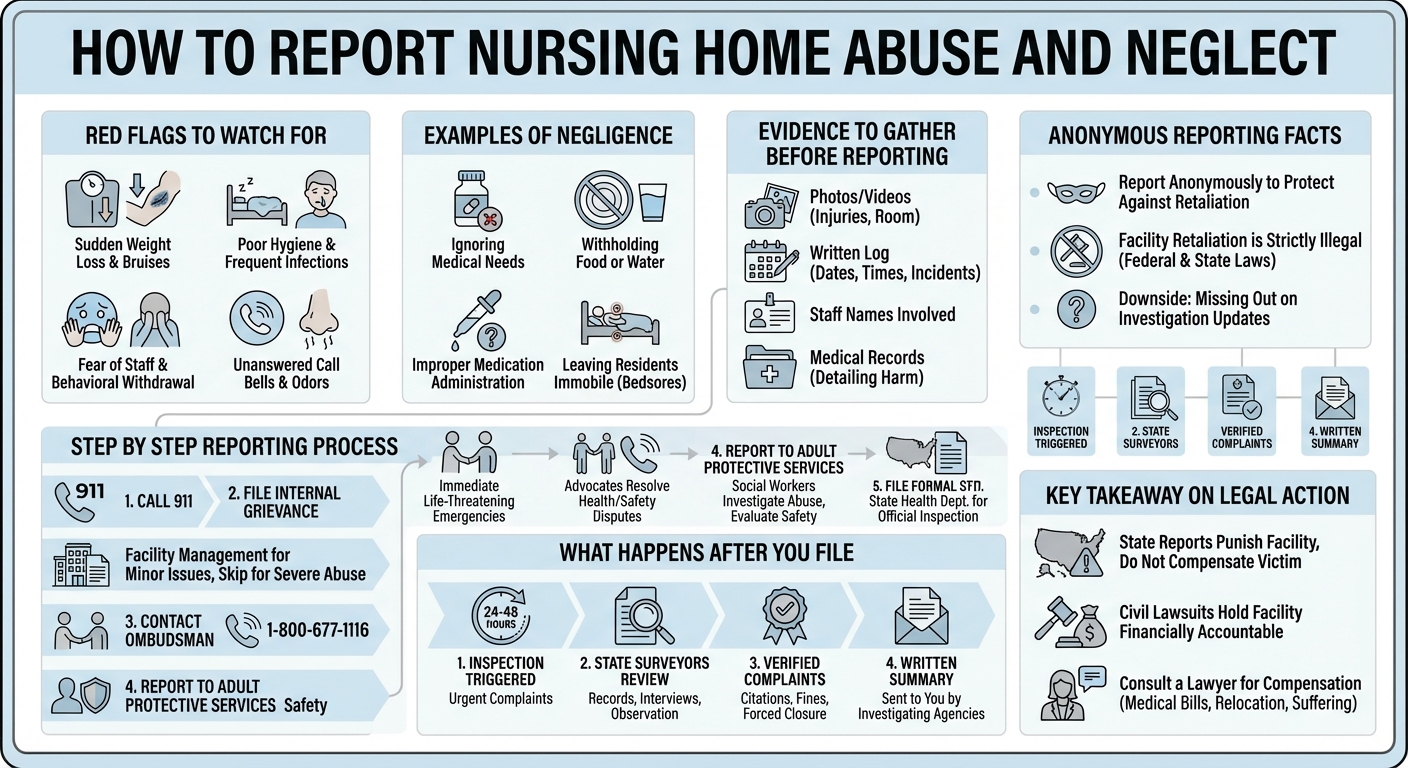
To report a nursing home, first call 911 if the resident is in immediate danger. For non-emergencies, contact your local Long-Term Care Ombudsman or Adult Protective Services (APS). You can also file a formal complaint with your state’s Department of Health by calling their toll-free nursing home complaint hotline or submitting an online form.
How to Report a Nursing Home for Abuse or Neglect
Discovering that a loved one is suffering in a long-term care facility is a devastating experience. Knowing exactly how to report a nursing home is critical to stopping the abuse, holding the facility accountable, and protecting other vulnerable residents. Reporting matters because state agencies rely on resident and family complaints to trigger unannounced inspections and enforce safety regulations.
When filing a report, it helps to understand the reporting hierarchy. Depending on the severity of the situation, you may need to escalate your concerns from facility management directly to state authorities or emergency responders. Acting quickly and contacting the right agency ensures the resident receives immediate protection.
Recognizing the Signs: When to File a Report
What are red flags in a nursing home?
Red flags in a nursing home include sudden weight loss, unexplained bruises, poor personal hygiene, and frequent infections. You may also notice behavioral changes like extreme withdrawal, fear of specific staff members, unanswered call bells, or a generally unclean facility with lingering odors.
What is considered negligence in a nursing home?
Negligence in a nursing home is considered any failure to provide adequate care, resulting in harm. This includes ignoring medical needs, failing to assist with hygiene, withholding food or water, improper medication administration, and leaving residents immobile for long periods, which often causes severe bedsores.
Documenting evidence before you report
Before you file a formal complaint, gather as much evidence as possible to support your claims. Strong documentation forces investigators to take your report seriously. Be sure to collect:
- Photographs or videos of injuries, bedsores, or unsanitary room conditions.
- A written log of dates, times, and specific incidents of neglect.
- Names of the staff members involved or on duty during the incidents.
- Medical records or statements from independent doctors detailing the harm.
Step-by-Step: Who to Contact to Report a Nursing Home
Step 1: Call 911 for Immediate Medical Emergencies or Physical Abuse
If a resident is in immediate, life-threatening danger, or if you witness active physical or sexual abuse, call 911 immediately. Law enforcement and emergency medical technicians (EMTs) have the authority to intervene instantly, remove the resident from danger, and initiate a criminal investigation.
Step 2: File an Internal Grievance with Facility Management
For minor issues like misplaced laundry or cold meals, start by speaking with the nursing home administrator or the director of nursing. Federal law requires facilities to have a formal grievance process. Submit your complaint in writing and request a timeline for their response. If the issue involves abuse or severe neglect, skip this step and go straight to state authorities.
Step 3: Contact Your Local Long-Term Care Ombudsman
The Long-Term Care Ombudsman program consists of advocates who resolve problems related to the health, safety, and rights of nursing home residents. They can mediate disputes between you and the facility. You can find your local Ombudsman by calling the national Eldercare Locator at 1-800-677-1116.
Step 4: Report to Adult Protective Services (APS)
Adult Protective Services (APS) investigates reports of abuse, neglect, and exploitation of vulnerable adults. APS social workers can step in to evaluate the resident’s safety, provide emergency support, and coordinate with local law enforcement if criminal abuse has occurred.
Step 5: File a Formal Complaint with Your State Health Department
Every state has a Department of Health (or equivalent agency) responsible for licensing and regulating nursing homes. Filing a complaint here is one of the most effective ways to force a state inspection. Most states offer a toll-free nursing home complaint hotline and an online submission form. When you file, provide your detailed evidence log to help inspectors target their investigation.
Can You Report a Nursing Home Anonymously?
How anonymous reporting works with APS and the Ombudsman
Yes, you can report a nursing home anonymously. Both Adult Protective Services and state health departments allow callers to withhold their names when submitting a tip. The Long-Term Care Ombudsman is also bound by strict confidentiality rules and will not reveal your identity or the resident’s identity without explicit permission.
Pros and cons of withholding your identity
The primary advantage of anonymous reporting is peace of mind, especially if you fear retaliation against your loved one. However, the downside is that investigators will not be able to contact you for follow-up questions, request additional evidence, or notify you directly about the outcome of the investigation.
Protections against facility retaliation
Federal and state laws strictly prohibit nursing homes from retaliating against residents or families who file complaints. Retaliation—such as threatening eviction, reducing the quality of care, or restricting visitation—is illegal and can result in severe fines or the loss of the facility’s Medicare/Medicaid funding.
What Happens After You File a Nursing Home Complaint?
The investigation process and timelines
Once a complaint is received by the state health department, it is triaged based on severity. Complaints alleging “immediate jeopardy” (situations likely to cause serious injury or death) typically trigger an on-site inspection within 24 to 48 hours. Less urgent complaints may take several weeks to be investigated.
State inspections and potential facility citations
During an unannounced inspection, state surveyors will review medical records, interview staff and residents, and observe facility operations. If they verify your complaint, the facility will be issued a citation (a “deficiency”). The nursing home must then submit a formal plan of correction. In severe cases, they may face heavy fines or be shut down.
How you will be notified of the outcome
If you provided your contact information when filing the report, the investigating agency will typically send you a written summary of their findings once the investigation concludes. This letter will state whether the complaint was substantiated and outline any penalties levied against the facility.
Next Steps: When to Consult a Nursing Home Abuse Lawyer
The difference between a state report and a civil lawsuit
Filing a complaint with the state is a regulatory action; it can fine the facility or force them to change their practices, but it does not compensate the victim. If your loved one suffered significant injuries, financial losses, or emotional trauma, you need to pursue a civil claim.
Seeking compensation for medical bills and suffering
A civil lawsuit holds the facility financially accountable for their negligence. Compensation can cover emergency medical bills, relocation costs, pain and suffering, and wrongful death damages. To understand what your case might be worth, read our comprehensive guide on How Much Can You Sue a Nursing Home for Negligence? A qualified nursing home abuse attorney can use the findings from your state complaint as powerful evidence to build a winning case.
 Call (713) 747-7777