
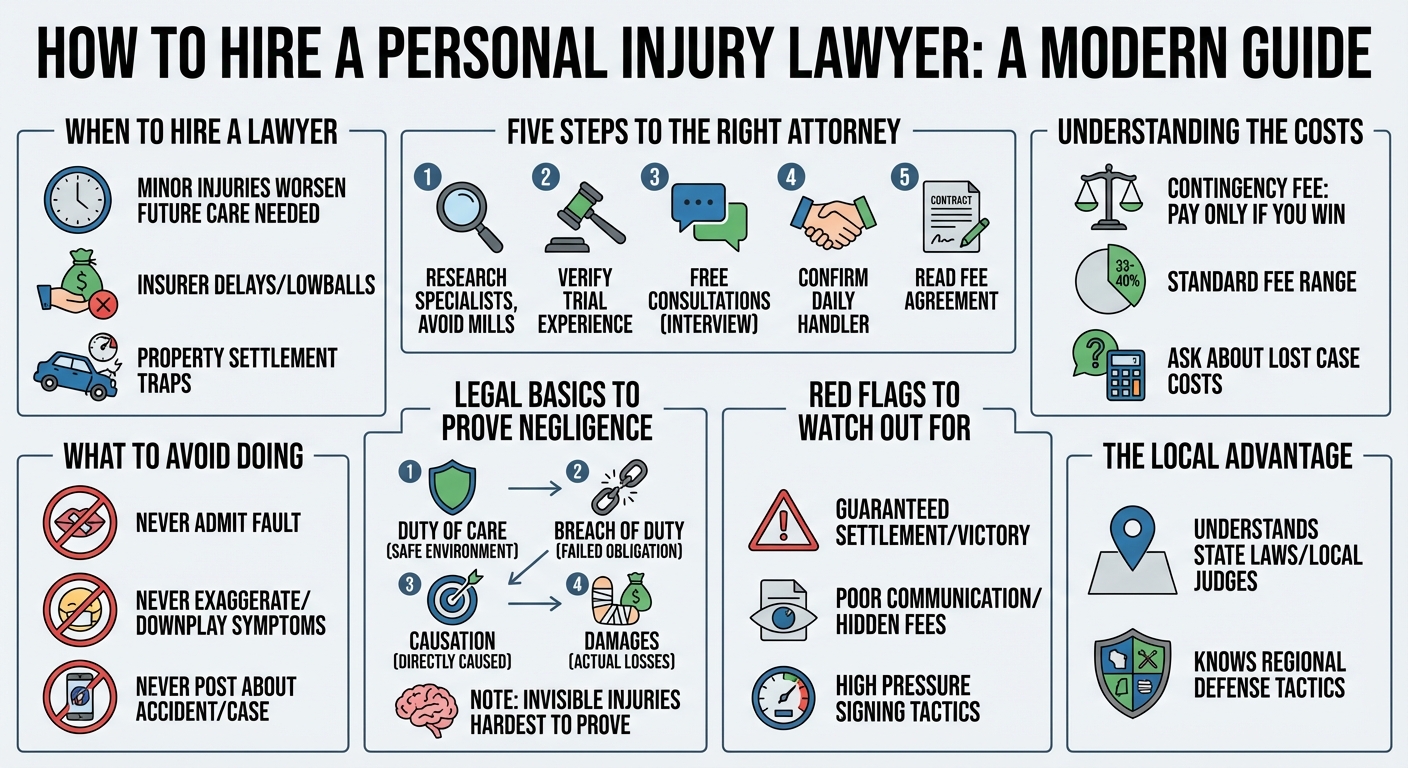
To hire a personal injury lawyer, start by researching local attorneys with specific experience in your type of injury. Verify their trial record, schedule free consultations to ask who will handle your case, and carefully review their contingency fee agreement before signing any contracts.
How to Hire a Personal Injury Lawyer: The Ultimate Step-by-Step Guide
Finding the right legal representation after an accident can mean the difference between a fair settlement and walking away with nothing. Hiring a personal injury lawyer is a major decision, and knowing what to look for will protect your rights and your financial future.
When Do You Actually Need a Personal Injury Lawyer?
Minor vs. Severe Injuries
Not every accident requires an attorney, but even seemingly minor incidents can have long-term consequences. While catastrophic injuries clearly require legal intervention, do not ignore minor soft tissue injuries. These conditions can worsen over time, and having a lawyer ensures you are compensated for future medical care.
When Insurance Companies Deny or Devalue Claims
Insurance companies are businesses focused on protecting their profit margins. They frequently use tactics like social inflation arguments to devalue your claim. If an adjuster is delaying your payout, disputing liability, or offering a lowball settlement, you need an attorney to level the playing field.
The Danger of Settling Property Damage Too Fast
Many victims fall into the property damage trap. Adjusters may rush to write a check for your totaled car, subtly including a release of all claims that prevents you from seeking compensation for your bodily injuries later. A lawyer will review all documents before you sign.
5 Steps to Finding and Hiring the Right Attorney
Step 1: Research and Build a Shortlist (Avoiding Settlement Mills)
Start by identifying local attorneys who specialize in personal injury. Avoid high-volume settlement mills that treat clients like numbers. Look for boutique firms or dedicated attorneys who have a reputation for taking cases to trial rather than accepting the first low settlement offer.
Step 2: Verify Trial Experience and Track Record
Defense attorneys know exactly which personal injury lawyers are willing to go to court and which ones always settle. Hiring an attorney with a strong trial record forces the insurance company to take your claim seriously from day one.
Step 3: Schedule Free Consultations
Reputable personal injury lawyers offer free, no-obligation consultations. Use this opportunity to interview two or three attorneys. Pay attention to how they assess your case, their communication style, and whether they seem genuinely invested in your recovery.
Step 4: Ask the Right Questions (Who will actually handle my case?)
During the consultation, ask direct questions. The most important question is: Who will actually handle my case? You want to ensure your claim isn’t passed off to an inexperienced paralegal or junior associate after you sign the contract.
Step 5: Review the Fee Agreement Carefully
Never sign a contract you do not fully understand. Ensure the fee structure is clearly outlined, including what happens if you lose the case and how out-of-pocket expenses are handled.
How much do most personal injury lawyers charge?
Most personal injury lawyers charge a contingency fee, meaning they only get paid if you win your case. The standard fee typically ranges from 33% to 40% of the final settlement or court award, depending on whether the case goes to trial or settles early.
Understanding Contingency Fees
A contingency fee aligns your attorney’s interests with yours: the more they recover for you, the more they earn. This structure allows injured victims to afford top-tier legal representation without paying upfront hourly rates.
Hidden Costs and Case Expenses
Beyond the attorney’s percentage, cases incur expenses like court filing fees, medical record retrieval, and expert witness fees. Ask your prospective lawyer if these costs are deducted before or after the contingency fee is calculated, and whether you are responsible for them if you lose.
Preparing for Your Consultation: What not to say to a personal injury lawyer?
When speaking to a personal injury lawyer, do not admit fault, exaggerate your injuries, or downplay your symptoms. Avoid saying you feel fine or guessing facts you aren’t sure about. Stick to the medical facts and let the attorney evaluate liability without premature assumptions.
Avoid Admitting Fault
Even if you think you might be partially to blame, do not admit fault. Liability is a complex legal issue, and you may not have all the facts about the other party’s negligence.
Do Not Exaggerate or Downplay Your Injuries
Honesty is critical. Exaggerating injuries damages your credibility, while downplaying them can severely reduce your compensation. Provide an accurate, factual account of your pain and limitations.
Keep Social Media Discussions Offline
Do not discuss your accident, injuries, or legal consultation on social media. Insurance adjusters actively monitor these platforms to find posts or photos they can use to undermine your claim.
Understanding Your Case: The Legal Basics
What are the 4 proofs of negligence?
To win a personal injury claim, you must establish the four proofs of negligence: Duty of care (the defendant owed you a safe environment), Breach of duty (they failed that obligation), Causation (their breach directly caused your accident), and Damages (you suffered actual financial or physical losses).
What is the hardest injury to prove?
The hardest injuries to prove are often invisible injuries, such as closed head injuries, mild traumatic brain injuries, and soft tissue damage. Because these do not always show up on standard imaging tests, insurance companies frequently dispute their severity and attempt to deny the claim.
Red Flags: Warning Signs When Choosing Legal Representation
Guarantees of Specific Outcomes
No attorney can ethically guarantee a specific settlement amount or a trial victory. If a lawyer promises you a certain payout during the initial consultation, consider it a major red flag.
Lack of Communication or Transparency
If an attorney is difficult to reach, dodges your questions about fees, or fails to explain their legal strategy clearly, they will likely be just as uncommunicative once they have your case.
Pressure to Sign Immediately
Choosing a lawyer is a big decision. While time is of the essence due to statutes of limitations, a reputable attorney will never pressure you to sign a contract on the spot without giving you time to review it.
Why Choosing a Local Expert Matters for Your Injury Claim
Hiring a local attorney provides a distinct advantage. Local lawyers understand the specific state laws governing your claim, know the tendencies of local judges, and are familiar with the tactics used by regional defense attorneys and insurance adjusters. A local expert can navigate the nuances of your jurisdiction to maximize your settlement and ensure your rights are fully protected.
 Call (713) 747-7777