
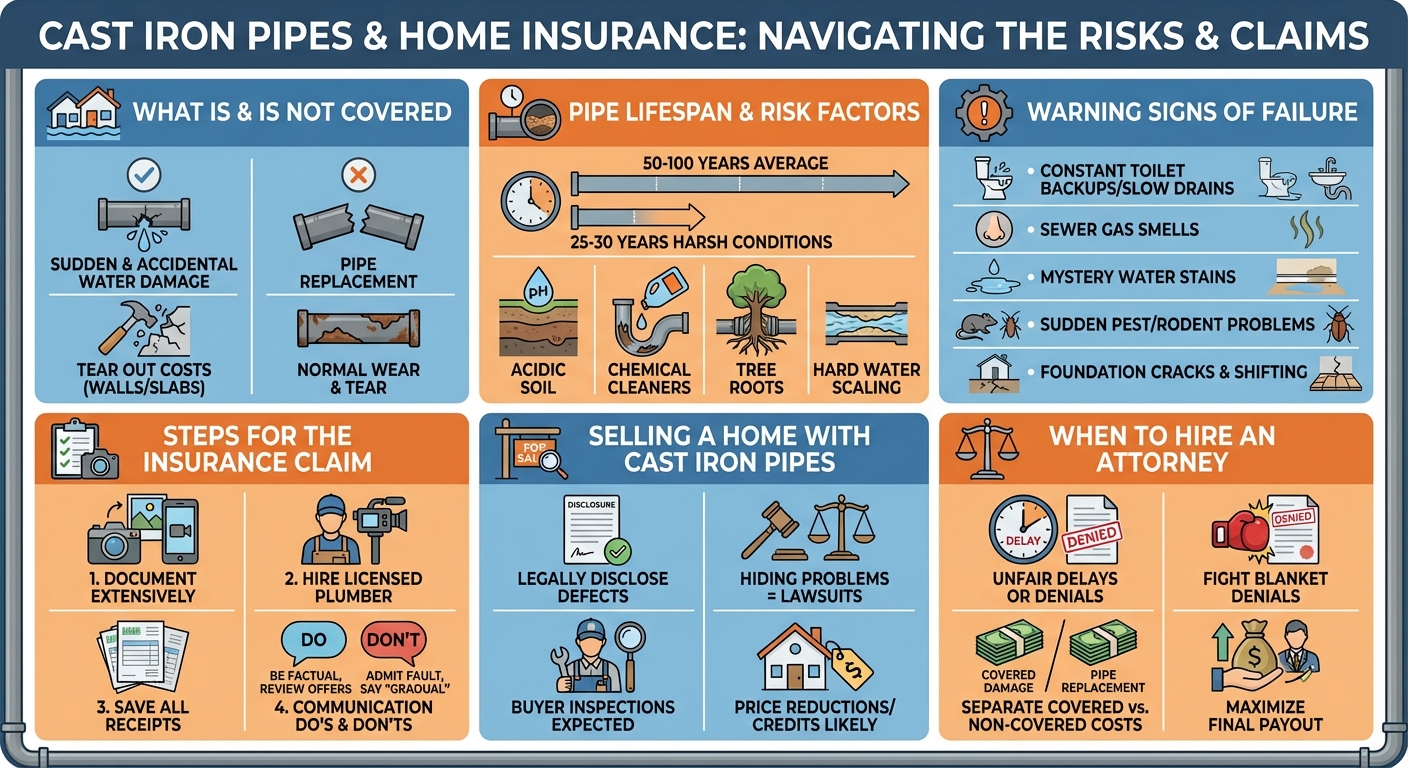
Most homeowners insurance policies do not cover the cost of replacing cast iron pipes, as aging plumbing is considered normal wear and tear. However, policies typically cover the resulting water damage to your home and the ‘tear-out’ costs required to break through floors or walls to access the broken pipe.
Does Homeowners Insurance Cover Replacing Cast Iron Pipes?
The Short Answer: Will insurance cover cast iron pipes?
Most homeowners insurance policies do not cover the cost of replacing the cast iron pipes themselves, as this is considered normal wear and tear. However, policies often cover the resulting water damage to your home and the tear-out costs required to access the broken pipes.
Understanding Your Policy: What Is and Isn’t Covered
When a cast iron pipe fails, the financial impact involves more than just the pipe itself. Insurance companies separate the claim into different categories of damage. Understanding these distinctions is critical to getting your claim approved.
Sudden and Accidental Water Damage (Covered)
If a cast iron pipe suddenly bursts or backs up, causing water to flood your home, standard homeowners insurance typically covers the resulting damage. This includes replacing ruined drywall, baseboards, flooring, and damaged personal property. The key phrase in your policy is “sudden and accidental.”
Tear-Out and Access Coverage (Often Covered)
Cast iron pipes are usually buried beneath your home’s concrete foundation or hidden behind walls. To fix the pipe, plumbers must break through these structures. Most policies include “tear-out” coverage, meaning the insurance company will pay for the excavation, trenching, and the restoration of the slab or wall, even if they refuse to pay for the actual plumbing pipe.
Gradual Wear and Tear of the Pipe Itself (Rarely Covered)
Insurance is designed for unexpected disasters, not home maintenance. Because cast iron naturally rusts and degrades over time, insurance adjusters almost universally classify the pipe’s deterioration as “wear and tear.” You will likely have to pay the plumber for the new PVC pipe materials and the labor to install them.
| Expense Type | Typically Covered? | Explanation |
|---|---|---|
| Resulting Water Damage | Yes | Covers ruined floors, walls, and cabinets from sudden leaks. |
| Tear-Out & Access | Yes | Covers breaking the concrete slab/walls to reach the pipe. |
| The Pipe Replacement | No | Considered standard maintenance and gradual wear and tear. |
What is the life expectancy of cast iron pipes?
The average life expectancy of cast iron pipes is between 50 and 100 years. However, in certain environments—especially humid coastal areas or homes with highly acidic soil and water—these pipes can begin failing, rusting, or corroding in as little as 25 to 30 years.
Factors that Accelerate Pipe Deterioration
Several environmental and usage factors can drastically shorten the lifespan of your plumbing:
- Soil Acidity: Highly acidic soil accelerates exterior corrosion.
- Chemical Drain Cleaners: Frequent use of harsh chemicals eats away at the interior iron.
- Tree Roots: Roots seek out moisture and can crush or infiltrate aging pipe joints.
- Hard Water: High mineral content can cause scaling and internal blockages.
Signs Your Cast Iron Plumbing is Failing
Do not wait for a catastrophic flood to check your plumbing. Look for these early warning signs:
- Frequent toilet backups or slow-draining sinks.
- Persistent sewer gas odors inside or outside the home.
- Unexplained water stains on your flooring or baseboards.
- Sudden pest or rodent infestations drawn to cracked pipes.
- Cracks in your foundation or shifting floorboards.
Navigating the Insurance Claim Process
Handling a cast iron pipe claim requires meticulous documentation. Insurance companies are notorious for looking for reasons to deny these specific claims.
How to Document Cast Iron Pipe Damage
Before you begin repairs, take extensive photos and videos of the water damage. Hire a licensed plumber to perform a video camera inspection of the sewer line. This video evidence is crucial for proving the exact location and nature of the failure. Keep all receipts for emergency water mitigation services.
What not to say to a homeowners insurance adjuster?
When speaking to a homeowners insurance adjuster, never admit fault, speculate about how long a leak existed, or say the damage happened gradually. Avoid giving a recorded statement without legal counsel, and never accept their first settlement offer or agree that the damage is merely wear and tear.
Spotting Bad Faith Insurance Tactics
Insurance companies often use aggressive tactics to minimize payouts on plumbing claims. They might unreasonably delay your claim, hire biased engineers to blame the damage on pre-existing conditions, or refuse to pay for the necessary tear-out costs. If your insurer is acting unreasonably, you need to know how to identify bad faith insurance practices and protect your rights.
Can you sell a house with cast iron pipes?
Yes, you can sell a house with cast iron pipes, but you must disclose their presence and any known plumbing issues to potential buyers. Homes with aging cast iron plumbing often sell for less, as buyers factor in the future cost of pipe replacement or trenchless relining.
Disclosure Requirements for Sellers
Real estate laws require sellers to disclose known material defects. If you have experienced backups, leaks, or have had a plumber diagnose failing cast iron pipes, you must include this in your seller’s disclosure. Failing to do so can result in post-sale lawsuits.
Impact on Home Value and Buyer Inspections
Savvy buyers will likely order a specialized plumbing inspection. If the pipes are nearing the end of their lifespan, buyers will typically request a seller’s credit, ask for a price reduction, or demand that the pipes be replaced prior to closing.
When to Hire a Property Damage Attorney
Cast iron pipe claims are among the most frequently denied property damage claims. If your home has suffered significant water damage, you do not have to fight the insurance company alone.
Appealing a Denied Cast Iron Pipe Claim
If your insurer issues a blanket denial citing “wear and tear,” an attorney can help you appeal. A skilled lawyer will separate the non-covered pipe deterioration from the covered sudden water damage and tear-out costs, holding the insurer to the actual language of your policy.
Maximizing Your Payout for Water Damage and Tear-Out Costs
Insurance adjusters frequently lowball the cost of repairing concrete slabs, replacing continuous flooring, and proper mold remediation. A property damage attorney works with independent estimators and plumbers to ensure your settlement covers the true cost of restoring your home to its pre-loss condition.
 Call (713) 747-7777