
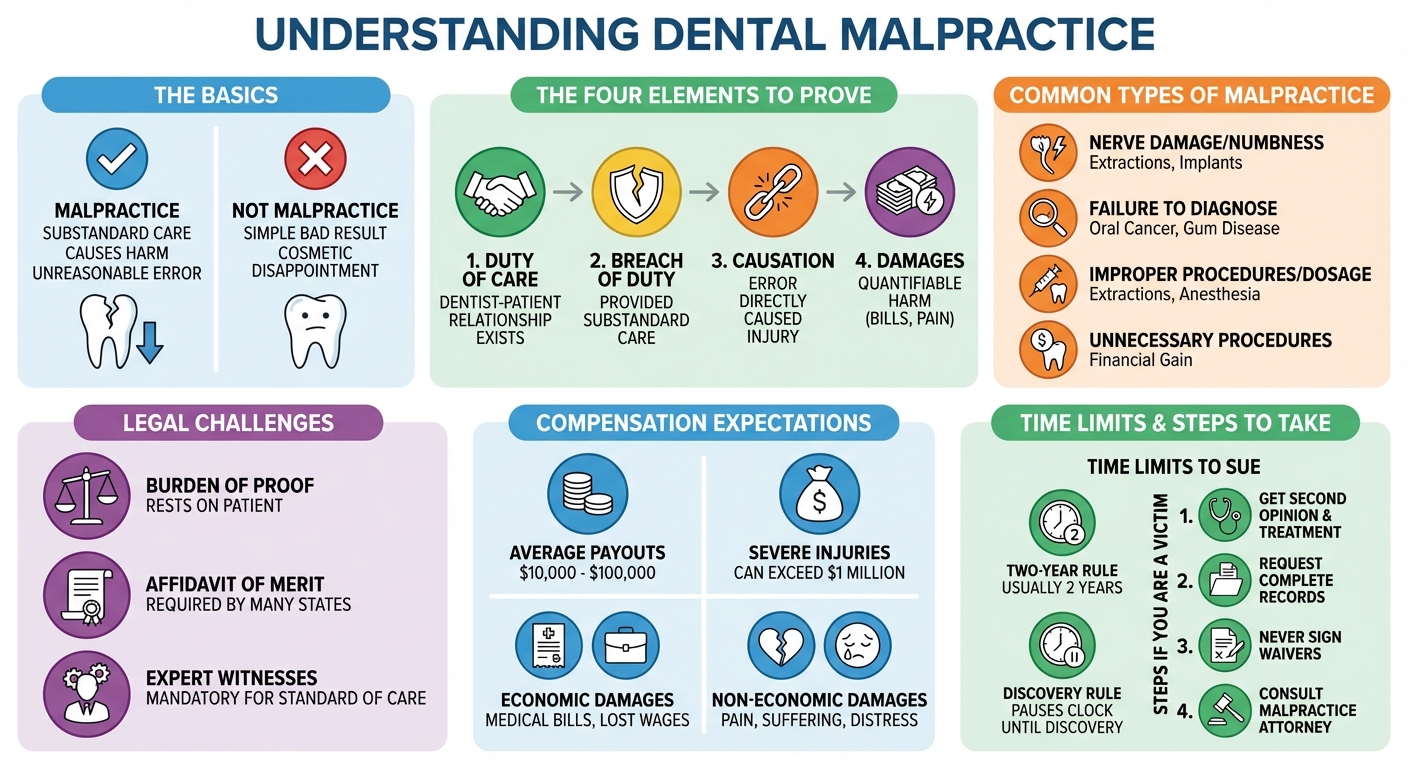
Yes, you can sue a dentist for dental malpractice if their care falls below the accepted medical standard and causes you direct harm. To win a lawsuit, you must prove four elements: a dentist-patient relationship existed, the dentist breached their duty of care, this breach caused an injury, and you suffered actual damages.
Can You Sue Your Dentist for Malpractice?
Yes, you can sue your dentist for malpractice if their treatment fell below the acceptable standard of care and caused you measurable harm. However, dental malpractice cases are complex legal battles that require substantial evidence.
The Difference Between a Bad Result and Dental Malpractice
It is crucial to understand the difference between a disappointing outcome and actual negligence. If you are simply unhappy with the shade of your new veneers or a filling falls out due to normal wear, you likely do not have a case. Malpractice occurs only when a dentist makes an unreasonable error that a competent professional would not have made under similar circumstances.
The 4 Elements You Must Prove (Duty, Breach, Causation, Damages)
To win a dental malpractice lawsuit, you must establish four legal elements:
- Duty of Care: A formal dentist-patient relationship existed, meaning the dentist owed you a duty to provide safe, competent care.
- Breach of Duty: The dentist violated this duty by providing substandard care.
- Causation: The dentist’s specific breach directly caused your injury.
- Damages: You suffered quantifiable harm, such as additional medical bills, lost wages, or severe pain and suffering.
What is considered malpractice in dentistry?
Malpractice in dentistry is considered any instance where a dental professional breaches the standard of care, resulting in patient injury. Common examples include permanent nerve damage, failure to diagnose oral cancer, improper tooth extractions, anesthesia errors, and performing unnecessary dental procedures.
Nerve Damage and Numbness
One of the most frequent reasons patients sue is lingual or trigeminal nerve damage. This often happens during wisdom tooth extractions or the placement of dental implants. If the dentist drills too deep or severs a nerve, it can lead to permanent numbness, loss of taste, or chronic pain in the jaw, lips, and tongue.
Failure to Diagnose Oral Cancer or Periodontal Disease
Dentists are trained to spot early signs of oral cancer and severe gum disease (periodontitis). Failing to perform routine screenings, ignoring obvious symptoms, or misinterpreting X-rays can delay life-saving treatment. If a delayed diagnosis leads to a worsened prognosis, the dentist may be liable.
Improper Tooth Extractions and Anesthesia Errors
Pulling the wrong tooth, leaving broken root fragments behind without informing the patient, or causing severe infections are clear signs of negligence. Additionally, administering too much anesthesia or failing to review a patient’s medical history for drug interactions can result in brain injury, heart attacks, or even death.
Unnecessary Dental Procedures
Performing procedures that are not medically required—such as placing multiple unnecessary crowns or extracting healthy teeth—is a form of malpractice. This is often done for financial gain and subjects the patient to unwarranted physical trauma and financial loss.
How hard is it to sue a dentist?
It is generally hard to sue a dentist because you must definitively prove their actions fell below the accepted standard of care and directly caused your injury. These cases require substantial evidence, including expert testimony from another dental professional, making them complex and expensive to litigate.
The Burden of Proof in Medical Malpractice
In civil lawsuits, the burden of proof rests entirely on the plaintiff (the injured patient). You must prove your case by a preponderance of the evidence, meaning it is more likely than not that the dentist’s negligence caused your injuries. This requires meticulous documentation and legal strategy.
Why You Need an Affidavit of Merit
Many states require plaintiffs to file an Affidavit of Merit (or Certificate of Merit) alongside their initial complaint. This is a sworn statement from a qualified dental expert confirming that your case has legal and medical validity. Without this document, the court will likely dismiss your lawsuit immediately.
The Role of Expert Dental Witnesses
Because judges and juries lack specialized dental knowledge, expert witnesses are mandatory. An expert witness—usually a dentist with similar training and experience as the defendant—must review your records, testify about the standard of care, and explain exactly how your dentist failed to meet that standard.
What is the average payout for dental negligence?
The average payout for dental negligence typically ranges from $10,000 to $100,000, depending on the severity of the injury. Minor, temporary injuries settle on the lower end, while cases involving permanent nerve damage, wrongful death, or severe disfigurement can result in settlements exceeding $1 million.
Economic Damages: Medical Bills and Lost Wages
Economic damages compensate you for out-of-pocket financial losses. This includes the cost of corrective dental surgeries, hospital stays, prescription medications, and any income you lost while recovering. You can also claim future medical expenses if your injury requires lifelong care.
Non-Economic Damages: Can I Sue My Dentist for Pain and Suffering?
Yes, you can sue your dentist for pain and suffering. Non-economic damages cover the physical pain, emotional distress, anxiety, and diminished quality of life caused by the malpractice. Because these damages are subjective, insurance companies often fight aggressively to minimize them.
Factors That Increase or Decrease Settlement Value
Several variables impact your final payout. A strong case with clear liability, permanent catastrophic injuries, and high medical bills will yield a higher settlement. Conversely, if you share partial blame (e.g., failing to follow post-operative care instructions) or lack strong expert testimony, your settlement value will decrease.
What is the dentist 2 year rule?
The dentist 2-year rule refers to the statute of limitations in many states, which gives patients exactly two years from the date of the dental malpractice—or the date they discovered the injury—to file a lawsuit. Failing to file within this window usually permanently bars you from seeking compensation.
Understanding the Statute of Limitations
The statute of limitations is a strict legal deadline for filing a lawsuit. Once this clock runs out, you lose your right to sue, regardless of how severe your injuries are. It is critical to act quickly to preserve evidence and secure witness testimony while memories are fresh.
The Discovery Rule Exception
In some cases, you may not realize a dentist made a mistake until months or years later (e.g., a poorly placed implant slowly causes bone loss). The discovery rule pauses the statute of limitations clock until the date you reasonably should have discovered the injury. However, there is usually an absolute final deadline, known as the statute of repose.
State-by-State Variations in Filing Deadlines
While the 2-year rule is common, deadlines vary widely by state. For example, California gives you one year from discovery or three years from the date of injury, while other states may allow up to three or four years. Always consult a local attorney to confirm your specific deadline.
Steps to Take If You Are a Victim of Dental Malpractice
1. Get a Second Opinion and Corrective Treatment
Your health is the top priority. If you suspect malpractice, immediately seek care from a different, independent dentist or oral surgeon. They can diagnose the problem, provide necessary corrective treatment, and document the errors made by your previous dentist.
2. Request Your Complete Dental Records
Under HIPAA law, you have the right to obtain a copy of your complete dental records, including X-rays, treatment notes, and billing statements. Request these records in writing before informing the negligent dentist that you plan to sue, as this prevents any accidental loss or alteration of your file.
3. Do Not Sign Any Waivers or Accept Refunds Prematurely
If a dentist realizes they made a mistake, they may offer you a refund or offer to fix the issue for free in exchange for signing a release form. Never sign any documents or accept money without speaking to a lawyer, as doing so will likely waive your right to sue for full compensation.
4. Consult with a Dental Malpractice Attorney
Dental malpractice claims are highly specialized. Most personal injury attorneys offer free initial consultations. An experienced dental malpractice lawyer can evaluate your case, hire the necessary medical experts, negotiate with the dentist’s malpractice insurance, and fight for the maximum settlement you deserve.
 Call (713) 747-7777