
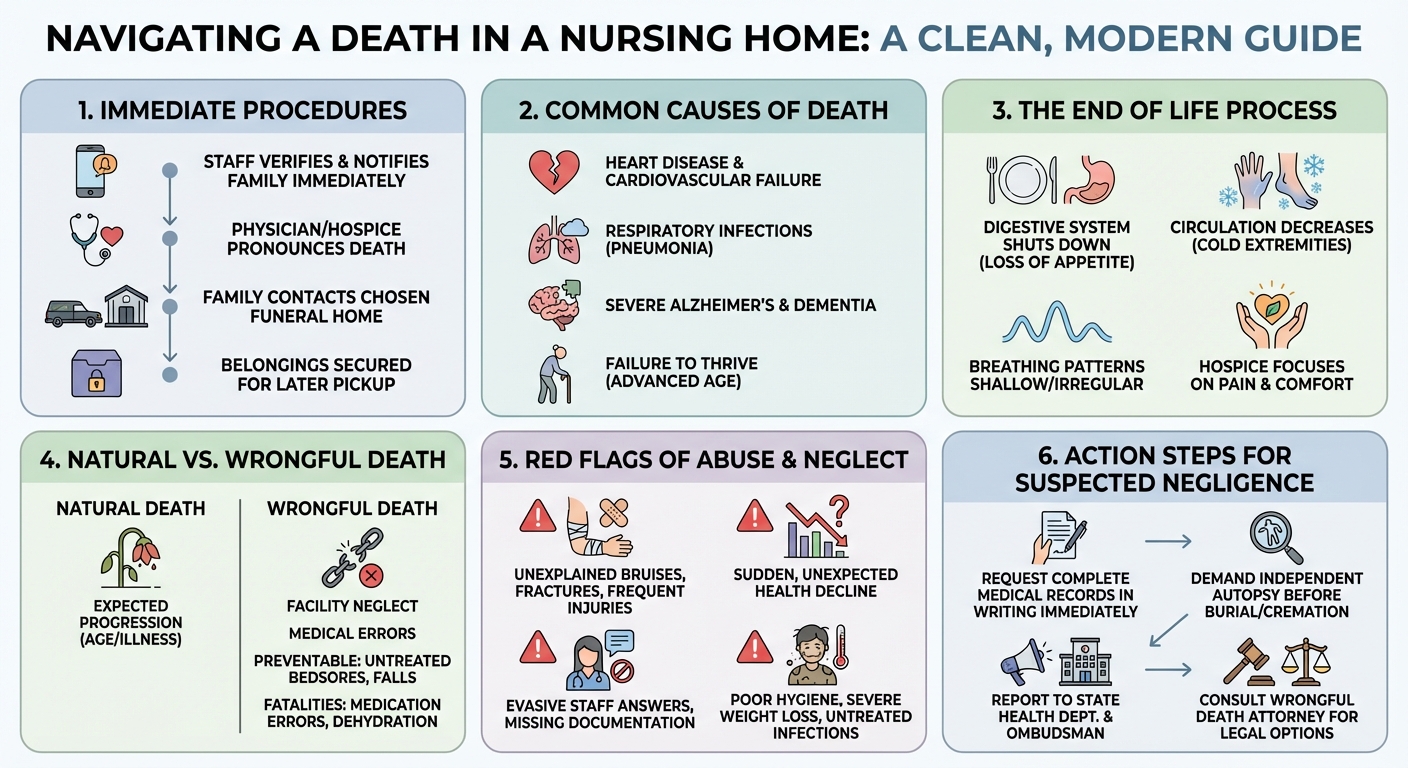
When a death occurs in a nursing home, staff will notify the family and a physician or hospice nurse to officially pronounce the death. The family must then contact a chosen funeral home to arrange the removal of the body, while the facility secures the resident’s personal belongings.
Navigating a Death in a Nursing Home: Procedures and Your Rights
Experiencing a death in a nursing home is a profoundly emotional event for any family. However, these situations generally fall into two distinct categories: an expected passing due to advanced age or terminal illness, and a sudden, unexpected event that may raise questions about the quality of care. Understanding this dual nature is essential for families navigating the aftermath.
Knowing the facility’s protocol and your legal rights is crucial. While most nursing homes follow strict, compassionate procedures during an expected end-of-life transition, families must remain vigilant. If a death occurs suddenly or under suspicious circumstances, understanding your rights ensures you can properly investigate the situation, secure medical records, and hold negligent parties accountable if necessary.
What happens when someone passes away in a nursing home?
When someone passes away in a nursing home, the staff immediately notifies the family and the resident’s physician. A medical professional or hospice nurse will officially pronounce the death. Afterward, the family must contact a funeral home to arrange transportation, and the facility will secure the resident’s personal belongings.
Immediate Facility Protocols and Family Notification
The first step a nursing home takes is verifying the resident’s passing. Staff are trained to shift into an operational but compassionate mode, immediately contacting the designated primary family member or medical proxy. They will explain the immediate next steps and provide the necessary time for the family to gather at the facility if they choose to do so.
Pronouncement of Death by Medical Staff or Hospice
A formal pronouncement of death must be made. If the resident was under hospice care, the nursing home will contact the on-call hospice nurse to make the official pronouncement. If hospice was not involved, the facility’s attending physician or a designated medical professional will confirm the passing and sign the death certificate.
Contacting the Funeral Home and Arranging Transportation
Nursing homes do not have morgues, so the body cannot remain at the facility indefinitely. The family is responsible for contacting their chosen funeral home to coordinate the removal of the body. The funeral directors will work directly with the nursing home staff to arrange a discreet and respectful transfer.
Securing the Resident’s Personal Belongings
Following the transfer, the nursing home will secure the resident’s room. Families are usually given a grace period—often a few days—to pack up and remove their loved one’s personal belongings, clothing, and decorations. The facility will provide an inventory list to ensure all documented valuables are returned to the family.
What is the most common cause of death in nursing homes?
The most common cause of death in nursing homes is heart disease, followed closely by respiratory infections like pneumonia and complications from Alzheimer’s disease. Many residents also pass away from a general failure to thrive associated with advanced age and the natural end-of-life process.
Heart Disease and Cardiovascular Failure
Cardiovascular issues, including congestive heart failure and coronary artery disease, are the leading causes of mortality among the elderly. In a nursing home setting, these chronic conditions often progress naturally over time, eventually leading to cardiac arrest or heart failure.
Respiratory Infections (Pneumonia, COPD Complications)
Elderly residents often have weakened immune systems, making them highly susceptible to respiratory infections. Pneumonia is particularly common and can be fatal, especially for residents who are bedridden or suffer from Chronic Obstructive Pulmonary Disease (COPD).
Alzheimer’s Disease and Severe Dementia Progression
In the late stages of Alzheimer’s and other forms of dementia, the brain gradually loses its ability to control basic bodily functions. This progression can lead to swallowing difficulties, malnutrition, and an increased risk of aspiration pneumonia, which frequently results in death.
Failure to Thrive in Advanced Age
“Failure to thrive” is a clinical term used when an elderly individual experiences a gradual decline in physical and cognitive function without a single, specific underlying disease. It is characterized by weight loss, decreased appetite, and profound inactivity, culminating in a natural passing.
The End-of-Life Process: What is the first organ to shut down when dying?
The digestive system is typically the first organ system to shut down when dying. As the body begins to conserve energy for vital organs like the heart and brain, a person will naturally lose their appetite and thirst, and digestion slows down significantly.
The Digestive System and Loss of Appetite/Thirst
Families are often distressed when their loved one stops eating or drinking, but this is a natural part of the dying process. Forcing food or fluids can actually cause discomfort, as the digestive tract can no longer process them effectively.
Changes in Breathing Patterns and Circulation
As the end of life approaches, circulation decreases, often causing the hands and feet to feel cold or appear mottled. Breathing patterns also change, becoming irregular, shallow, or characterized by periods of rapid breathing followed by pauses (Cheyne-Stokes respiration).
How Hospice Care Manages Comfort During Organ Failure
Hospice care focuses entirely on comfort rather than a cure. As organs begin to fail, hospice professionals administer medications to manage pain, reduce anxiety, and ease breathing difficulties, ensuring the resident passes as peacefully as possible.
Natural Death vs. Wrongful Death: Knowing the Difference
Understanding the distinction between a natural passing and a wrongful death is vital for families seeking closure and justice.
Defining a Natural, Expected Passing in a Care Facility
A natural death occurs as a result of old age, the expected progression of a terminal illness, or chronic health conditions. In these cases, the nursing home has provided appropriate, standard-of-care medical treatment and palliative support leading up to the resident’s passing.
Defining Wrongful Death Caused by Neglect, Abuse, or Medical Errors
A wrongful death occurs when a resident dies prematurely due to the facility’s negligence, intentional abuse, or severe medical errors. If the death could have been prevented with proper care, the nursing home may be held legally liable for the loss.
Common Preventable Causes
- Bedsores (Decubitus Ulcers): Severe, untreated bedsores can lead to fatal infections like sepsis.
- Falls: Lack of supervision or failure to implement fall-prevention protocols can result in fatal head traumas or hip fractures.
- Medication Errors: Administering the wrong drug, incorrect dosages, or missing critical medications can be lethal.
- Malnutrition and Dehydration: Failing to assist residents with eating or drinking can lead to fatal organ failure.
Recognizing Abuse: What does a red flag mean in a nursing home?
A red flag in a nursing home means there is a warning sign of potential neglect, abuse, or substandard care. These warning signs include unexplained bruises, sudden weight loss, poor hygiene, severe bedsores, or evasive answers from staff regarding a resident’s sudden and unexpected decline in health.
Unexplained Injuries, Bruises, or Fractures Prior to Death
If your loved one suffered from frequent, unexplained injuries before their passing, it may indicate physical abuse or severe neglect regarding fall prevention. Documenting these injuries is crucial.
Sudden, Unexpected Decline in Health Without a Clear Medical Explanation
While elderly individuals can decline rapidly, a sudden drop in health without a diagnosed medical reason is highly suspicious. This can be a sign of medication mismanagement, untreated infections, or severe dehydration.
Evasive Answers or Missing Documentation from Nursing Home Staff
If nursing home administrators or floor staff are defensive, provide conflicting stories about how an injury occurred, or claim that medical records are “unavailable,” this is a major red flag indicating a potential cover-up.
Poor Hygiene, Severe Weight Loss, or Untreated Infections
A resident who is consistently left in soiled clothing, experiences rapid weight loss, or develops severe, untreated urinary tract infections (UTIs) is likely suffering from systemic neglect, which can easily escalate to a fatal outcome.
Steps to Take if You Suspect Nursing Home Negligence
If you believe your loved one’s death was preventable, you must act quickly to preserve evidence and protect your legal rights.
Requesting a Complete Copy of the Resident’s Medical Records Immediately
Under federal law, you have the right to access your loved one’s medical records. Request these immediately in writing before the facility has an opportunity to alter or “lose” critical documentation regarding their care.
Asking for an Independent Autopsy Before Cremation or Burial
If you suspect foul play or medical negligence, request an independent autopsy. Once a body is cremated or buried, it becomes incredibly difficult to definitively prove the exact cause of death.
Reporting the Facility to State Health Departments and Ombudsman Programs
File a formal complaint with your state’s Department of Public Health and the local Long-Term Care Ombudsman. This triggers an official investigation into the facility’s practices and creates a paper trail of the incident.
Consulting a Wrongful Death Attorney to Evaluate Liability and Potential Settlement
Navigating a nursing home negligence case is complex. Consulting an experienced wrongful death attorney can help you understand your legal options, evaluate the facility’s liability, and determine if pursuing a settlement is the right path for your family to achieve justice.
 Call (713) 747-7777