
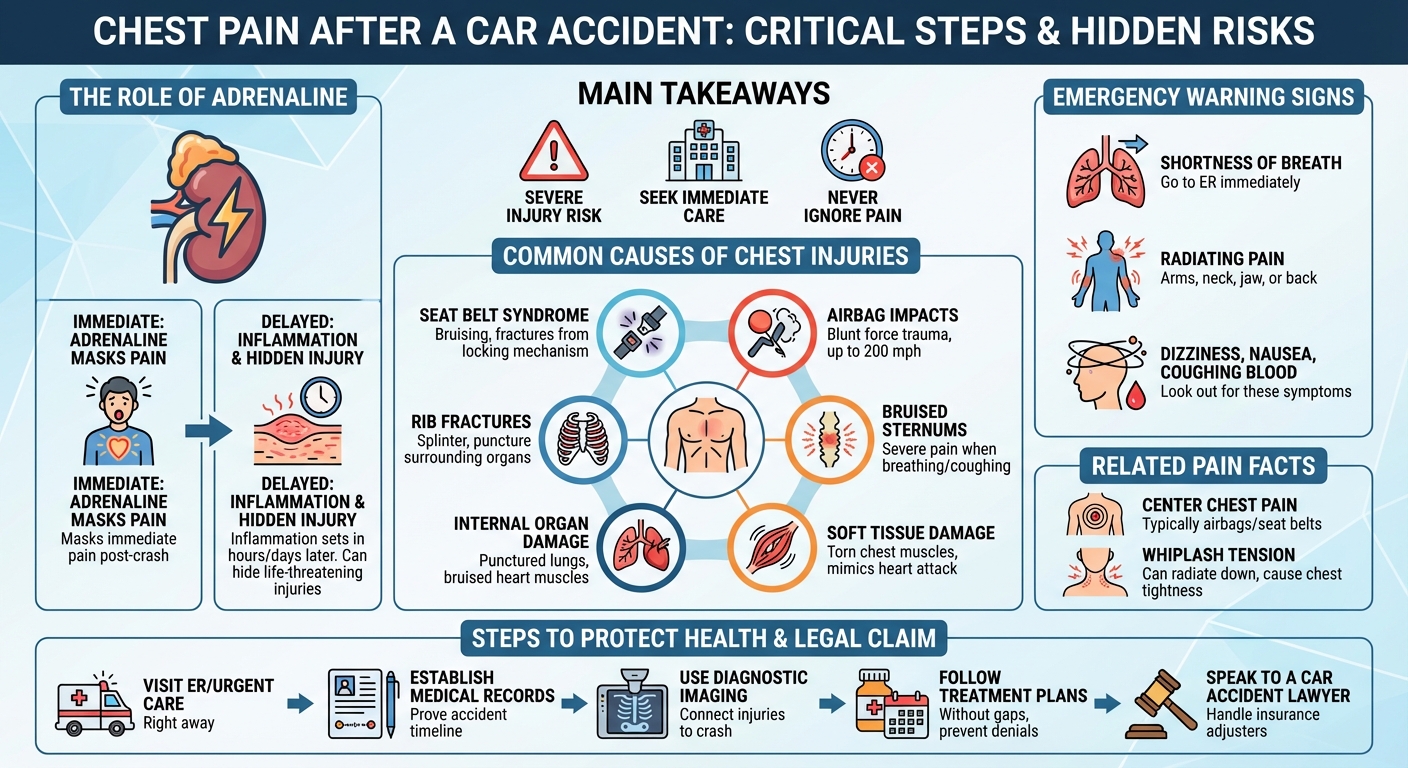
Chest pain after a car accident is a serious symptom that can indicate severe injuries, including broken ribs, a bruised sternum, muscle strains, or internal organ damage. Because adrenaline can mask immediate symptoms, you should seek emergency medical attention immediately, even if the pain feels minor or delayed.
Understanding Chest Pain After a Car Accident
The Role of Adrenaline in Masking Immediate Pain
In the immediate aftermath of a collision, your body releases a massive surge of adrenaline and endorphins. This natural fight-or-flight response is designed to help you survive trauma, but it also acts as a powerful painkiller. You might walk away from a severe crash feeling completely fine, unaware that your chest has sustained significant trauma.
Why Delayed Chest Pain is Common and Dangerous
As adrenaline wears off over the next few hours or days, inflammation sets in. Delayed chest pain is incredibly common, but it is also highly dangerous. What feels like a minor ache could actually be a symptom of internal bleeding, micro-tears in your muscles, or hairline rib fractures that worsen with movement. Ignoring delayed pain can turn a treatable injury into a life-threatening emergency.
Common Causes of Chest Pain from a Collision
Seat Belt Syndrome and Airbag Impact
Your vehicle’s safety features are designed to save your life, but they do so by absorbing immense kinetic energy. Seat belt syndrome occurs when the belt locks across your chest, causing severe bruising, abrasions, or even fractures. Similarly, an airbag deploys at speeds up to 200 mph, delivering a blunt force impact to your chest and sternum that can leave you sore for weeks.
Rib Fractures and Bruised Sternums
The sheer force of a crash frequently leads to broken ribs or a bruised sternum (breastbone). Rib fractures are particularly dangerous because a splintered bone can puncture surrounding organs. Even a simple bruised sternum can make breathing, coughing, or laughing excruciatingly painful.
Internal Organ Damage (Heart and Lungs)
Blunt force trauma to the chest can damage the vital organs housed beneath your ribcage. Life-threatening conditions include a punctured lung (pneumothorax), cardiac contusions (bruising of the heart muscle), or internal bleeding. These injuries require immediate emergency intervention.
Muscle Strains and Soft Tissue Damage
Your chest is supported by a complex network of intercostal muscles, ligaments, and tendons. The violent jerking motion of a car crash can overstretch or tear these soft tissues. While not usually life-threatening, soft tissue damage in the chest can cause sharp, stabbing pain that mimics a heart attack.
Warning Signs: When Your Chest Pain is a Medical Emergency
Never attempt to self-diagnose chest pain after a collision. Go to the nearest emergency room immediately if you experience any of the following red flag symptoms:
- Shortness of Breath or Difficulty Breathing: If you cannot catch your breath, feel a tightening in your chest, or experience shallow breathing, it may indicate a punctured lung or severe airway obstruction.
- Pain Radiating to the Arms, Neck, or Jaw: Pain that travels from your chest into your left arm, neck, jaw, or back is a classic warning sign of cardiac distress or a heart attack brought on by the trauma of the accident.
- Dizziness, Nausea, or Coughing Up Blood: Coughing up blood, feeling lightheaded, or experiencing sudden nausea are critical indicators of internal bleeding or severe organ damage. Do not wait to see if these symptoms improve.
Frequently Asked Questions About Post-Accident Pain
Why does the middle of my chest hurt after a car accident?
Pain in the middle of your chest is typically caused by the blunt force of an airbag deploying or the locking mechanism of your seat belt. This impact can result in a bruised sternum, fractured ribs, or soft tissue damage in the center of your chest.
Can whiplash cause chest tightness?
Yes, whiplash can cause chest tightness. The violent snapping of your neck strains the muscles and ligaments in your upper back and shoulders. This tension often radiates down into the chest muscles, leading to a feeling of tightness or restricted breathing.
How long after a car accident can you feel back pain?
Back pain can appear immediately, but it frequently takes anywhere from a few hours to several weeks to fully manifest. Adrenaline masks initial pain, and inflammation in the spinal discs or surrounding soft tissues often takes time to build up and compress nerves.
How long does it take to recover from a car accident?
Recovery time varies widely based on the severity of your injuries. Minor soft tissue strains may heal in a few weeks, while broken ribs, internal injuries, or severe whiplash can take months or even years of physical therapy and medical treatment to fully resolve.
How Chest Injuries Impact Your Personal Injury Claim
The Importance of Immediate Medical Records
Insurance companies look for any excuse to deny your claim. If you wait days to seek treatment for your chest pain, adjusters will argue that your injuries are unrelated to the crash or not truly serious. Immediate medical records from an emergency room or urgent care center establish a definitive timeline that protects your health and your case.
Connecting Your Medical Treatment to Your Legal Case
To secure fair compensation, you must prove that the car accident directly caused your chest injuries. Consistent medical treatment, diagnostic imaging (like X-rays or CT scans), and expert medical testimony form the foundation of this proof. Gaps in your treatment give insurance adjusters leverage to reduce your payout.
Why You Should Speak to a Houston Car Accident Lawyer
Navigating the aftermath of a severe collision is overwhelming, especially when you are recovering from painful chest injuries. A dedicated Houston car accident lawyer will handle the aggressive insurance adjusters, gather the necessary medical evidence, and fight for the maximum compensation you deserve, allowing you to focus entirely on your physical recovery.
 Call (713) 747-7777