
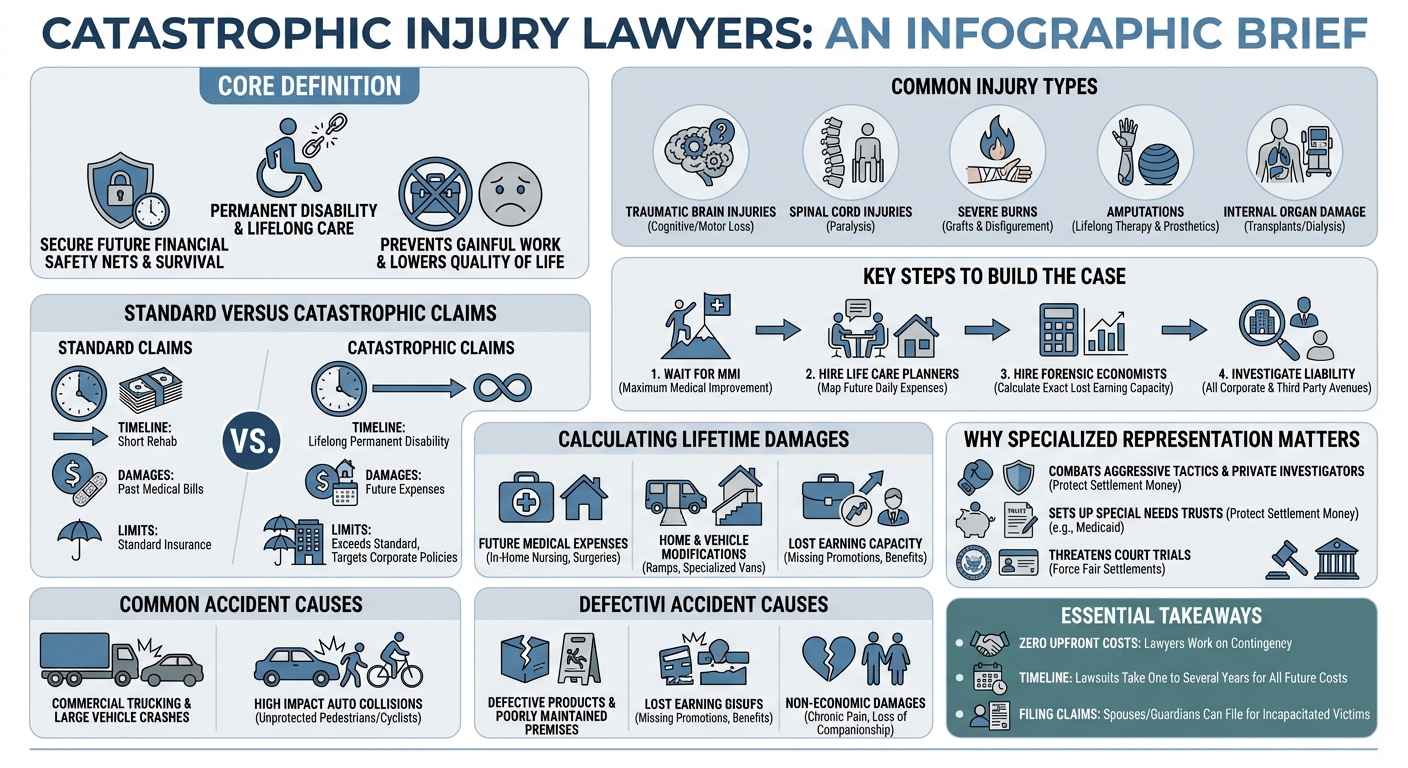
A catastrophic injury lawyer specializes in high-stakes personal injury claims involving permanent, life-altering harm. These attorneys help victims secure maximum compensation for lifelong medical care, lost earning capacity, and severe pain and suffering by utilizing medical experts, life care planners, and forensic economists.
Catastrophic Injury Lawyer: Representation for Life-Altering Accidents
When an accident results in permanent, life-altering harm, the legal strategy must shift entirely. A standard personal injury claim focuses on recovery and returning to normal life. A catastrophic injury claim focuses on survival, lifelong care, and securing a financial safety net for a future that has been permanently changed.
Hiring a catastrophic injury lawyer is not just about filing a lawsuit; it is about building a comprehensive legal and medical framework to ensure you or your loved one is never left paying out-of-pocket for someone else’s negligence.
What Constitutes a ‘Catastrophic’ Injury in Personal Injury Law?
The Legal vs. Medical Definition of Catastrophic
In the medical field, a catastrophic injury is an acute trauma requiring immediate, intensive emergency intervention. In the legal field, the definition hinges on long-term impact. Legally, an injury is considered catastrophic if it prevents the victim from performing any gainful work and permanently degrades their quality of life.
The legal threshold requires proving that the victim will need ongoing medical assistance, modifications to their living environment, or lifelong personal care.
Common Types of Catastrophic Injuries (Overview)
While any severe trauma can be catastrophic if it causes permanent disability, the most common categories handled by specialized attorneys include:
- Traumatic Brain Injuries (TBIs): Resulting in cognitive impairment, personality changes, or loss of motor function.
- Spinal Cord Injuries: Leading to partial or total paralysis (paraplegia or quadriplegia).
- Severe Burn Injuries: Requiring extensive skin grafting and causing permanent disfigurement or nerve damage.
- Amputations: Loss of limbs requiring lifelong prosthetics and physical therapy.
- Internal Organ Damage: Injuries requiring transplants or lifelong dialysis.
How Catastrophic Injury Cases Differ from Standard Personal Injury Claims
Treating a catastrophic injury claim like a standard car accident case is a fast track to financial ruin. The stakes, evidence, and timelines are fundamentally different.
| Factor | Standard Personal Injury | Catastrophic Injury |
|---|---|---|
| Medical Timeline | Weeks to months of rehabilitation. | Lifelong care and permanent disability. |
| Damages Focus | Past medical bills and temporary lost wages. | Future medical costs, home modifications, and lost earning capacity. |
| Insurance Limits | Usually resolved within standard policy limits. | Often exceeds primary limits; requires hunting for umbrella policies and corporate assets. |
Higher Stakes and Insurance Policy Limits
Because catastrophic claims often run into the millions of dollars, they frequently hit the ceiling of standard insurance policies. A specialized lawyer must aggressively investigate all potential avenues of liability, including corporate umbrella policies, third-party liability, and underinsured motorist coverage, to ensure the settlement actually covers the victim’s needs.
The Crucial Role of Life Care Planners and Economists
You cannot guess the cost of a lifetime of medical care. Catastrophic injury lawyers partner with Life Care Planners—medical professionals who map out every future expense, from wheelchair replacements every five years to daily in-home nursing care. Forensic Economists are then brought in to adjust these costs for inflation and calculate the exact present value of the victim’s lost lifetime earning capacity.
Extended Litigation Timelines and Complex Evidence
These cases rarely settle quickly. Rushing a settlement before the victim reaches Maximum Medical Improvement (MMI) can result in millions of dollars left on the table. The evidence gathering phase is exhaustive, often requiring accident reconstructionists, biomechanical engineers, and multiple medical specialists.
Calculating Lifetime Damages in High-Value Cases
Future Medical Expenses and 24/7 Care Costs
Compensation must cover more than just hospital bills. A comprehensive demand package includes:
- Ongoing physical, occupational, and speech therapy.
- Home and vehicle modifications (e.g., ramps, widened doorways, specialized vans).
- In-home nursing care or assisted living facility costs.
- Future surgeries and replacement of medical equipment.
Loss of Earning Capacity and Vocational Rehabilitation
If a victim was earning $80,000 a year and is permanently disabled at age 35, the loss of earning capacity is not just their current salary multiplied by years until retirement. It must include lost promotions, bonuses, retirement contributions, and benefits. If the victim can work in a diminished capacity, funds for vocational rehabilitation must be secured.
Maximizing Non-Economic Damages (Pain, Suffering, Loss of Consortium)
The emotional toll of a catastrophic injury is immeasurable. High-value claims place heavy emphasis on non-economic damages, compensating the victim for chronic pain, loss of enjoyment of life, and emotional distress. Additionally, spouses can claim loss of consortium for the loss of companionship, affection, and intimacy.
Common Causes of Catastrophic Injuries
Commercial Trucking and 18-Wheeler Crashes
Due to the sheer size and weight of commercial trucks, collisions frequently result in catastrophic harm. These cases involve complex federal regulations (FMCSA), corporate trucking company defense teams, and multiple layers of insurance.
High-Impact Car and Pedestrian Accidents
High-speed collisions, particularly those involving pedestrians, cyclists, or motorcyclists who lack structural protection, are leading causes of traumatic brain injuries and spinal cord damage.
Defective Products and Dangerous Premises
Catastrophic injuries can also stem from everyday environments. Defective machinery, exploding consumer products, or severe falls on poorly maintained commercial properties can instantly alter a life, requiring product liability or premises liability litigation.
Why You Need a Specialized Catastrophic Injury Attorney
Combating Aggressive Insurance Defense Tactics on Multi-Million Dollar Claims
Insurance companies lose money on catastrophic claims. To protect their bottom line, they deploy aggressive tactics: hiring private investigators to surveil the victim, using independent medical examiners (IMEs) to downplay the severity of the injury, and attempting to shift blame onto the victim. A specialized attorney anticipates and neutralizes these strategies.
Protecting Your Settlement: Special Needs Trusts and Structured Settlements
Winning a massive settlement is only half the battle; protecting it is the other. Receiving a lump sum can disqualify a victim from essential government benefits like Medicaid or Supplemental Security Income (SSI). A catastrophic injury lawyer works with financial experts to establish Special Needs Trusts and structured settlements, ensuring the money lasts a lifetime while preserving benefit eligibility.
Trial Readiness: Why Your Lawyer Must Be Willing to Go to Court
Insurance companies know which lawyers settle for pennies and which ones take cases to trial. If an attorney is afraid of the courtroom, the insurance company will never offer a fair settlement. Hiring a trial-tested catastrophic injury lawyer forces the defense to negotiate fairly, knowing that a sympathetic jury could award an even larger verdict.
Frequently Asked Questions About Catastrophic Injury Claims
How much does it cost to hire a catastrophic injury lawyer?
Most catastrophic injury lawyers work on a contingency fee basis. This means you pay nothing upfront, and the law firm covers all the costs of investigation, hiring expert witnesses, and litigation. The lawyer only gets paid a percentage of the final settlement or verdict if they win your case.
How long does a catastrophic injury lawsuit take to settle?
Because of the high stakes and the need to fully understand the victim’s long-term prognosis, these cases typically take anywhere from 12 months to several years to resolve. Rushing the process can result in inadequate compensation for future medical needs.
Who can file a claim if the victim is incapacitated or in a coma?
If the victim is legally incapacitated, a spouse, parent, adult child, or a court-appointed legal guardian or conservator can file a personal injury lawsuit on their behalf to ensure their medical care and financial needs are covered.
 Call (713) 747-7777