
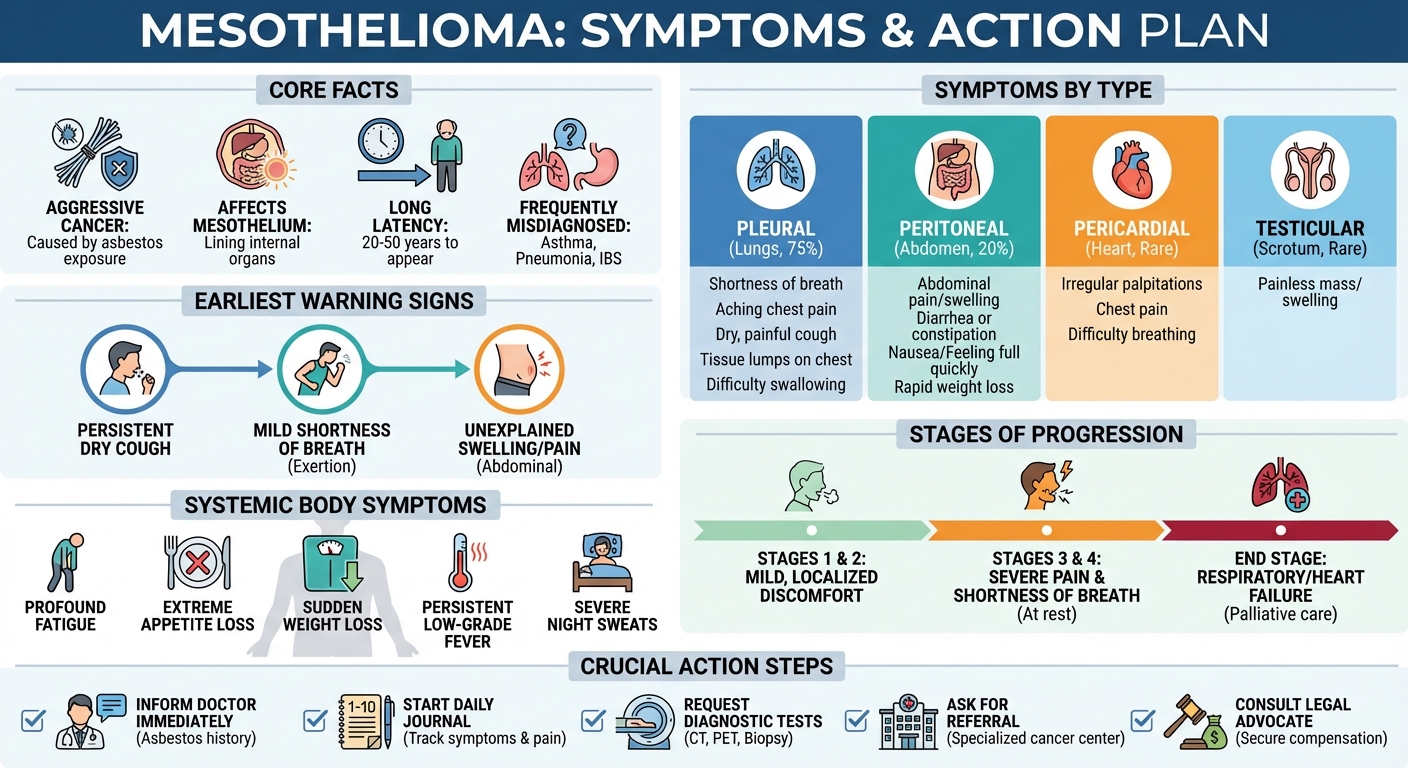
The most common cancer mesothelioma symptoms include shortness of breath, chest or abdominal pain, persistent dry cough, and unexplained weight loss. Because mesothelioma affects the lining of the lungs or abdomen, patients may also experience fatigue, fever, night sweats, and fluid buildup in the affected area.
Recognizing Cancer Mesothelioma Symptoms: An Overview
Mesothelioma is an aggressive form of cancer caused almost exclusively by exposure to asbestos. Because the disease develops in the mesothelium—the thin layer of tissue covering most of your internal organs—symptoms are often localized to the chest or abdomen.
One of the most challenging aspects of this disease is its latency period. Cancer mesothelioma symptoms can take anywhere from 20 to 50 years to appear after the initial asbestos exposure. When they do surface, they often mimic common, less severe conditions, making early recognition critical for effective treatment.
What is the first symptom of mesothelioma?
The first symptom of mesothelioma is typically a persistent, dry cough or mild shortness of breath during physical exertion for pleural cases. For peritoneal mesothelioma, the earliest sign is often unexplained abdominal swelling or mild pain. These initial symptoms are subtle and frequently mistaken for common, less severe illnesses.
Common Mesothelioma Symptoms by Type
Mesothelioma is categorized by where the tumors first develop. The symptoms you experience will depend heavily on the specific type of mesothelioma you have.
Pleural Mesothelioma Symptoms (Lungs and Chest)
Pleural mesothelioma accounts for roughly 75% of all cases. It develops in the lining of the lungs (the pleura). Common symptoms include:
- Shortness of breath (dyspnea): Often caused by fluid buildup around the lungs (pleural effusion).
- Chest pain: A persistent, aching pain under the rib cage.
- Painful coughing: A dry, raspy cough that does not go away.
- Tissue lumps: Unusual lumps of tissue under the skin on the chest.
- Difficulty swallowing: Feeling as though food is stuck in the chest.
Peritoneal Mesothelioma Symptoms (Abdomen)
Developing in the lining of the abdomen (the peritoneum), this type accounts for about 20% of cases. Symptoms are primarily gastrointestinal:
- Abdominal pain and swelling: Caused by tumor growth and fluid accumulation (ascites).
- Changes in bowel habits: Unexplained diarrhea or constipation.
- Nausea and vomiting: Often accompanied by a feeling of fullness after eating very little.
- Unexplained weight loss: A rapid drop in weight without dietary changes.
Pericardial and Testicular Mesothelioma (Rare Types)
These two types make up less than 5% of all mesothelioma diagnoses.
- Pericardial (Heart): Symptoms include irregular heart palpitations, chest pain, and difficulty breathing.
- Testicular: The primary symptom is a painless mass or swelling in the scrotum.
| Mesothelioma Type | Primary Location | Hallmark Symptoms |
|---|---|---|
| Pleural | Lungs / Chest | Shortness of breath, chest pain, dry cough |
| Peritoneal | Abdomen | Abdominal swelling, nausea, altered bowel habits |
| Pericardial | Heart | Irregular heartbeat, chest pain |
General Signs of Mesothelioma to Watch For
Beyond localized pain and swelling, mesothelioma triggers systemic responses in the body. These general signs are common across all types of the disease.
Unexplained Weight Loss and Fatigue
As the body expends massive amounts of energy fighting the cancer, patients often experience profound, unrelenting fatigue. This is frequently paired with a sudden loss of appetite and unexplained weight loss, a condition known as cancer cachexia.
Fever and Night Sweats
A persistent, low-grade fever is a common immune response to mesothelioma tumors. Many patients also report severe night sweats, waking up drenched regardless of the room’s temperature.
What is the progression of mesothelioma?
The progression of mesothelioma involves tumors spreading from the original lining of the lungs or abdomen into nearby tissues, lymph nodes, and eventually distant organs. As the cancer advances, symptoms progress from mild respiratory or digestive discomfort to severe pain, chronic fluid buildup, and significant difficulty breathing.
Early-Stage vs. Late-Stage Symptom Differences
In early-stage mesothelioma (Stages 1 and 2), symptoms are mild and localized. You might feel slightly winded after climbing stairs or notice mild bloating. In late-stage mesothelioma (Stages 3 and 4), tumors have grown and spread. Symptoms become severe and constant. Shortness of breath occurs even at rest, pain requires strong medication to manage, and weight loss becomes drastic.
Advanced and End-Stage Mesothelioma
As mesothelioma reaches its final stages, the focus of care shifts from curative treatments to palliative care, prioritizing the patient’s comfort and quality of life.
What are the end of life symptoms of mesothelioma?
End of life symptoms of mesothelioma typically include severe shortness of breath, extreme fatigue, profound weight loss, difficulty swallowing, and increased chest or abdominal pain. Patients may also experience confusion, restlessness, and a significant decrease in appetite or fluid intake as the body’s systems begin to shut down.
What happens when someone dies of mesothelioma?
When someone dies of mesothelioma, the immediate cause is often respiratory failure, heart failure, or severe infection. As tumors heavily restrict lung or organ function, the patient typically loses consciousness, their breathing becomes shallow and irregular, and the heart eventually stops beating, usually under palliative care.
Why Mesothelioma is Frequently Misdiagnosed
Because mesothelioma is rare and its symptoms mirror common ailments, misdiagnosis is incredibly common. Pleural mesothelioma is frequently mistaken for asthma, pneumonia, or bronchitis. Peritoneal mesothelioma is often misdiagnosed as irritable bowel syndrome (IBS), hernias, or ovarian cancer in women. If you have a known history of asbestos exposure, you must proactively inform your doctor so they can order the correct imaging scans (like a CT or PET scan) and biopsies.
What to Do If You Experience These Symptoms
If you are experiencing symptoms and have a history of working in construction, shipyards, manufacturing, or the military, immediate action is required.
Tracking Your Symptoms for Medical and Legal Records
Start a daily symptom journal. Note when the pain occurs, its severity on a scale of 1 to 10, and how it impacts your daily life. This documentation is vital for your oncologist to tailor your treatment plan. Furthermore, detailed medical records are the foundation of any future legal claims for asbestos compensation.
Connecting with Specialists and Legal Advocates
General practitioners rarely treat mesothelioma. Request a referral to a comprehensive cancer center with a dedicated mesothelioma program. Once your medical team is in place, consulting with an experienced mesothelioma lawyer can help you understand your options for securing compensation to cover expensive treatments and protect your family’s financial future.
 Call (713) 747-7777