
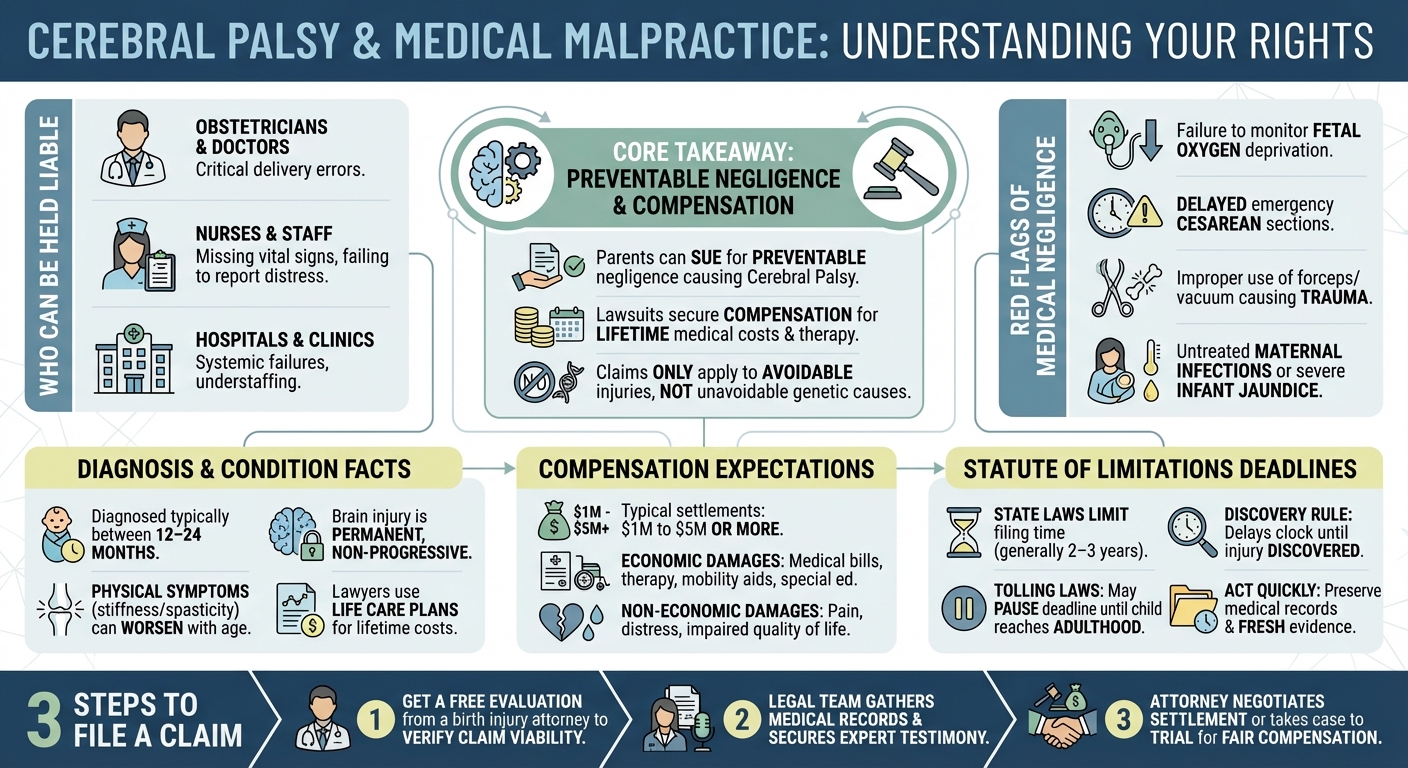
Yes, you can sue for cerebral palsy if your child’s condition was caused by medical negligence or a preventable birth injury. By filing a medical malpractice lawsuit, families can secure financial compensation to cover lifetime medical expenses, physical therapy, and specialized care. Consulting a birth injury attorney is the first step.
Can You Sue for Cerebral Palsy? (The Short Answer)
Yes, you can sue for cerebral palsy if your child’s condition was the direct result of medical negligence. When healthcare providers fail to meet the standard of care during pregnancy, labor, or delivery, they can be held legally responsible for the resulting birth injuries.
When is cerebral palsy considered medical malpractice?
Cerebral palsy becomes a medical malpractice issue when a preventable error causes oxygen deprivation or trauma to the baby’s brain. If a doctor, nurse, or hospital staff member made a mistake that a reasonably competent professional would have avoided under similar circumstances, you may have a valid claim.
The difference between genetic causes and preventable birth injuries
Not all cases of cerebral palsy warrant a lawsuit. Some instances stem from unavoidable genetic abnormalities or maternal conditions that could not be treated. However, if the brain damage was caused by delayed interventions, improper delivery techniques, or ignored fetal distress, it is classified as a preventable birth injury rather than a genetic inevitability.
What is the lawsuit for cerebral palsy?
A lawsuit for cerebral palsy is a civil medical malpractice claim filed by parents on behalf of their child. It seeks financial compensation from healthcare providers whose negligence caused a preventable birth injury. These lawsuits help families cover the exorbitant lifetime costs of medical care, therapy, and specialized equipment.
Understanding birth injury and medical negligence claims
Birth injury claims require you to prove that a medical professional breached their duty of care. This means demonstrating that their actions (or failure to act) directly caused your child’s cerebral palsy. These cases are complex and rely heavily on medical records and expert testimony to establish fault.
Who can you sue?
Depending on the circumstances of the delivery, multiple parties can be held liable in a cerebral palsy lawsuit. Potential defendants include:
- Obstetricians and attending physicians: For making critical errors during delivery.
- Nurses and delivery staff: For failing to monitor vital signs or communicate distress to the doctor.
- Hospitals and clinics: For systemic failures, understaffing, or inadequate training.
Signs Your Child’s Cerebral Palsy Was Caused by Medical Malpractice
It is not always immediately clear if medical malpractice occurred. However, certain red flags during labor and delivery often point to negligence.
Failure to monitor or respond to fetal distress
Fetal monitoring devices track the baby’s heart rate to detect signs of oxygen deprivation (hypoxia). If medical staff ignore irregular heartbeats or fail to act quickly when the baby is in distress, the resulting brain damage is often grounds for a lawsuit.
Delayed emergency C-sections
When a baby is stuck in the birth canal or experiencing severe distress, an emergency Cesarean section is often required. Delaying this crucial procedure can cut off the baby’s oxygen supply, leading to permanent neurological damage.
Improper use of delivery tools (forceps and vacuum extractors)
Forceps and vacuum extractors can assist in difficult deliveries, but they must be used with extreme care. Applying too much force or placing the tools incorrectly can cause skull fractures, brain bleeds, and subsequent cerebral palsy.
Failure to treat maternal infections or infant jaundice
Maternal infections during pregnancy can pass to the baby and cause brain inflammation. Similarly, severe, untreated infant jaundice can develop into kernicterus, a type of brain damage linked to cerebral palsy. Failing to diagnose and treat these routine conditions is a clear breach of medical duty.
At what age is cerebral palsy diagnosed?
Cerebral palsy is typically diagnosed between 12 and 24 months of age, though severe cases may be identified shortly after birth. Mild symptoms might not become apparent until a child misses developmental milestones during toddlerhood. Early diagnosis is crucial for starting interventions and pursuing timely legal action.
Typical timeline for a CP diagnosis
While the brain injury occurs before, during, or shortly after birth, the physical signs of cerebral palsy take time to manifest. Parents often notice delays when their child struggles to roll over, sit up, crawl, or walk. By age two, pediatricians can usually confirm a diagnosis through neurological exams and MRI scans.
Why delayed diagnosis impacts your legal case
A delayed diagnosis can complicate your lawsuit by pushing you closer to the statute of limitations deadline. It can also make it harder to definitively link the condition to events that occurred during childbirth. If you suspect developmental delays, seek a medical evaluation immediately to protect both your child’s health and your legal rights.
How much compensation for cerebral palsy?
Compensation for cerebral palsy varies widely, but successful birth injury settlements often range from $1 million to over $5 million. The exact amount depends on the severity of the child’s condition, lifetime care requirements, and the degree of medical negligence proven during the legal proceedings.
Average settlement amounts for birth injury cases
Because cerebral palsy requires lifelong care, settlements are typically substantial. While every case is unique, compensation is calculated based on two primary categories of damages: economic and non-economic.
Economic damages
These cover quantifiable financial losses associated with the injury, including:
- Past and future medical bills
- Physical, occupational, and speech therapy
- Mobility aids (wheelchairs, braces)
- Home and vehicle modifications
- Special education costs
Non-economic damages
These compensate for the intangible impacts of the birth injury, such as:
- Physical pain and suffering
- Emotional distress
- Loss of enjoyment of life
- Disfigurement or physical impairment
Does cerebral palsy get worse as you get older?
Cerebral palsy itself does not get worse as you get older, because the brain injury that caused it is non-progressive. However, the physical symptoms—such as muscle spasticity, joint stiffness, and mobility challenges—can intensify over time, requiring ongoing therapy, surgeries, and a comprehensive life care plan.
The non-progressive nature of CP vs. worsening symptoms
The neurological damage responsible for cerebral palsy is permanent but static. It will not spread or degrade further. Yet, as a child grows, the abnormal muscle tone can put immense strain on bones and joints, leading to premature arthritis, contractures, and increased pain in adulthood.
Calculating lifetime care costs for a Life Care Plan
Because the physical toll of CP evolves, lawyers work with medical and financial experts to create a Life Care Plan. This document outlines the projected costs of medical care, therapies, and living assistance your child will need from infancy through adulthood, ensuring your lawsuit demands adequate compensation.
The Statute of Limitations: How Long Do You Have to File?
You do not have unlimited time to sue for cerebral palsy. The statute of limitations imposes strict legal deadlines for filing a medical malpractice claim.
How state laws dictate your filing deadline
Every state has its own statute of limitations for medical malpractice, generally ranging from two to three years from the date of the injury. If you miss this window, the court will permanently dismiss your case, barring you from recovering any compensation.
The Discovery Rule and tolling for minors
Because CP is not always diagnosed immediately, many states apply the Discovery Rule, which starts the clock on the date the injury was discovered (or reasonably should have been discovered). Additionally, tolling laws often pause the statute of limitations for minors, sometimes allowing lawsuits to be filed until the child reaches age 18 or 21. However, it is always best to act quickly while evidence is fresh.
Steps to File a Cerebral Palsy Lawsuit
Filing a lawsuit against a hospital or doctor can feel overwhelming, but an experienced attorney will handle the heavy lifting. Here is what the process generally looks like.
Step 1: Get a free case evaluation from a birth injury lawyer
Most birth injury law firms offer free, no-obligation consultations. During this meeting, the attorney will listen to your story, assess the basic facts of your delivery, and determine if you have a viable medical malpractice claim.
Step 2: Gathering medical records and expert testimony
If you hire the lawyer, their team will collect all relevant maternal and infant medical records. They will then hire independent medical experts—such as obstetricians and neurologists—to review the files and testify that the standard of care was breached.
Step 3: Negotiating a settlement vs. going to trial
The majority of cerebral palsy lawsuits are settled out of court. Your lawyer will present a demand package to the defendants’ insurance companies and negotiate for maximum compensation. If the hospital refuses to offer a fair settlement, your attorney will take the case to trial to present the evidence before a judge and jury.
 Call (713) 747-7777