
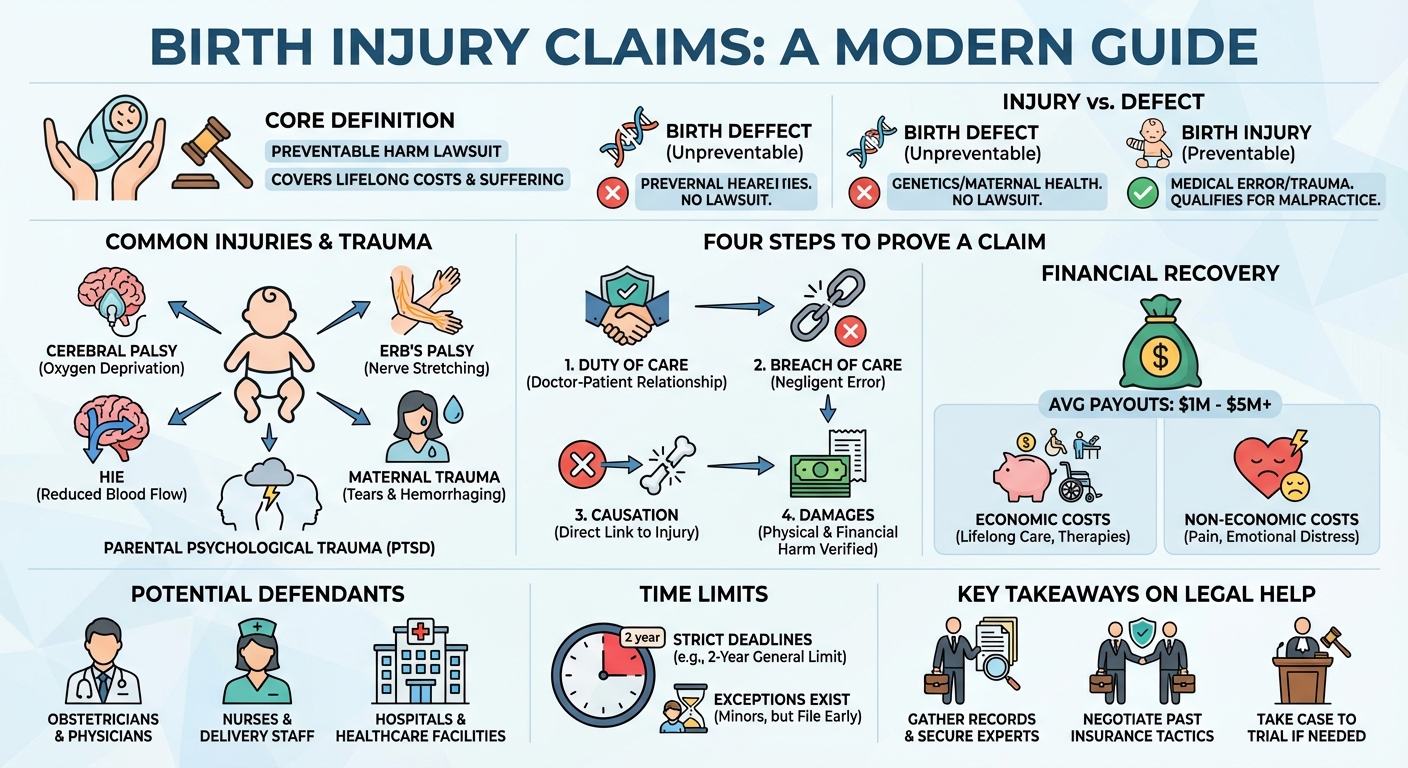
A birth injury claim is a medical malpractice lawsuit filed by parents on behalf of a child who suffered preventable harm during delivery. These claims seek financial compensation from negligent doctors or hospitals to cover the child’s lifelong medical expenses, therapy costs, and pain and suffering.
Understanding Birth Injury Claims: A Guide for Parents
A birth injury claim is a specialized type of medical malpractice lawsuit filed by parents on behalf of a child who suffered harm during the labor and delivery process. When medical professionals fail to uphold the standard of care, the resulting injuries can alter a family’s life forever. These claims are designed to secure the financial resources necessary for the child’s lifelong care.
What Constitutes a Birth Injury Claim?
To constitute a valid birth injury claim, the injury must be the direct result of medical negligence. This means a doctor, nurse, or hospital staff member made a preventable error. Common triggers for these claims include failing to monitor fetal distress, delaying a necessary C-section, or improperly using delivery instruments.
The Difference Between Birth Defects and Birth Injuries
Insurance companies often try to blur the lines between birth defects and birth injuries to avoid liability. Understanding the distinction is critical for your case.
| Feature | Birth Defect | Birth Injury |
|---|---|---|
| Cause | Genetics, maternal health conditions, or developmental issues during pregnancy. | Mechanical trauma, oxygen deprivation, or medical errors during labor and delivery. |
| Preventability | Typically unpreventable by the delivery team. | Highly preventable with competent medical monitoring and intervention. |
| Legal Recourse | Generally not grounds for a lawsuit. | Forms the basis of a medical malpractice claim. |
What are the examples of birth injuries?
Common examples of birth injuries include Cerebral Palsy, Erb’s Palsy, Hypoxic-Ischemic Encephalopathy (HIE), facial nerve paralysis, and spinal cord injuries. These preventable conditions often result from oxygen deprivation during delivery or the improper use of extraction tools like forceps and vacuum extractors.
Cerebral Palsy and Brain Damage
Cerebral palsy is a group of disorders affecting movement, muscle tone, and posture. In the context of a birth injury, it is frequently caused by a lack of oxygen to the baby’s brain (asphyxia) during a prolonged or mismanaged delivery.
Erb’s Palsy and Brachial Plexus Injuries
Erb’s Palsy occurs when the brachial plexus nerves around the baby’s shoulder are stretched or torn. This often happens during shoulder dystocia, a complication where the baby’s shoulder gets stuck behind the mother’s pelvic bone, and the physician uses excessive force to pull the baby out.
Hypoxic-Ischemic Encephalopathy (HIE)
HIE is a severe type of brain dysfunction caused by a reduction in blood flow and oxygen to the brain. If not treated immediately with therapeutic hypothermia (cooling therapy), HIE can lead to permanent cognitive and physical disabilities.
Spinal Cord Injuries and Fractures
Aggressive pulling or twisting during a difficult delivery can result in fractured collarbones (clavicles) or severe spinal cord injuries. While some fractures heal with time, spinal cord damage can cause permanent paralysis.
What are the examples of birth trauma?
Examples of birth trauma include physical injuries to the infant, such as skull fractures or nerve damage, and severe maternal trauma like perineal tears, uterine rupture, or hemorrhaging. It also encompasses the profound psychological trauma that parents endure following a negligent and dangerous delivery process.
Physical Trauma to the Infant (Forceps and Vacuum Extraction Injuries)
When labor stalls, doctors may use forceps or vacuum extractors to assist. If applied incorrectly, these tools can cause skull fractures, brain bleeds (intracranial hemorrhages), and permanent disfigurement to the infant.
Maternal Birth Trauma (Perineal Tears, Hemorrhaging, and Uterine Rupture)
Birth trauma isn’t limited to the baby. Mothers can suffer catastrophic injuries due to medical negligence, including severe third- or fourth-degree perineal tears, uncontrolled postpartum hemorrhaging, or life-threatening uterine ruptures caused by improper administration of labor-inducing drugs like Pitocin.
Psychological Trauma for the Parents
The emotional toll of a traumatic birth is immense. Parents often suffer from Post-Traumatic Stress Disorder (PTSD), severe anxiety, and postpartum depression after witnessing their child suffer a preventable injury. This psychological trauma is a valid component of a birth injury claim.
The 4 Legal Elements of a Birth Injury Case
Winning a birth injury lawsuit requires proving four specific legal elements. Defense attorneys will aggressively challenge each one.
1. Duty of Care Owed by Medical Professionals
You must establish that a doctor-patient relationship existed. This relationship legally obligates the healthcare provider to treat the mother and child with the accepted standard of medical care.
2. Breach of the Standard of Care (Medical Negligence)
A breach occurs when the provider’s actions fall below what a reasonably prudent medical professional would do under similar circumstances. Examples include ignoring fetal monitor alarms or failing to order an emergency C-section.
3. Causation: Linking the Breach to the Injury
This is often the most contested element. You must prove that the medical professional’s specific mistake directly caused the birth injury, rather than an underlying genetic condition or an unavoidable complication.
4. Damages: The Resulting Harm and Financial Loss
Finally, there must be quantifiable harm. This includes the physical injury to the child, the emotional distress of the family, and the financial burden of ongoing medical care.
Birth Injury Settlements and Financial Recovery
What is the average payout for birth injury?
The average payout for a birth injury claim typically ranges from $1 million to over $5 million, depending on the severity of the harm. Because cases involving lifelong conditions like cerebral palsy require decades of specialized care, settlements are uniquely high to cover these extensive future medical expenses.
How much compensation for a birth injury?
Compensation for a birth injury is calculated based on the child’s specific lifetime needs. Payouts cover past and future medical bills, ongoing physical therapy, special education costs, lost future earning capacity, and non-economic damages like pain, suffering, and a diminished quality of life.
Economic Damages: Medical Bills and Lifelong Care Costs
Economic damages are highly calculable out-of-pocket expenses. In birth injury cases, a life care planner is often hired to project the exact cost of surgeries, wheelchairs, home modifications, in-home nursing, and specialized therapies the child will need over their lifetime.
Non-Economic Damages: Pain, Suffering, and Loss of Quality of Life
These damages compensate for the intangible losses. They cover the child’s physical pain, emotional anguish, and the loss of the ability to enjoy a normal life. Texas law places caps on non-economic damages in medical malpractice cases, which your attorney will navigate.
Who Can Be Held Liable for a Birth Injury?
Liability in birth injury cases can extend to multiple parties involved in the delivery process.
Obstetricians and Attending Physicians
The primary doctor overseeing the delivery is usually the main defendant. They are responsible for making critical decisions, such as when to perform a C-section or how to resolve a shoulder dystocia.
Nurses and Delivery Room Staff
Nurses are responsible for monitoring the mother’s vitals and the baby’s heart rate. If they fail to notice signs of fetal distress or fail to alert the attending physician promptly, they can be held liable.
Hospitals and Healthcare Facilities
Under the doctrine of vicarious liability, a hospital can be sued for the negligence of its employees. Hospitals can also be directly liable for understaffing, failing to enforce safety protocols, or keeping faulty monitoring equipment in the delivery room.
When to File: Understanding the Statute of Limitations
Time is of the essence in birth injury claims. Failing to file within the legal deadline will result in your case being permanently dismissed.
Time Limits for Filing a Birth Injury Lawsuit in Texas
In Texas, the general statute of limitations for medical malpractice is two years from the date the injury occurred. However, birth injury cases have specific nuances because the victim is a minor.
Exceptions for Minors (Tolling the Statute)
For minors injured under the age of 12, Texas law allows parents to file a medical malpractice claim until the child’s 14th birthday. Despite this extension, it is crucial to act immediately. Medical records can be lost, and witnesses’ memories fade over time.
How a Birth Injury Lawyer Can Help Your Family
Birth injury cases are among the most complex areas of personal injury law. You need an advocate who understands both the legal and medical intricacies.
Gathering Medical Records and Expert Testimony
An experienced attorney will secure all fetal monitoring strips, maternal health records, and delivery notes. They will then work with top-tier medical experts—such as board-certified OB-GYNs and pediatric neurologists—to prove exactly how the standard of care was breached.
Negotiating with Malpractice Insurance Companies
Hospital defense teams and their insurance adjusters will try to minimize your claim or blame the injury on genetics. A skilled lawyer knows how to counter these tactics and demand a settlement that fully funds your child’s life care plan.
Taking Your Case to Trial if Necessary
While most birth injury claims settle out of court, some hospitals refuse to offer fair compensation. Your attorney must be prepared to present your case to a jury, using expert testimony and compelling evidence to secure the verdict your family deserves.
 Call (713) 747-7777