
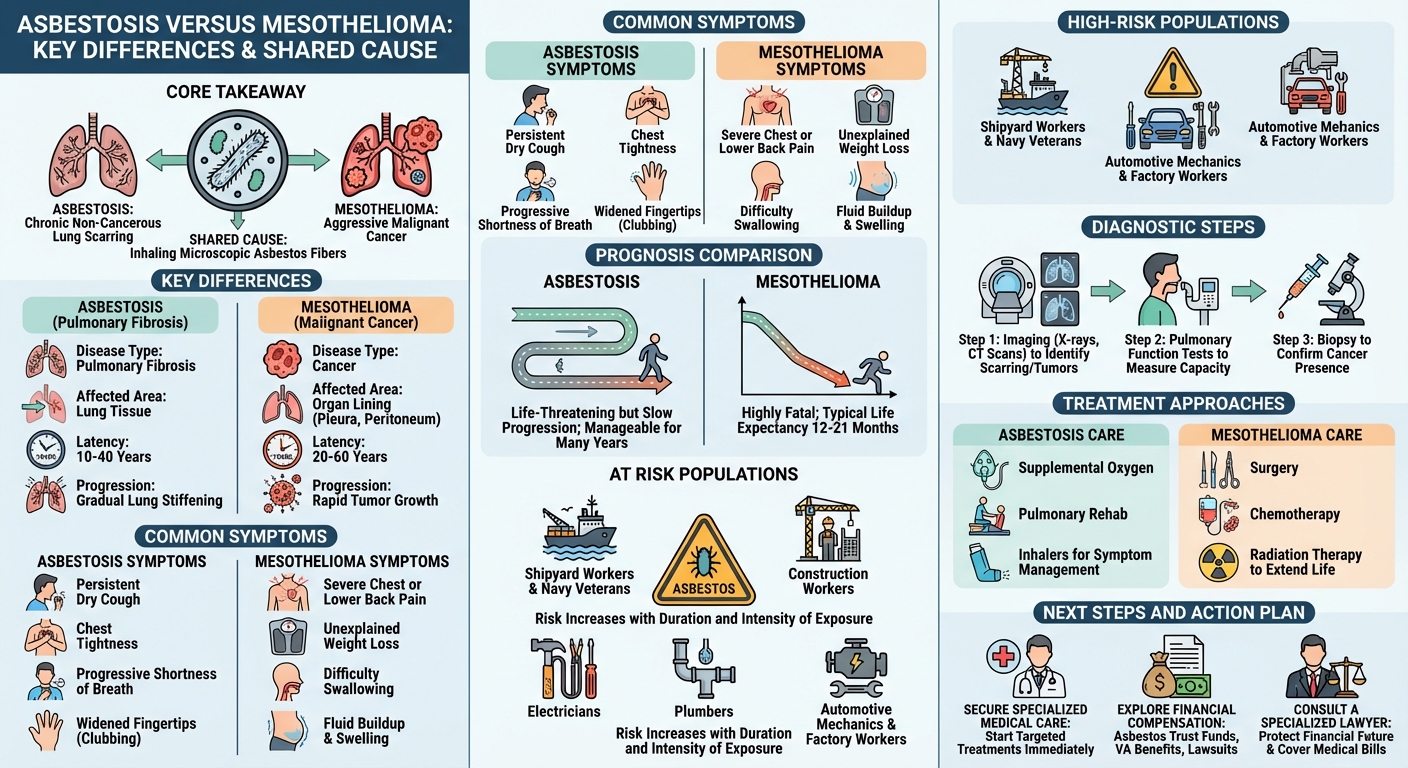
Asbestosis and mesothelioma are distinct diseases caused by asbestos exposure. The primary difference is that asbestosis is a chronic, non-cancerous scarring of the lung tissue, whereas mesothelioma is an aggressive, malignant cancer that attacks the lining of the lungs or abdomen. While both cause breathing difficulties, mesothelioma is generally more fatal.
Asbestosis vs. Mesothelioma: The Key Differences
Asbestosis and mesothelioma are distinct diseases, yet both share a common, devastating cause: exposure to microscopic asbestos fibers. When inhaled, these fibers become permanently lodged in the body, leading to severe health complications decades later. The primary difference between the two conditions is that asbestosis is a chronic, non-cancerous scarring of the lung tissue, while mesothelioma is an aggressive, malignant cancer.
| Feature | Asbestosis | Mesothelioma |
|---|---|---|
| Disease Type | Non-cancerous (Pulmonary Fibrosis) | Malignant Cancer |
| Primary Area Affected | Inside the lung tissue (alveoli) | Lining of the lungs, abdomen, or heart |
| Latency Period | 10 to 40 years | 20 to 60 years |
| Progression | Gradual scarring and stiffening | Rapid tumor growth and spreading |
Understanding Asbestosis: A Non-Cancerous Lung Disease
Asbestosis is a form of pulmonary fibrosis. When asbestos fibers settle deep inside the alveoli (the tiny air sacs in the lungs), the body’s immune system attempts to break them down. This immune response fails, causing widespread inflammation and scar tissue. Over time, the lungs become stiff, making it increasingly difficult to breathe and properly oxygenate the blood.
What are the first signs of asbestosis?
The first signs of asbestosis usually include a persistent dry cough, progressive shortness of breath during physical exertion, and a feeling of tightness or pain in the chest. Some patients also develop clubbing, which is the widening and rounding of the fingertips or toes.
Understanding Mesothelioma: A Rare Asbestos Cancer
Unlike asbestosis, which affects the lung tissue itself, mesothelioma attacks the mesothelium—the protective membrane lining the body’s internal organs. Pleural mesothelioma (affecting the lung lining) is the most common form, though it can also develop in the abdomen (peritoneal) or heart (pericardial). As the cancer grows, tumors thicken the lining, crushing the organs inside.
What are 5 signs and symptoms of mesothelioma?
Five common signs and symptoms of mesothelioma include severe chest or lower back pain, unexplained shortness of breath, persistent dry cough, unexplained weight loss, and difficulty swallowing. Patients may also experience fluid buildup in the chest or abdomen, causing noticeable swelling.
Prognosis and Severity: Comparing the Outcomes
Because these diseases behave differently, their prognoses vary significantly. Neither condition has a definitive cure, but their progression and impact on a patient’s lifespan differ greatly.
What is worse, asbestosis or mesothelioma?
Mesothelioma is generally worse because it is an aggressive, fatal cancer that spreads rapidly. Asbestosis is a chronic, non-cancerous condition that, while serious and potentially life-threatening, progresses more slowly and can often be managed for many years with proper medical care.
What is the life expectancy of someone with asbestos mesothelioma?
The life expectancy for someone with asbestos mesothelioma is typically 12 to 21 months after diagnosis. However, survival rates depend heavily on the cancer’s stage, the patient’s overall health, and how well they respond to treatments like surgery, chemotherapy, or immunotherapy.
Causes and Risk Factors: How Asbestos Exposure Leads to Disease
Both conditions are almost exclusively caused by asbestos exposure. The risk of developing either disease increases with the duration and intensity of the exposure.
Occupational Exposure Risks
Until the late 1980s, asbestos was heavily used in industrial and commercial applications due to its heat resistance and durability. High-risk occupations included:
- Shipyard workers and Navy veterans
- Construction workers and carpenters
- Electricians and plumbers
- Automotive mechanics (especially brake specialists)
- Factory and mill workers
Latency Periods for Asbestos Diseases
Asbestos diseases are notorious for their long latency periods. A worker exposed in the 1970s might not show symptoms until the 2020s. Asbestosis typically takes 10 to 40 years to manifest, whereas mesothelioma can lie dormant for 20 to 60 years before tumors begin to form.
Diagnosis and Treatment Options
Early detection is challenging because symptoms of both diseases mimic common respiratory conditions like asthma or pneumonia.
How Doctors Diagnose Asbestos-Related Diseases
Physicians use a combination of imaging and tissue testing to differentiate between asbestosis and mesothelioma:
- Imaging Scans: X-rays and CT scans can reveal lung scarring (asbestosis) or pleural thickening and tumors (mesothelioma).
- Pulmonary Function Tests (PFTs): These measure lung capacity and are primarily used to assess the severity of asbestosis.
- Biopsy: The only definitive way to diagnose mesothelioma is by extracting fluid or tissue and examining it for cancer cells.
Managing Asbestosis vs. Treating Mesothelioma
Treatment goals differ fundamentally. For asbestosis, doctors focus on managing symptoms and slowing progression using supplemental oxygen, pulmonary rehabilitation, and inhalers. For mesothelioma, treatment is oncological and aims to extend life. Options include aggressive tumor-removal surgeries, chemotherapy, radiation, and emerging immunotherapies.
Legal Rights and Next Steps After an Asbestos Diagnosis
A diagnosis of either asbestosis or mesothelioma is overwhelming, but patients and their families have specific legal rights. Because the dangers of asbestos were hidden by manufacturers for decades, victims are entitled to seek justice.
Seeking Compensation for Medical Bills and Lost Wages
Treating asbestos-related diseases is incredibly expensive. Patients can pursue compensation through asbestos trust funds, VA benefits, or personal injury lawsuits to cover medical bills, lost wages, and pain and suffering. The type of disease diagnosed will influence the compensation structure and the legal strategy required.
Connecting with Specialists and Legal Advocates
Your immediate priority should be securing specialized medical care. Facilities like MD Anderson in Houston offer targeted treatments for complex asbestos cancers. Simultaneously, consulting with a dedicated mesothelioma lawyer in Texas can help you understand your legal rights, ensuring your family’s financial future is protected while you focus on your health.
 Call (713) 747-7777