
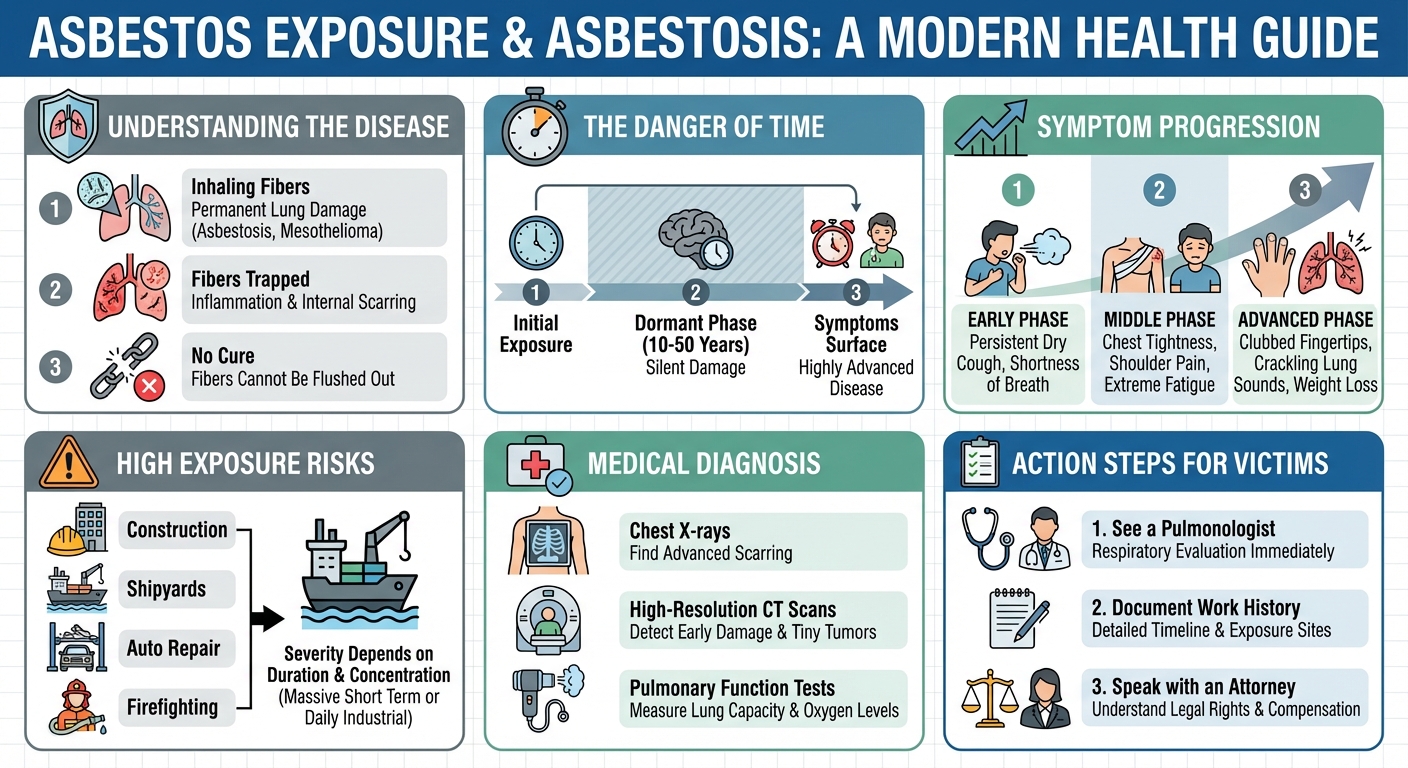
The most common symptoms of asbestos poisoning (asbestosis) include shortness of breath, a persistent dry cough, and chest tightness or pain. As the disease progresses, patients may experience extreme fatigue, unexplained weight loss, clubbed fingertips, and a dry, crackling sound in the lungs when inhaling.
What Is Asbestos Poisoning?
Understanding Asbestosis and Asbestos-Related Diseases
While people often search for the term “asbestos poisoning,” medical professionals do not use this phrase. Instead, inhaling toxic asbestos fibers leads to specific, progressive respiratory conditions. The most common of these is asbestosis, a chronic lung disease characterized by severe tissue scarring. Prolonged exposure can also lead to deadly cancers, including mesothelioma and asbestos-related lung cancer. Because asbestos fibers are microscopic and indestructible, they cause continuous internal damage once they enter the body.
The Latency Period: Why Symptoms Take Decades to Appear
One of the most dangerous aspects of asbestos exposure is its latency period. Symptoms of asbestos-related diseases rarely appear immediately. In most cases, it takes anywhere from 10 to 50 years after the initial exposure for a patient to notice the first signs of illness. During this dormant phase, the trapped fibers slowly cause inflammation and scarring, meaning the disease is often highly advanced by the time symptoms finally surface.
What happens if I inhale asbestos?
When you inhale asbestos, microscopic fibers bypass your body’s natural filtration systems and become permanently lodged deep within your lung tissue. Over time, these trapped fibers cause severe inflammation and scarring, known as fibrosis. This stiffens the lungs, restricts breathing, and can eventually lead to asbestosis or mesothelioma.
Early Signs and Symptoms of Asbestos Poisoning
Respiratory Symptoms (Shortness of breath, persistent dry cough)
The earliest indicators of asbestos-related lung damage are usually respiratory. Patients frequently experience a persistent, dry cough that does not respond to standard cold or allergy medications. As lung tissue becomes scarred and stiff, shortness of breath (dyspnea) develops. Initially, this may only happen during physical exertion, but as the disease progresses, breathing becomes difficult even while resting.
Physical Pain and Fatigue (Chest tightness, shoulder pain)
As the lungs lose their elasticity, patients often report a feeling of tightness or heaviness in the chest. This can escalate to sharp chest or shoulder pain, especially when taking deep breaths. Because the body is working much harder to oxygenate the blood, extreme, unexplained fatigue is a very common symptom that severely impacts daily life.
Advanced Physical Signs (Clubbed fingertips, crackling lung sounds, weight loss)
In the advanced stages of asbestosis, a doctor listening to your lungs with a stethoscope may hear a distinct dry, crackling sound when you inhale. Another visible sign is “clubbing,” where the tips of the fingers and toes become wider and rounder due to chronic oxygen deprivation. Additionally, patients often experience a loss of appetite, leading to significant and unintended weight loss.
What is considered an intense asbestos exposure?
Intense asbestos exposure is generally defined as working directly with friable, easily crumbled asbestos materials on a daily basis for an extended period. It can also occur during massive short-term events, such as a building collapse or industrial accident, where individuals inhale high concentrations of asbestos dust without protective gear.
Duration vs. Concentration in Asbestos Exposure
The severity of asbestos-related diseases is heavily influenced by two factors: how long you were exposed (duration) and how much asbestos was in the air (concentration). While a single, brief exposure to a low amount of asbestos rarely causes disease, daily exposure in an industrial setting drastically increases the risk. However, short-term exposure to extremely high concentrations can be just as damaging as long-term, low-level exposure.
High-Risk Occupations and Environments
Certain trades historically faced massive asbestos exposure before modern regulations were enacted. If you worked in any of these fields prior to the 1980s, your risk of developing symptoms is significantly higher.
| Occupation | Primary Risk Factor |
|---|---|
| Construction Workers | Handling asbestos insulation, drywall, and roofing materials. |
| Shipyard Workers | Building, repairing, and dismantling ships lined with asbestos. |
| Auto Mechanics | Blowing out and replacing asbestos-containing brake pads and clutches. |
| Firefighters | Inhaling airborne fibers during building fires and structural collapses. |
Can asbestos poisoning be cured?
No, asbestos poisoning cannot be cured. Conditions like asbestosis and mesothelioma involve permanent lung damage and scarring caused by trapped asbestos fibers. While the underlying damage is irreversible, various medical treatments, therapies, and medications can effectively manage symptoms, slow disease progression, and improve a patient’s overall quality of life.
Can you detox asbestos?
You cannot detox or flush asbestos from your body. Once microscopic asbestos fibers are inhaled and embedded deep within your lung tissue, they remain there permanently. No diet, juice cleanse, or medical procedure can extract these fibers, making early detection and symptom management the only viable medical approaches.
Diagnosing Asbestos-Related Diseases
Imaging Tests (X-rays and CT Scans)
If you present symptoms of asbestos exposure, doctors will typically start with imaging tests. A standard chest X-ray can reveal advanced lung scarring or pleural plaques (thickened tissue around the lungs). For a more detailed view, a high-resolution CT scan is used to detect early-stage asbestosis or tiny tumors that an X-ray might miss.
Pulmonary Function Tests
To determine how much damage has been done to your respiratory system, a pulmonologist will order pulmonary function tests (PFTs). These tests measure how much air your lungs can hold and how effectively they transfer oxygen into your bloodstream, providing a clear picture of your lung capacity and function.
What to Do If You Suspect Asbestos Exposure
Seeking Immediate Medical Evaluation
If you have a history of asbestos exposure and are experiencing a persistent cough or shortness of breath, do not wait for symptoms to worsen. Schedule an appointment with a pulmonologist immediately. Early detection is critical for managing symptoms and preventing further respiratory decline.
Documenting Your Work History and Exposure
Write down a detailed timeline of your work history. Include the names of companies you worked for, the specific job sites, the dates of employment, and the types of materials you handled. This documentation is vital for both your medical diagnosis and any potential legal claims.
Understanding Your Legal Rights and Compensation Options
Because the dangers of asbestos were hidden by manufacturers for decades, victims of asbestos-related diseases have legal rights. You may be entitled to financial compensation to cover medical bills, lost wages, and pain and suffering. Consulting with an attorney who specializes in asbestos litigation can help you navigate trust fund claims, workers’ compensation, or personal injury lawsuits.
 Call (713) 747-7777