
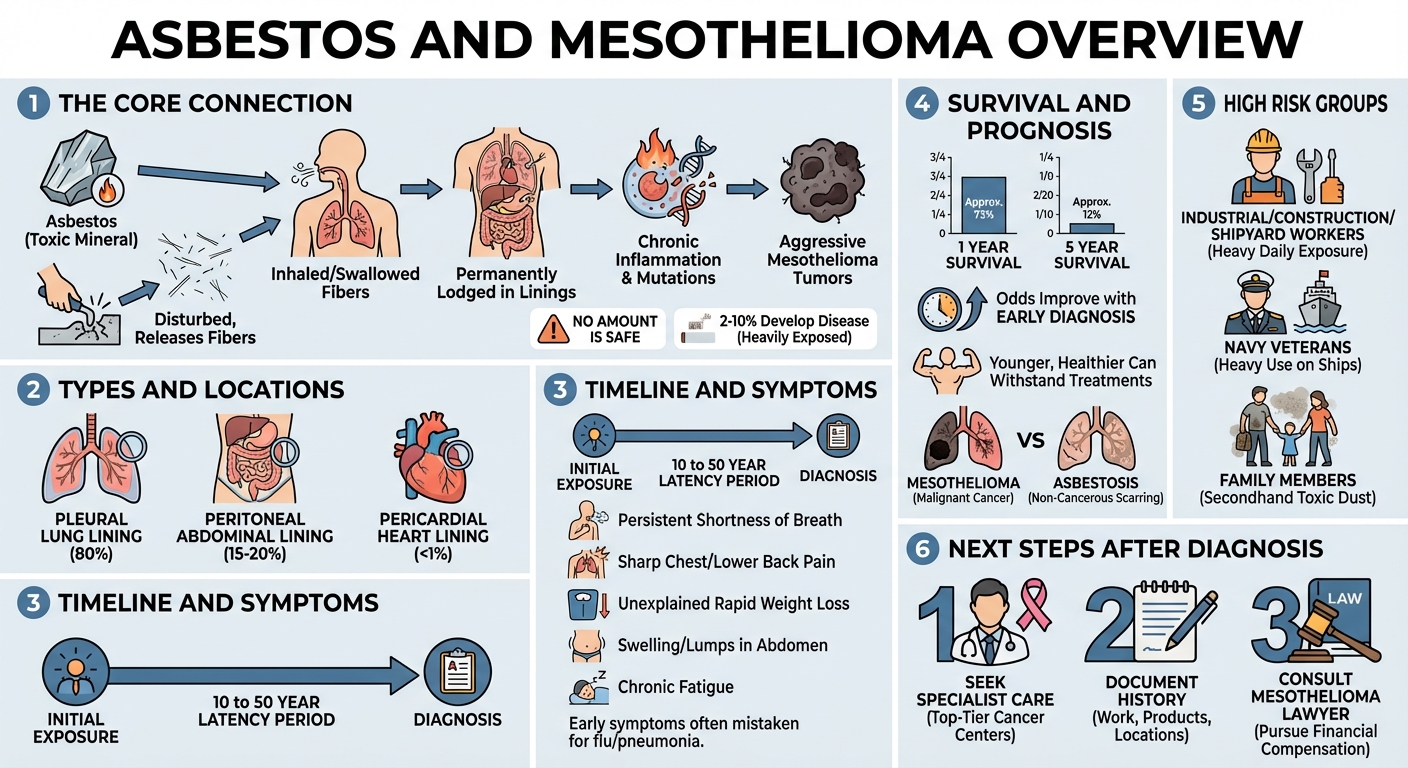
Asbestos exposure is the primary cause of mesothelioma, a rare and aggressive cancer that develops in the thin tissue lining the lungs, abdomen, or heart. When microscopic asbestos fibers are inhaled or swallowed, they become permanently lodged in the body, causing chronic inflammation and genetic mutations that lead to tumors decades later.
Understanding the Link Between Asbestos and Mesothelioma
What is Asbestos?
Asbestos is a naturally occurring mineral composed of microscopic, heat-resistant fibers. For decades, it was heavily used in construction, shipbuilding, automotive manufacturing, and industrial insulation. Because of its durability and fire-resistant properties, millions of workers were unknowingly exposed to this toxic material before its severe health risks were widely regulated.
How Asbestos Fibers Cause Cancer
When asbestos-containing materials are disturbed, they release invisible fibers into the air. If a person inhales or swallows these fibers, they can become permanently lodged in the mesothelium—the thin, protective membrane that covers most internal organs. Over time, the body’s inability to expel these sharp fibers causes chronic inflammation, cellular damage, and genetic mutations, ultimately leading to the formation of malignant mesothelioma tumors.
How likely are you to get mesothelioma from asbestos?
While asbestos is the primary cause of mesothelioma, the cancer remains rare. Only about 2% to 10% of people with prolonged, heavy exposure to asbestos will eventually develop mesothelioma. However, because the fibers are highly toxic, no amount of asbestos exposure is considered completely safe.
Types of Mesothelioma Caused by Asbestos Exposure
Mesothelioma is categorized by where the tumors first develop in the body. The location is directly tied to how the asbestos fibers entered the system.
| Type of Mesothelioma | Affected Area | Percentage of Cases |
|---|---|---|
| Pleural | Lungs (Pleura) | ~80% |
| Peritoneal | Abdomen (Peritoneum) | 15% – 20% |
| Pericardial | Heart (Pericardium) | < 1% |
| Testicular | Testes (Tunica Vaginalis) | < 1% |
Pleural Mesothelioma (Lungs)
This is the most common form of the disease. It occurs when inhaled asbestos fibers embed in the pleura, the lining of the lungs and chest cavity. Patients often experience severe chest pain, chronic coughing, and fluid buildup around the lungs (pleural effusion).
Peritoneal Mesothelioma (Abdomen)
Developing in the peritoneum (the abdominal lining), this type is typically caused by swallowing asbestos fibers. Symptoms include abdominal swelling, unexplained weight loss, and digestive issues. It is the second most common form of the disease.
Pericardial and Testicular Mesothelioma (Rare)
Pericardial mesothelioma affects the lining of the heart, while testicular mesothelioma affects the lining of the testes. Both are exceptionally rare, accounting for a tiny fraction of all asbestos-related cancer diagnoses.
Symptoms and the Asbestos Latency Period
The 10 to 50-Year Latency Period Explained
One of the most dangerous aspects of mesothelioma is its latency period. It typically takes anywhere from 10 to 50 years after initial asbestos exposure for symptoms to appear. Because the disease develops so slowly, patients exposed in the 1970s or 1980s may only just now be receiving a diagnosis.
Early Warning Signs to Watch For
Early symptoms of mesothelioma are often mistaken for common, less severe illnesses like pneumonia or the flu. Key warning signs include:
- Persistent shortness of breath
- Sharp chest or lower back pain
- Unexplained, rapid weight loss
- Swelling or lumps in the abdomen
- Chronic fatigue
What happens to someone with mesothelioma?
When someone develops mesothelioma, tumors form in the protective lining of their internal organs, most commonly the lungs. As the tumors grow, they restrict organ function, causing fluid buildup, severe chest pain, and breathing difficulties. Patients typically undergo a combination of surgery, chemotherapy, and radiation to manage these symptoms.
Prognosis, Survival Rates, and Related Conditions
What is the survival rate of mesothelioma?
The survival rate for mesothelioma is generally low because the disease is often diagnosed at an advanced stage. The average one-year survival rate is roughly 73%, while the five-year survival rate drops to about 12%. However, early detection and aggressive specialized treatments can significantly improve a patient’s overall prognosis.
Factors That Impact Your Prognosis (Age, Stage, Cell Type)
Several variables determine a patient’s life expectancy after an asbestos mesothelioma diagnosis:
- Cancer Stage: Stage 1 or 2 diagnoses offer more surgical options and better outcomes than Stage 3 or 4.
- Cell Type: Epithelioid cells respond better to treatment than sarcomatoid or biphasic cells.
- Patient Age and Health: Younger, healthier patients can generally withstand aggressive, life-extending treatments.
Mesothelioma vs. Asbestosis: Understanding the Difference
While both conditions are caused by asbestos, they are fundamentally different. Mesothelioma is a malignant cancer. Asbestosis is a chronic, non-cancerous respiratory disease characterized by severe scarring of the lung tissue. Both require medical intervention, but their treatment paths and prognoses differ vastly.
What is the life expectancy of asbestosis patients?
Unlike mesothelioma, asbestosis is a non-cancerous scarring of the lung tissue. The life expectancy of asbestosis patients varies widely based on severity, but many live for decades after diagnosis. While it can reduce life expectancy due to respiratory complications, it is generally not fatal as quickly as mesothelioma.
High-Risk Occupations and Sources of Exposure
Industrial, Construction, and Shipyard Workers
Occupational exposure is the leading cause of mesothelioma. Those at the highest risk include construction workers, electricians, plumbers, boilermakers, and shipyard workers who handled asbestos-laden insulation, cement, and fireproofing materials daily.
Military Veterans and Asbestos
Veterans, particularly those who served in the U.S. Navy between World War II and the Korean War, face a disproportionately high risk of mesothelioma. Asbestos was used extensively in ships, barracks, and military vehicles, leading to widespread exposure among service members.
Secondhand (Take-Home) Asbestos Exposure
You do not have to work directly with asbestos to be at risk. Many spouses and children developed mesothelioma through secondhand exposure, which occurred when workers unknowingly brought toxic asbestos dust home on their clothing, skin, or hair.
Next Steps After an Asbestos Mesothelioma Diagnosis
Seeking Specialized Medical Treatment
Because mesothelioma is rare, general oncologists may not have the expertise required to treat it effectively. It is critical to seek care from dedicated specialists at top-tier cancer centers, such as MD Anderson, to access cutting-edge clinical trials, targeted therapies, and specialized surgical options.
Organizing Your Exposure History
Identifying exactly when, where, and how you were exposed to asbestos is a vital step. Start documenting your work history, the products you handled, and the locations you lived or worked in. This information is crucial for both your medical team and any future legal claims.
Exploring Your Legal and Financial Options
An asbestos mesothelioma diagnosis brings significant physical, emotional, and financial burdens. Victims of asbestos exposure have legal rights to seek compensation from the manufacturers who hid the dangers of their products. Consulting with an experienced mesothelioma lawyer can help you understand how to file a claim, secure compensation for medical bills, and protect your family’s financial future.
 Call (713) 747-7777